Sugar Glider
The sugar glider (Petaurus breviceps) is a small nocturnal marsupial of Australia and New Guinea that glides between trees on a furry membrane. It looks much like a flying squirrel, a placental mammal, because both evolved gliding independently.
The sugar glider (Petaurus breviceps) is a small nocturnal marsupial of Australia and New Guinea that glides between trees on a furry membrane. It looks much like a flying squirrel, a placental mammal, because both evolved gliding independently.
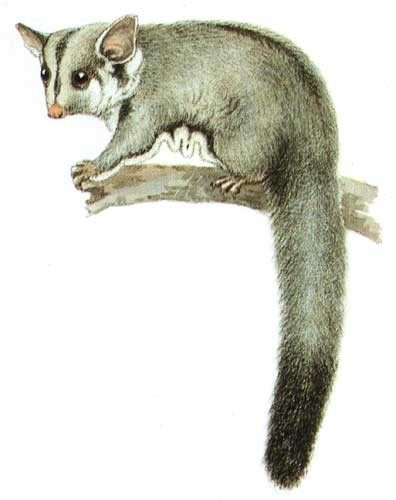
🧬 Field Guide Specimen: Open Sugar Glider in the CRV Science Field Guide to log the specimen, see its place among the Mammals lineages in the Cladogram Explorer, and test your recall in the Red List conservation game.
Gliding: How Far Can It Go?
A fold of skin, the patagium, stretches from the wrists to the ankles. By spreading its limbs, the glider can sail tens of meters between trees and steer using its tail. Gliding saves energy compared with climbing down and up.
A Sweet Diet
Sugar gliders feed on tree sap, nectar and gum, with insects as protein. They live in family groups of up to a dozen animals that share a nest of leaves and scent-mark one another.
Convergence With Flying Squirrels
The resemblance to flying squirrels is a textbook case of convergent evolution. Sugar gliders are also kept as pets, a trade that has raised welfare and conservation concerns.
Sugar Glider at a Glance
| Property | Value |
|---|---|
| Scientific name | Petaurus breviceps |
| Kingdom | Animalia |
| Phylum | Chordata |
| Class | Mammalia |
| Order | Diprotodontia |
| Family | Petauridae |
| Field Guide group | Mammals: Marsupialia (Metatherians) |
| Diagnostic feature (Field Guide) | Gliding patagium membrane extending between wrists and ankles, large night eyes, bushy steering tail. |
| IUCN Red List status | Least Concern (LC), assessed 2016 |
| Glide distance | Tens of meters |
| Order | Diprotodontia |