Tropical Two-wing Flyingfish
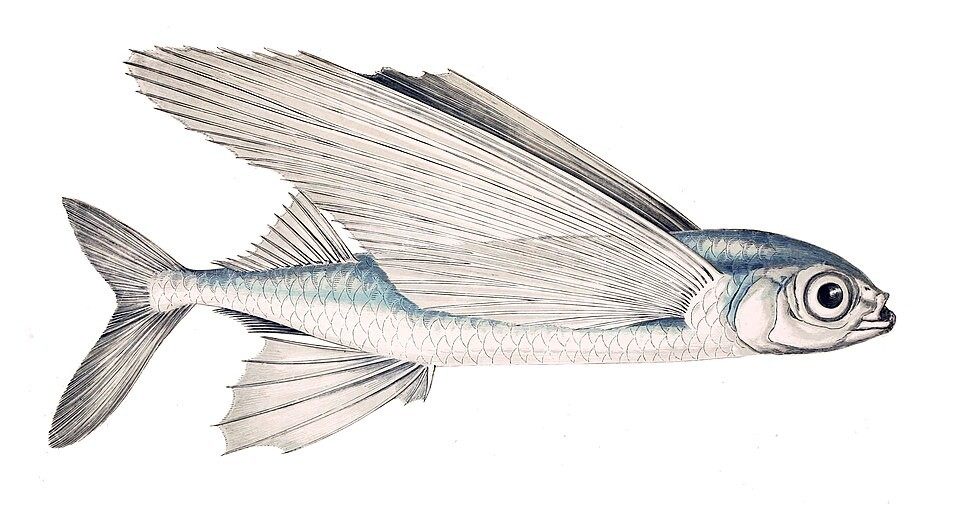
The tropical two-wing flyingfish (Exocoetus volitans) leaps out of the ocean and glides for long distances on its enlarged, wing-like pectoral fins. The behavior helps it escape predators such as mahi-mahi and tuna.
The tropical two-wing flyingfish (Exocoetus volitans) leaps out of the ocean and glides for long distances on its enlarged, wing-like pectoral fins. The behavior helps it escape predators such as mahi-mahi and tuna.
🧬 Field Guide Specimen: Open Tropical Two-wing Flyingfish in the CRV Science Field Guide to log the specimen, see its place among the Vertebrates lineages in the Cladogram Explorer, and test your recall in the Red List conservation game.
Gliding Flight: How Does It Take Off?
The fish accelerates underwater, breaks the surface and uses the lower lobe of its tail, which is longer than the upper one, to keep paddling in the water while airborne. It then spreads its fins and glides for up to several hundred meters, using wind updrafts from waves.
Escaping Predators
Flights last a few seconds to more than a minute and can be repeated. A flying fish may change direction in the air, though it can land in the path of seabirds that wait above.
Evolution of Gliding
Gliding evolved independently in several groups of fishes, an example of how similar predation pressures can produce similar solutions. See Sugar Glider.
Tropical Two-wing Flyingfish at a Glance
| Property | Value |
|---|---|
| Scientific name | Exocoetus volitans |
| Kingdom | Animalia |
| Phylum | Chordata |
| Class | Actinopterygii |
| Order | Beloniformes |
| Family | Exocoetidae |
| Field Guide group | Marine and Freshwater Fish |
| Diagnostic feature (Field Guide) | Enlarged wing-like pectoral fins, deeply forked hypocercal tail, glides through the air above wave crests for over 400 meters. |
| IUCN Red List status | Least Concern (LC), assessed 2015 |
| Glide distance | Up to several hundred meters |
| Wings | Enlarged pectoral fins |