Vampire Bat
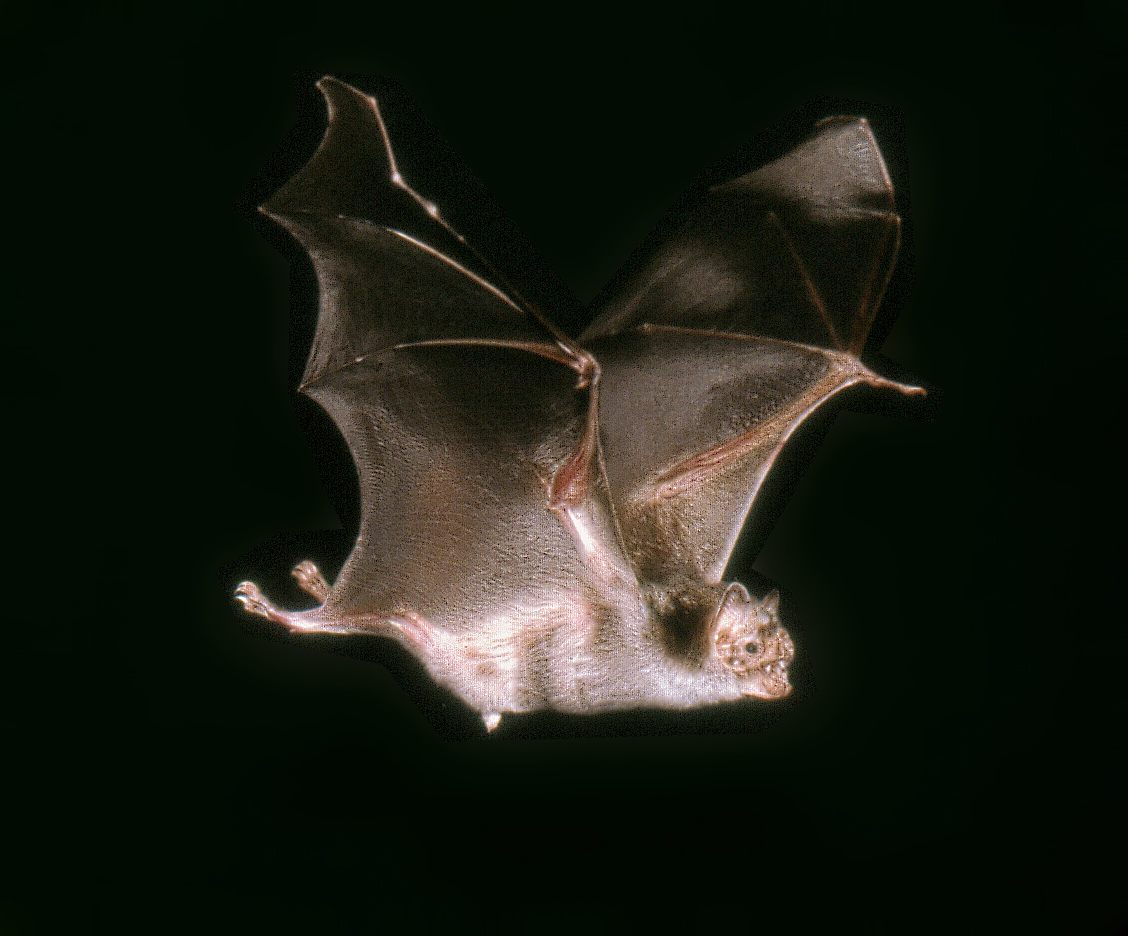
The common vampire bat (Desmodus rotundus) is a small bat of Latin America that feeds on the blood of mammals and birds. It is one of only three living bat species with a blood diet and is also a vector of rabies for livestock.
The common vampire bat (Desmodus rotundus) is a small bat of Latin America that feeds on the blood of mammals and birds. It is one of only three living bat species with a blood diet and is also a vector of rabies for livestock.
🧬 Field Guide Specimen: Open Vampire Bat in the CRV Science Field Guide to log the specimen, see its place among the Mammals lineages in the Cladogram Explorer, and test your recall in the Red List conservation game.
Finding a Vein: How Does It Sense Heat?
Pits on the face house heat sensors that detect infrared radiation from warm blood vessels beneath the skin. A variant of the heat-sensitive TRPV1 channel in the bat's nerve endings is tuned to a lower temperature threshold than in other mammals.
Anticoagulant Saliva
The bat's saliva keeps blood flowing and has been studied for a drug against stroke. The bat makes a tiny incision with razor-sharp incisors and laps up blood.
Sharing Blood: Reciprocal Altruism
A bat that fails to feed for two nights can starve, so roost mates regurgitate blood for hungry neighbors, often those who have shared with them before. Gerald Wilkinson's study of this behavior is a key example of reciprocal altruism.
Vampire Bat at a Glance
| Property | Value |
|---|---|
| Scientific name | Desmodus rotundus |
| Kingdom | Animalia |
| Phylum | Chordata |
| Class | Mammalia |
| Order | Chiroptera |
| Family | Phyllostomidae |
| Field Guide group | Mammals: Eutheria (Placentals) |
| Diagnostic feature (Field Guide) | Demonstrates obligate hematophagy, reciprocal altruism, and specialized blood-feeding saliva. |
| IUCN Red List status | Least Concern (LC), assessed 2015 |
| Diet | Blood |
See Also
- Little Brown Bat — an insect-eating bat
- Natural selection — the evolution of cooperation