American Alligator
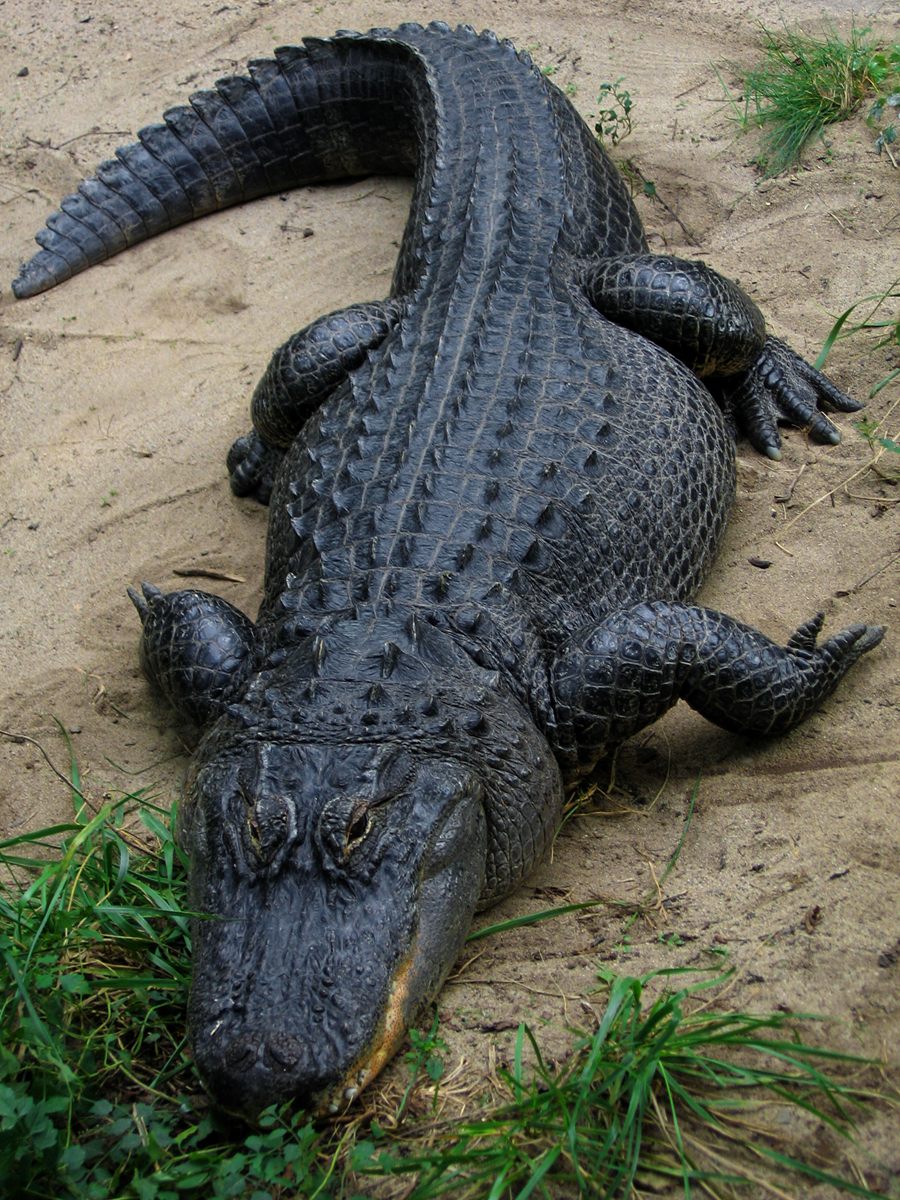
The American alligator (Alligator mississippiensis) is a large crocodilian of the southeastern United States, up to about 4 meters long.
The American alligator (Alligator mississippiensis) is a large crocodilian of the southeastern United States, up to about 4 meters long. Hunted to near extinction by the 1960s, it recovered under protection and was removed from the endangered species list in 1987.
🧬 Field Guide Specimen: Open American Alligator in the CRV Science Field Guide to log the specimen, see its place among the Reptilia lineages in the Cladogram Explorer, and test your recall in the Red List conservation game.
Temperature and Sex
The sex of an alligator embryo depends on nest temperature. Cooler nests, around 30 °C, produce mostly females, and nests near 34 °C produce males. The mother builds a mound of vegetation to incubate her eggs and guards the nest and the hatchlings.
An Ecosystem Engineer
Alligators dig "gator holes" that retain water in the dry season and shelter fish and other animals. A bite force of several thousand newtons crushes turtle shells. They bellow in chorus in the breeding season.
Close Relatives of Birds
Crocodilians are the closest living relatives of birds, forming with them the archosaurs. Both groups share a four-chambered heart and parental care, and the group survived the extinction that eliminated the non-avian dinosaurs.
American Alligator at a Glance
| Property | Value |
|---|---|
| Scientific name | Alligator mississippiensis |
| Kingdom | Animalia |
| Phylum | Chordata |
| Class | Reptilia |
| Order | Crocodilia |
| Family | Alligatoridae |
| Field Guide group | Reptilia (Reptiles) |
| Diagnostic feature (Field Guide) | Represents the archosaur lineage; showcases a 4-chambered heart and temperature-dependent sex determination. |
| IUCN Red List status | Least Concern (LC), assessed 2019 |
| Sex determination | Temperature-dependent |