Nile Crocodile
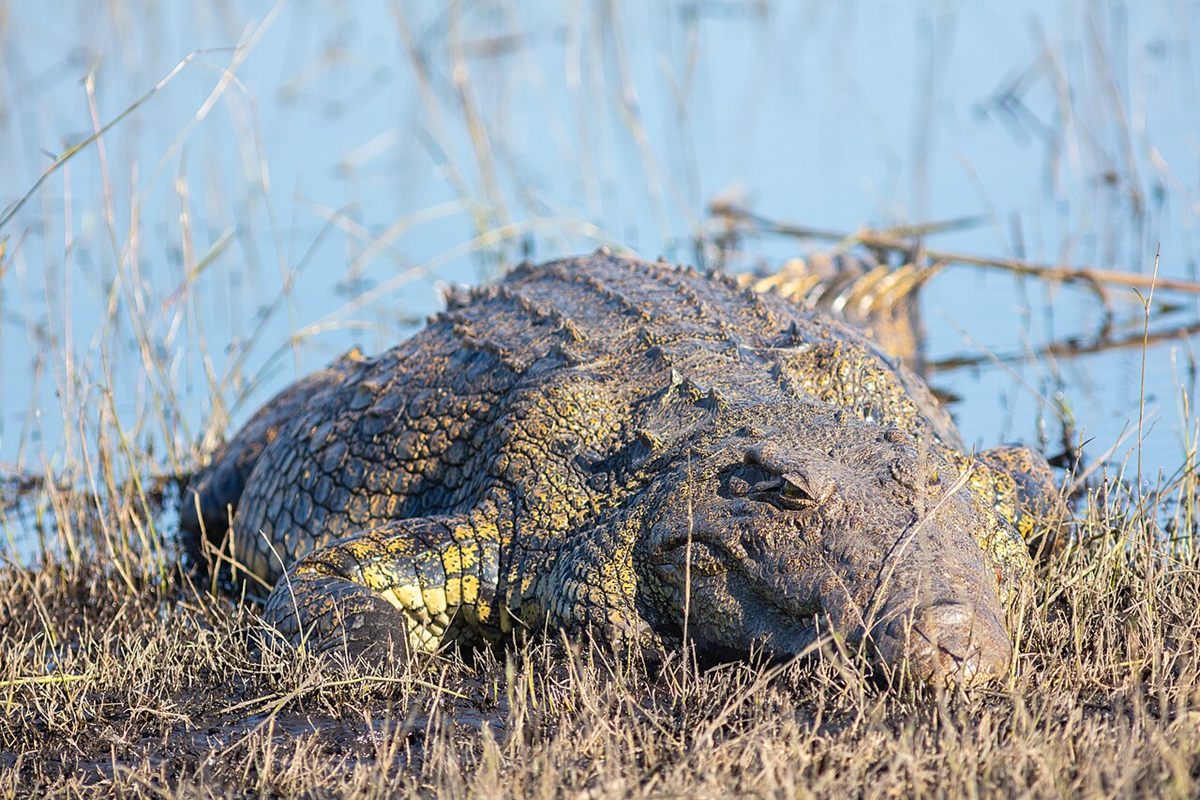
The Nile crocodile (Crocodylus niloticus) is a large predator of the rivers, lakes and swamps of sub-Saharan Africa, growing to about 5 meters. It is the apex predator of many African waterways.
The Nile crocodile (Crocodylus niloticus) is a large predator of the rivers, lakes and swamps of sub-Saharan Africa, growing to about 5 meters. It is the apex predator of many African waterways.
🧬 Field Guide Specimen: Open Nile Crocodile in the CRV Science Field Guide to log the specimen, see its place among the Reptilia lineages in the Cladogram Explorer, and test your recall in the Red List conservation game.
Ambush at the River Crossing
Crocodiles lie almost submerged and explode from the water to seize animals drinking or crossing, such as the wildebeest during the Serengeti migration. They use a "death roll" to tear off pieces of prey.
Caring Mothers
The female guards her nest of eggs buried in sand, and when the hatchlings call from inside the eggs she digs them out and carries them gently in her mouth to the water. Nest temperature determines the sex of the young.
People and Crocodiles
The species is responsible for many human deaths each year, while the animals themselves were heavily hunted for skins. Populations have rebounded in many areas under protection. See American Alligator.
Nile Crocodile at a Glance
| Property | Value |
|---|---|
| Scientific name | Crocodylus niloticus |
| Kingdom | Animalia |
| Phylum | Chordata |
| Class | Reptilia |
| Order | Crocodilia |
| Family | Crocodylidae |
| Field Guide group | Reptilia (Reptiles) |
| Diagnostic feature (Field Guide) | Huge armored river predator with bony back plates, a V-shaped snout, and interlocking teeth visible with the mouth shut. |
| IUCN Red List status | Least Concern (LC), assessed 2019 |
| Maximum length | About 5 meters |
See Also
- American Alligator — another crocodilian
- Nile Monitor — an egg raider