Saltwater Crocodile
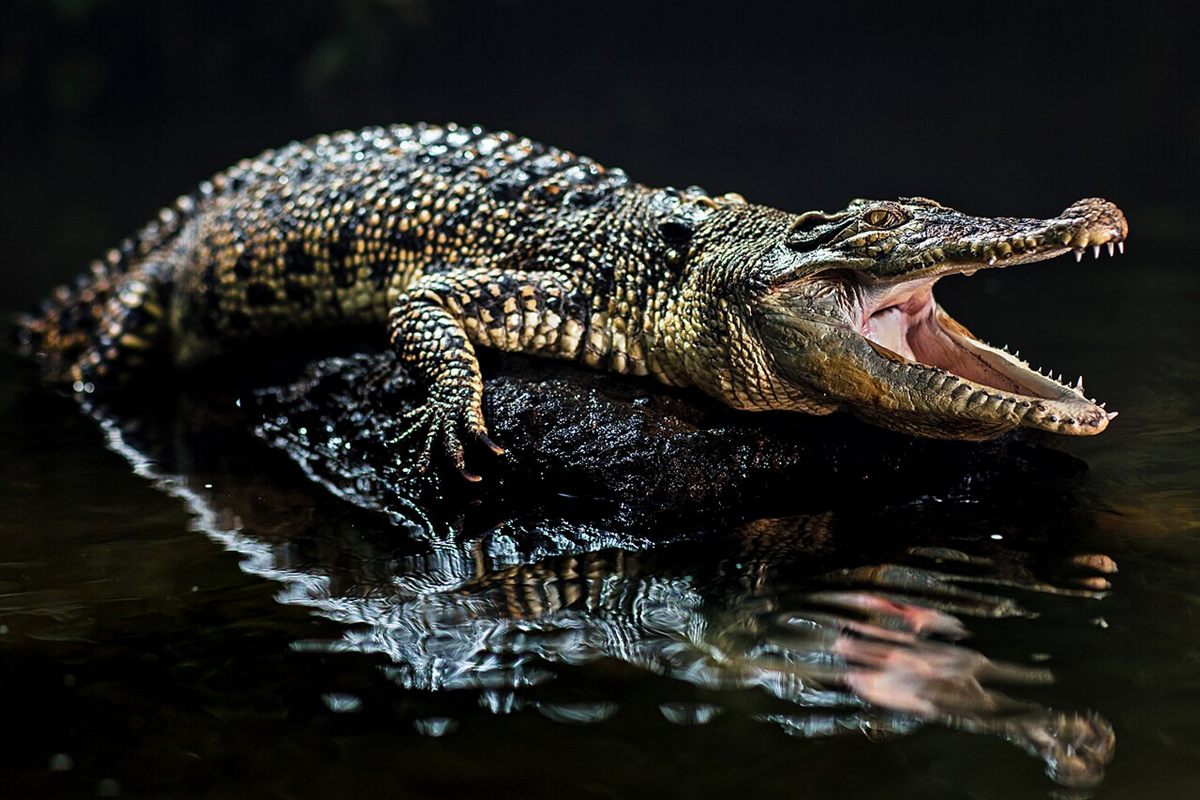
The saltwater crocodile (Crocodylus porosus) is the largest living reptile, with big males reaching 5 to 6 meters. It lives in coastal waters, mangroves and rivers from India through Southeast Asia to northern Australia.
The saltwater crocodile (Crocodylus porosus) is the largest living reptile, with big males reaching 5 to 6 meters. It lives in coastal waters, mangroves and rivers from India through Southeast Asia to northern Australia.
🧬 Field Guide Specimen: Open Saltwater Crocodile in the CRV Science Field Guide to log the specimen, see its place among the Reptilia lineages in the Cladogram Explorer, and test your recall in the Red List conservation game.
The Strongest Bite Measured
In tests of crocodilians, a large saltwater crocodile produced a bite force of more than sixteen thousand newtons, the highest measured for any living animal. The crocodile's jaws are designed for gripping and crushing.
Ocean Voyagers and Salt Glands
Saltwater crocodiles can travel hundreds of kilometers across open sea, riding currents. Glands on the tongue excrete salt, allowing them to live in saltwater. They colonized remote Pacific islands in this way.
Recovery From Hunting
Hunted for skin until the 1970s, populations in northern Australia have recovered under protection and farming. See Gharial.
Saltwater Crocodile at a Glance
| Property | Value |
|---|---|
| Scientific name | Crocodylus porosus |
| Kingdom | Animalia |
| Phylum | Chordata |
| Class | Reptilia |
| Order | Crocodilia |
| Family | Crocodylidae |
| Field Guide group | Reptilia (Reptiles) |
| Diagnostic feature (Field Guide) | Largest living reptile, over 6 meters long; salt glands on its tongue let it cross open ocean between islands. |
| IUCN Red List status | Least Concern (LC), assessed 2021 |
| Maximum length | About 5 to 6 meters |