American Giant Millipede
The American giant millipede (Narceus americanus) is a large, smooth, cylindrical millipede of eastern North American woodlands, up to about 10 to 12 centimeters long. It is a slow-moving forest-floor recycler.
The American giant millipede (Narceus americanus) is a large, smooth, cylindrical millipede of eastern North American woodlands, up to about 10 to 12 centimeters long. It is a slow-moving forest-floor recycler.
🧬 Field Guide Specimen: Open American Giant Millipede in the CRV Science Field Guide to log the specimen, see its place among the Ecdysozoa lineages in the Cladogram Explorer, and test your recall in the Red List conservation game.
Chemical Defense
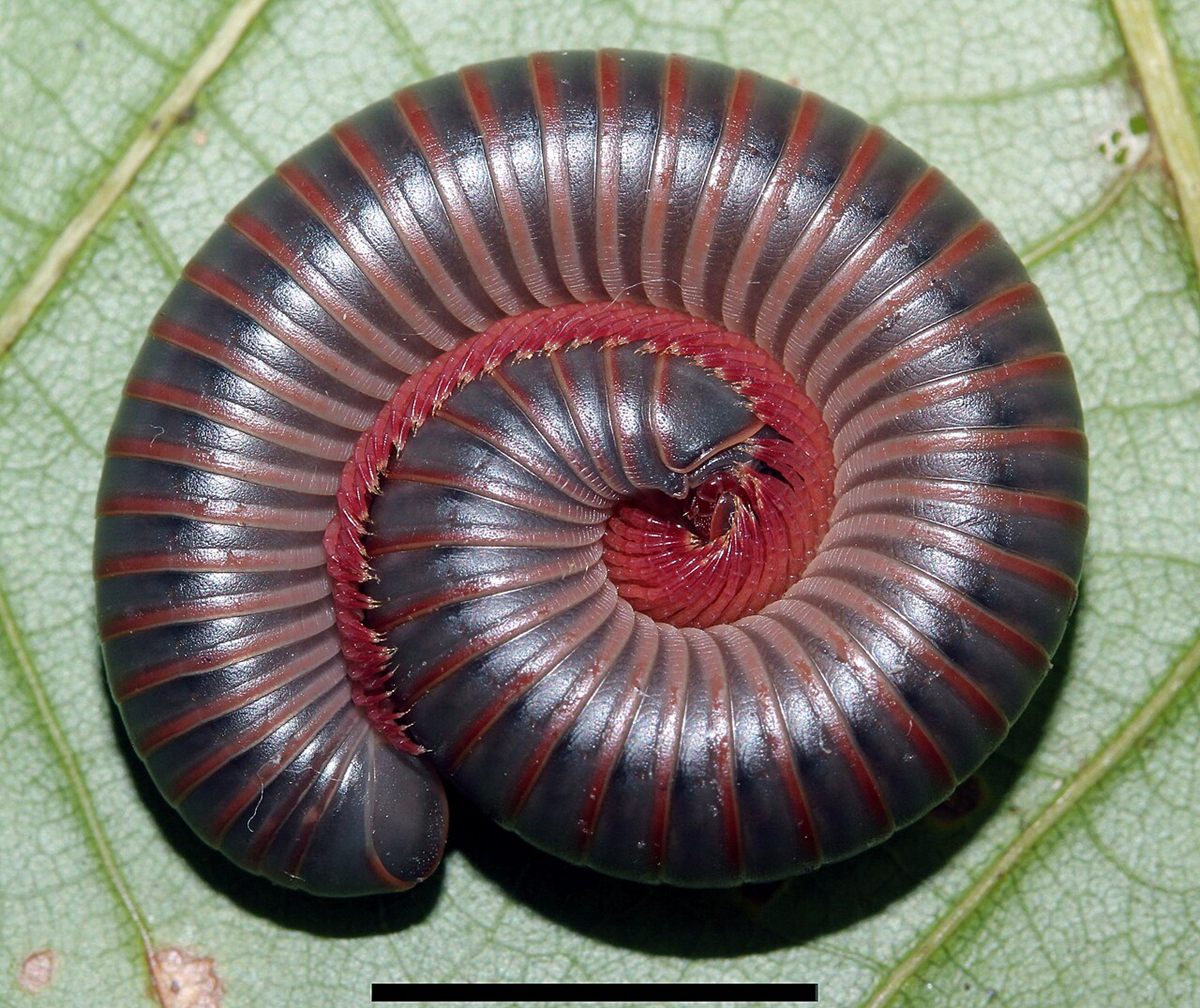
When disturbed, the millipede secretes a fluid containing quinones from glands along its sides, which stains skin brown and can irritate eyes. It also coils into a spiral to protect its soft underside.
Litter Processors
Millipedes eat decaying leaves and wood, passing the fragments to fungi and bacteria. They are among the main decomposers in deciduous forests. See Giant African Millipede.
Life Cycle
The animal lives for several years, molting as it grows and adding body segments. The females lay eggs in soil.
American Giant Millipede at a Glance
| Property | Value |
|---|---|
| Scientific name | Narceus americanus |
| Kingdom | Animalia |
| Phylum | Arthropoda |
| Class | Diplopoda |
| Order | Spirobolida |
| Family | Spirobolidae |
| Field Guide group | Ecdysozoa: Mandibulata (Mandibulates) |
| Diagnostic feature (Field Guide) | Glossy dark cylindrical body with red-edged rings and two pairs of legs on most segments; coils into a spiral when threatened. |
| Class | Diplopoda |
| Length | Up to about 10 to 12 centimeters |
See Also
- Giant African Millipede — a similar millipede
- House Centipede — a centipede