American Kestrel
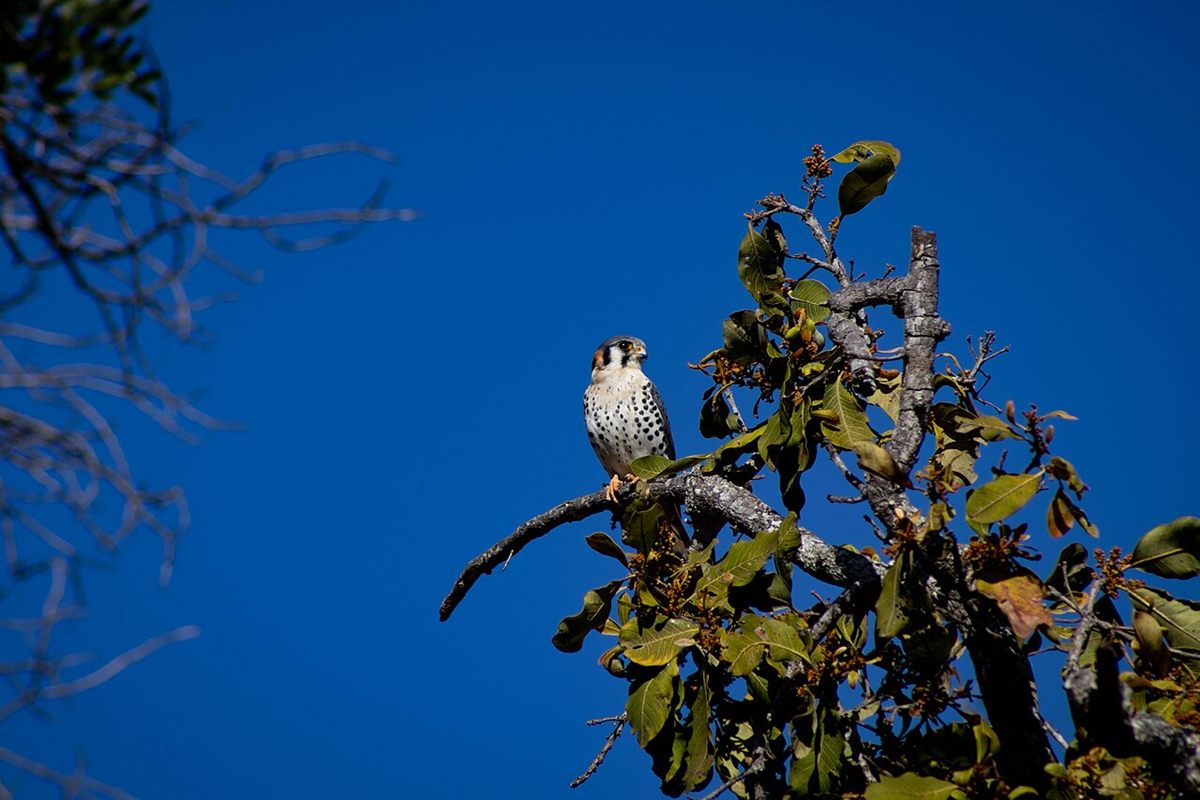
The American kestrel (Falco sparverius) is the smallest and most widespread falcon in North America, no larger than a jay. The male has blue-gray wings and a rusty back, while the female is rusty with bars.
The American kestrel (Falco sparverius) is the smallest and most widespread falcon in North America, no larger than a jay. The male has blue-gray wings and a rusty back, while the female is rusty with bars.
🧬 Field Guide Specimen: Open American Kestrel in the CRV Science Field Guide to log the specimen, see its place among the Reptilia lineages in the Cladogram Explorer, and test your recall in the Red List conservation game.
Hover Hunting
Kestrels hover over fields, facing the wind, before diving on grasshoppers, mice and small birds. They often perch on wires and fence posts watching for prey. They can see ultraviolet light, which may help them find rodent trails.
Cavity Nesters and Nest Boxes
Kestrels nest in tree holes and in boxes. Nest box programs have helped replace lost nest sites, but numbers have fallen across much of North America in recent decades, possibly due to habitat change and pesticides.
Sexual Differences
Males and females differ in color, unlike most raptors. Falcons have a notch in the beak (tomial tooth) for severing the spine of prey. See Peregrine Falcon.
American Kestrel at a Glance
| Property | Value |
|---|---|
| Scientific name | Falco sparverius |
| Kingdom | Animalia |
| Phylum | Chordata |
| Class | Aves |
| Order | Falconiformes |
| Family | Falconidae |
| Field Guide group | Reptilia: Aves (Birds) |
| Diagnostic feature (Field Guide) | Small raptor with a rusty back, blue-gray wings, and two black facial 'mustache' stripes; hovers in place before diving on insects. |
| IUCN Red List status | Least Concern (LC), assessed 2025 |
| Family | Falconidae |
| Nesting | Tree cavities and nest boxes |
See Also
- Peregrine Falcon — a larger falcon
- Gyrfalcon — the largest falcon