Peregrine Falcon
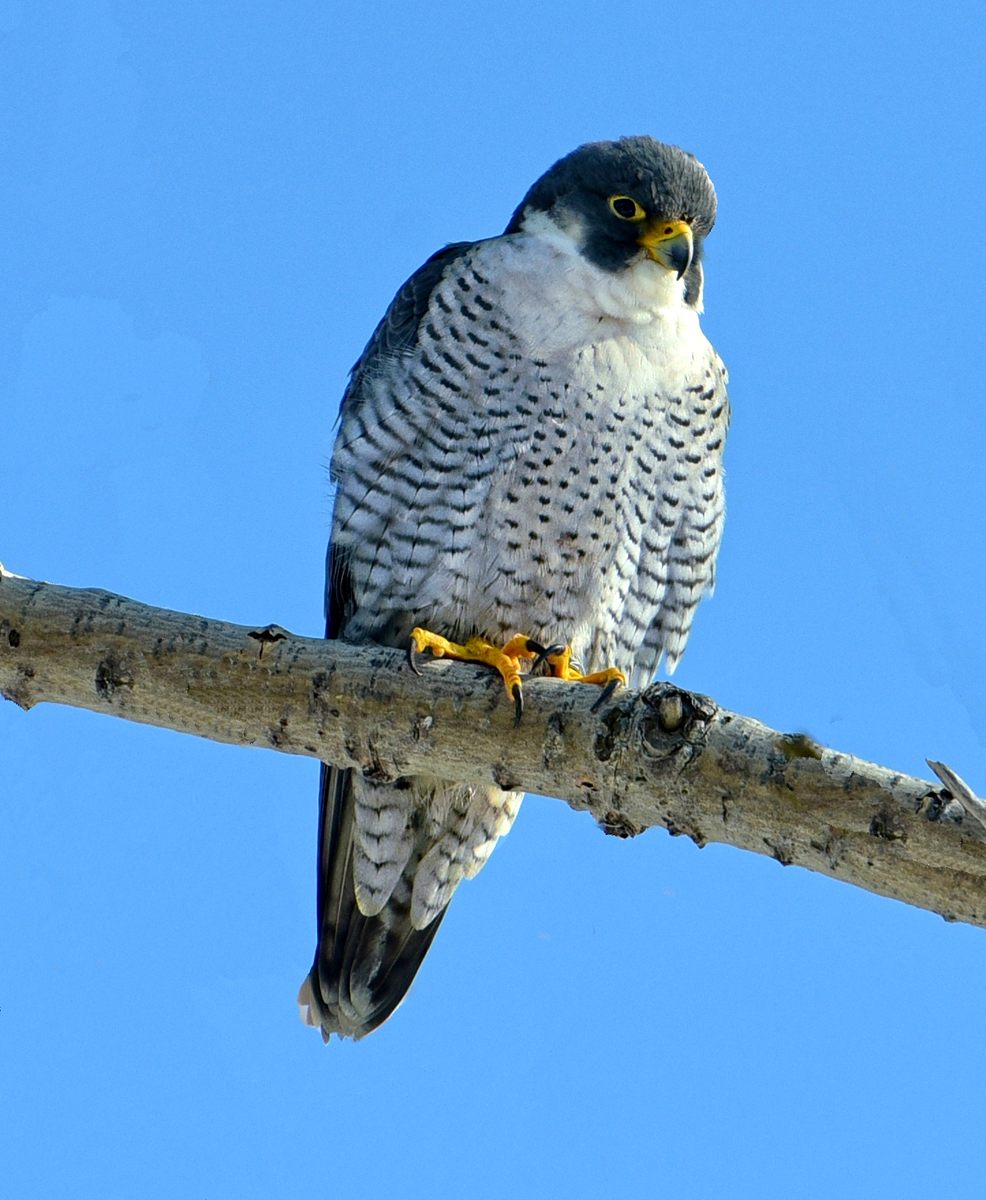
The peregrine falcon (Falco peregrinus) is the fastest animal in the world, reaching over 300 kilometers per hour in a hunting dive called a stoop. It nests on cliffs and, increasingly, on skyscrapers, on every continent except Antarctica.
The peregrine falcon (Falco peregrinus) is the fastest animal in the world, reaching over 300 kilometers per hour in a hunting dive called a stoop. It nests on cliffs and, increasingly, on skyscrapers, on every continent except Antarctica.
🧬 Field Guide Specimen: Open Peregrine Falcon in the CRV Science Field Guide to log the specimen, see its place among the Reptilia lineages in the Cladogram Explorer, and test your recall in the Red List conservation game.
Built for the Stoop: How Does It Survive 300 km/h?
A streamlined body, stiff wings and small bony cones in the nostrils (which are thought to regulate airflow) help the falcon in a dive. Its eyes have a very high density of photoreceptors, letting it track prey from far above.
The DDT Crash
In the mid-twentieth century the pesticide DDT, concentrated up the food chain, made eggshells so thin that they broke, and peregrines vanished from much of North America and Europe. After DDT was banned in the 1970s and captive-bred birds were released, the species recovered and was removed from the US endangered species list in 1999.
A City Bird
Tall buildings mimic cliffs, and pigeons provide food, so many cities now host nesting peregrines. The recovery is a conservation success story.
Peregrine Falcon at a Glance
| Property | Value |
|---|---|
| Scientific name | Falco peregrinus |
| Kingdom | Animalia |
| Phylum | Chordata |
| Class | Aves |
| Order | Falconiformes |
| Family | Falconidae |
| Field Guide group | Reptilia: Aves (Birds) |
| Diagnostic feature (Field Guide) | Pointed delta wings enabling 320+ km/h stoop dives, bony nasal tubercles guiding airflow. |
| IUCN Red List status | Least Concern (LC), assessed 2021 |
| Diving speed | Over 300 km/h |
See Also
- Food web — biomagnification of pesticides
- Natural selection — adaptations for speed