Anorthosite
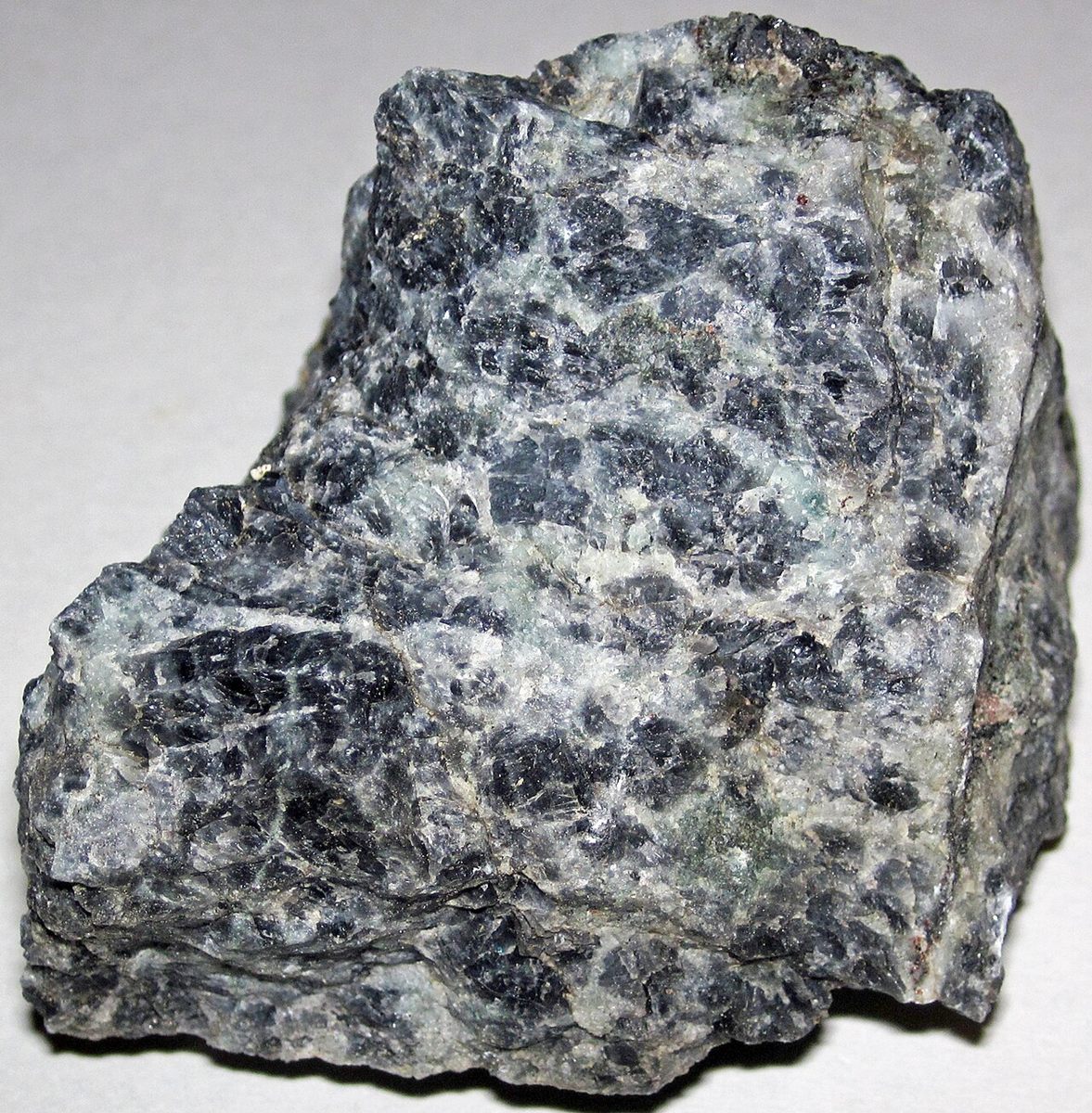
Anorthosite is a plutonic rock made of more than 90 percent plagioclase feldspar. It occurs in two very different settings: large masses in ancient continental crust, and the pale highlands of the Moon.
Anorthosite is a plutonic rock made of more than 90 percent plagioclase feldspar. It occurs in two very different settings: large masses in ancient continental crust, and the pale highlands of the Moon.
🪨 Geology Guide Specimen: Open Anorthosite in the CRV Science Rock & Mineral ID Guide to log the specimen, compare it with the other 7 subgroups of Igneous, and test your eye in LithoClade.
Plagioclase Flotation: How Do You Build a Rock from One Mineral?
In a magma rich in iron and magnesium, calcium-rich plagioclase can be less dense than the surrounding liquid. Crystals that grow in a chamber may then float and pile up, leaving a rock that is almost entirely feldspar. On Earth the details are debated, with some models having plagioclase accumulate near the base of the crust and rise as buoyant masses.
Lunar Highlands: Why Does the Moon Have Anorthosite?
The bright highlands of the Moon are made largely of anorthosite, which is why they reflect more sunlight than the dark basaltic maria. The leading explanation is a magma ocean: as the early Moon's outer layers crystallized, plagioclase floated to form a light crust. Anorthosite fragments in the Apollo 11 samples first suggested the idea, and an Apollo 15 anorthosite was nicknamed the Genesis Rock.
Terrestrial Occurrences: Where Are the Earth Examples?
Large Proterozoic anorthosite massifs occur in the Adirondack Mountains, in Labrador and in southern Norway, and older Archean anorthosites occur in Greenland and elsewhere. The plagioclase of some Labrador anorthosites displays flashes of blue and green, called labradorescence, from microscopic internal layering.
Anorthosite at a Glance
| Property | Value |
|---|---|
| Type / variety | Cumulate Plagioclase Anorthosite |
| Composition | >90% Calcium-Rich Plagioclase (Labradorite / Bytownite) + <10% Pyroxene |
| Geology Guide group | Igneous Rocks (Plutonic & Volcanic) |
| Rock Classification | Mafic Plutonic (Gabbroids) |
| Mohs hardness | Mohs 6–6.5 |
| Texture / habit | Coarse interlocking tabular plagioclase crystals |
| Density | 2.70–2.80 g/cm³ |
| Lustre and cleavage | Striated cleavage planes often flashing blue-green iridescence |
| Geological setting | Proterozoic layered intrusions and the ancient Lunar Highlands |
| Diagnostic feature (Geology Guide) | Coarse interlocking plutonic rock composed of over 90% calcium-rich plagioclase feldspar crystals—often showing twin striations and blue flashes—formed by crystal flotation in iron-magnesium magma chambers. |
| Plagioclase content | More than 90% |
| Notable settings | Proterozoic massifs and the lunar highlands |