Arkose
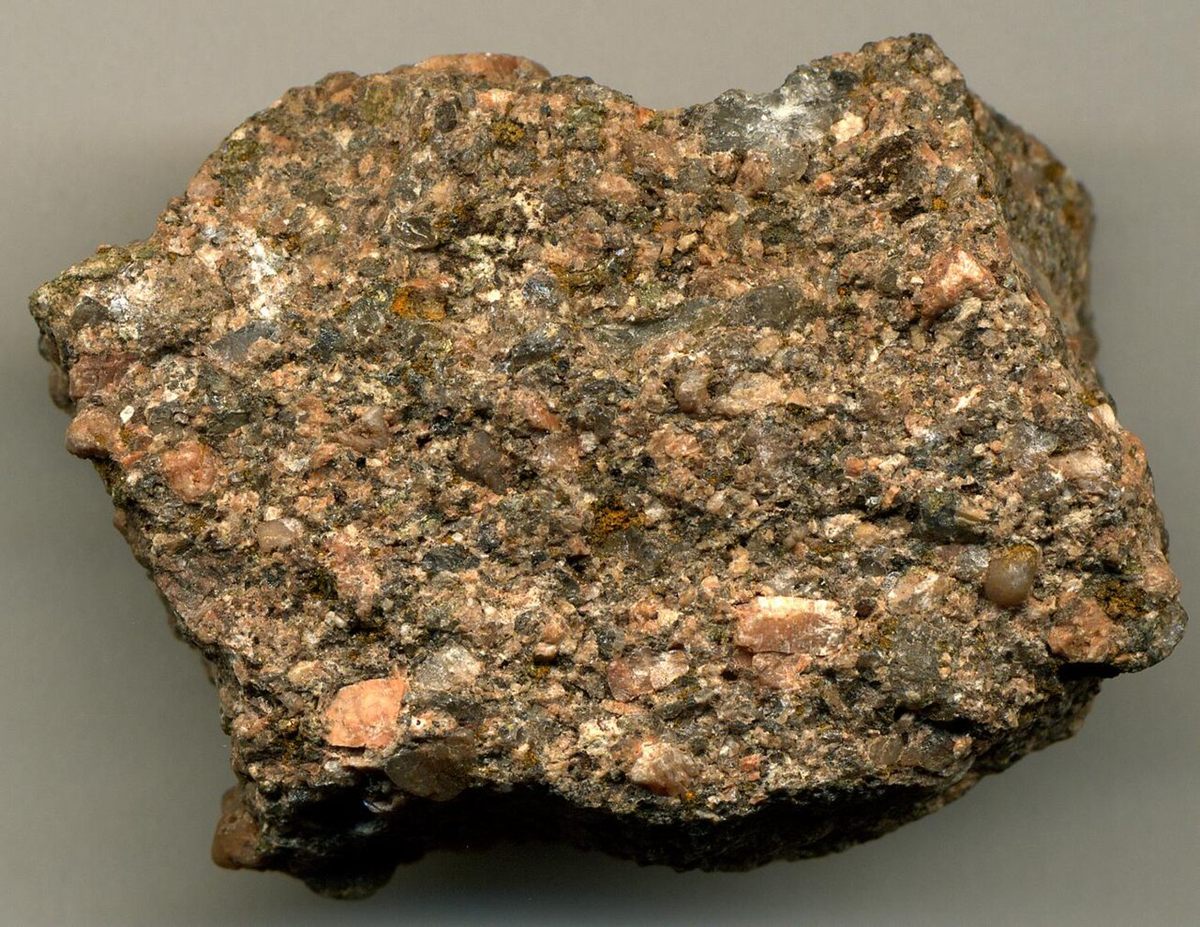
Arkose is a coarse, feldspar-rich sandstone, with at least about 25 percent feldspar, that is typically pink or reddish. It records fast erosion of granite or gneiss with little chemical weathering.
Arkose is a coarse, feldspar-rich sandstone, with at least about 25 percent feldspar, that is typically pink or reddish. It records fast erosion of granite or gneiss with little chemical weathering.
🪨 Geology Guide Specimen: Open Arkose in the CRV Science Rock & Mineral ID Guide to log the specimen, compare it with the other 6 subgroups of Sedimentary, and test your eye in LithoClade.
Surviving Feldspar: What Does It Say About Climate and Relief?
Feldspar breaks down to clay in warm, wet conditions over long periods. Finding it as fresh grains in sandstone means the sediment was eroded rapidly from steep terrain and buried quickly, or that weathering was suppressed by a cold or dry climate.
Source and Setting: Where Does Arkose Form?
Arkose collects in alluvial fans and river valleys at the foot of uplifted granitic mountains, and in rift basins bounded by faults, such as the Triassic basins of eastern North America. The grains are often angular, poorly sorted and mixed with gravel, signs of short transport.
Reading the Source: What Is in the Grains?
Pink potassium feldspar and quartz in arkose mirror the composition of granite, so the rock is a record of the exhumation of a granitic source area. Compared with a mature quartz arenite, arkose is an immature sandstone that has not lost its unstable minerals.
Arkose at a Glance
| Property | Value |
|---|---|
| Type / variety | Feldspathic Alluvial Arkose |
| Composition | Quartz + >25% Pink Potassium Feldspar (Orthoclase/Microcline) + Mica |
| Geology Guide group | Sedimentary Rocks (Clastic, Chemical & Biogenic) |
| Rock Classification | Medium Clastic (Sandstones) |
| Mohs hardness | Mohs 6–6.5 |
| Texture / habit | Coarse, sub-angular 0.2–2 mm grains with poorly sorted matrix |
| Density | 2.55–2.66 g/cm³ |
| Lustre and cleavage | Reddish-pink color with flashing cleavage faces of detrital feldspar |
| Geological setting | Arid alluvial fans and fault basins adjacent to uplifting granitic mountains |
| Diagnostic feature (Geology Guide) | Pinkish-red, coarse-grained clastic rock (0.2–2 mm grains) containing at least 25% angular pink potassium feldspar grains alongside quartz and mica, eroded rapidly from nearby granitic mountains. |
| Feldspar content | At least about 25% |
| Typical color | Pink to red |
See Also
- Quartz Arenite — the mature, quartz-only counterpart
- Granite — the usual source rock
- Potassium — the element in pink alkali feldspar