Granite
Granite is a coarse-grained plutonic igneous rock made mostly of quartz and feldspar, with smaller amounts of mica or amphibole.
Granite is a coarse-grained plutonic igneous rock made mostly of quartz and feldspar, with smaller amounts of mica or amphibole. It crystallizes slowly from silica-rich magma deep in the continental crust, and its visible, interlocking crystals make it the textbook example of an intrusive rock.
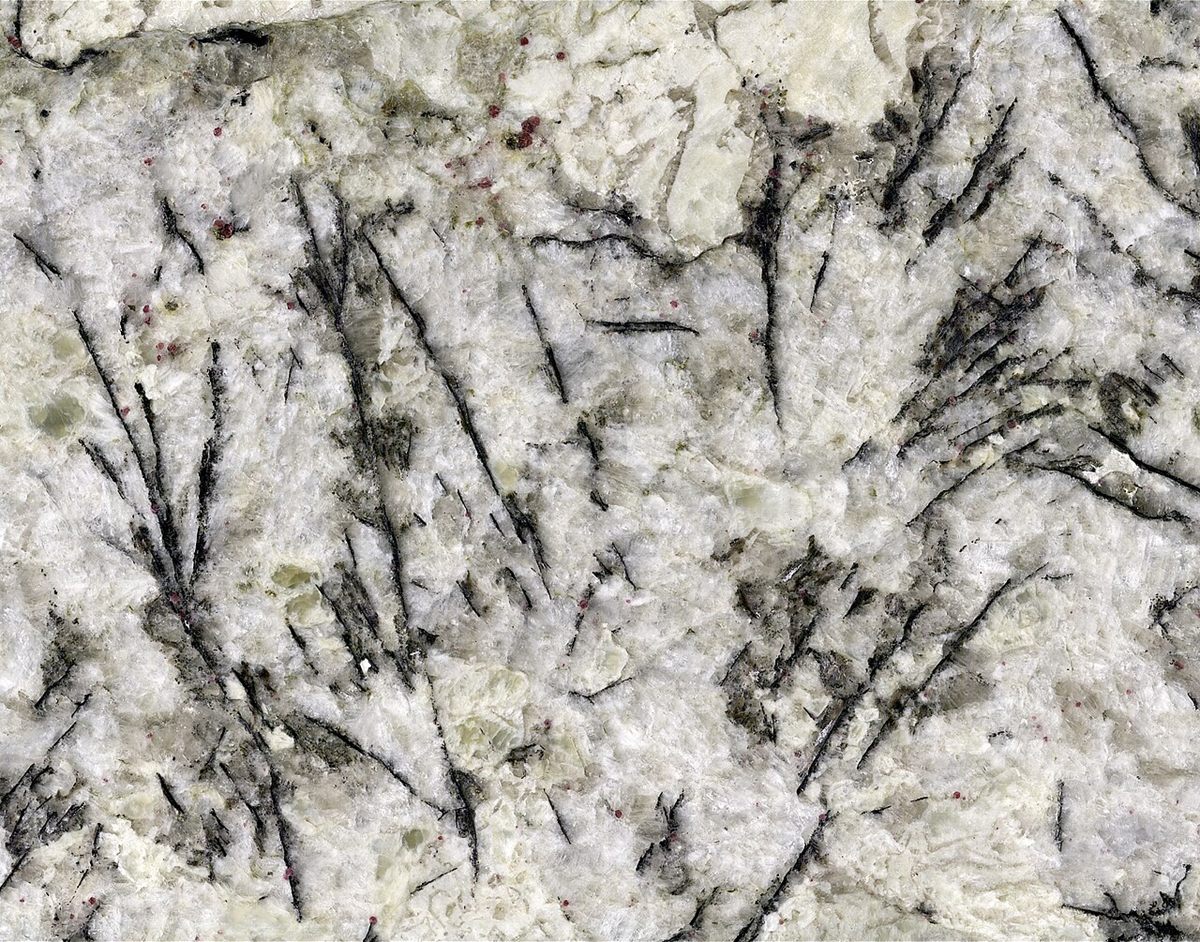
🪨 Geology Guide Specimen: Open Granite in the CRV Science Rock & Mineral ID Guide to log the specimen, compare it with the other 7 subgroups of Igneous, and test your eye in LithoClade.
Formation: How Does Magma Become Granite?
Granitic magma forms when continental crust partly melts, or when mantle-derived melts mix with and differentiate into silica-rich liquid, most often at convergent margins and in collision zones. The buoyant magma rises as bodies called plutons and usually stalls underground before it can erupt. Cooling over thousands to millions of years gives crystals time to grow to millimeters in size, and many plutons merge into huge composite bodies called batholiths, such as the Sierra Nevada of California.
Mineral Makeup: What Are the Grains?
The glassy grey grains are quartz, the pink or white blocky grains are alkali feldspar, the chalky white ones are plagioclase, and the dark flecks are biotite mica or hornblende. Under the IUGS scheme a rock is granite when quartz makes up 20 to 60 percent of its light minerals and alkali feldspar is at least about a third of the feldspar. With more plagioclase than that it is a granodiorite.
Weathering and Use: Why Is Granite Everywhere in Landscapes and Buildings?
Granite is hard and durable, so it stands out as domes, tors and cliffs, but its feldspar slowly alters to clay, crumbling the rock into gravelly grus. People have quarried it for buildings, bridges, monuments and countertops. The trade name "granite" is looser than the geological one and often covers other coarse, light-colored igneous and metamorphic rocks.
Granite at a Glance
| Property | Value |
|---|---|
| Type / variety | Biotite–Hornblende Granite |
| Composition | Quartz (25–35%) + Orthoclase/Microcline (40%) + Na-Plagioclase + Biotite |
| Geology Guide group | Igneous Rocks (Plutonic & Volcanic) |
| Rock Classification | Felsic Plutonic (Granitoids) |
| Mohs hardness | Mohs 6–7 |
| Texture / habit | Coarse interlocking crystals (1–5 mm) |
| Density | 2.65–2.75 g/cm³ |
| Lustre and cleavage | Vitreous grey quartz & pearly pink/white feldspar |
| Geological setting | Deep continental arc batholiths & plutons |
| Diagnostic feature (Geology Guide) | Coarse, visible interlocking grains of smoky translucent quartz, salmon-pink potassium feldspar, white sodium plagioclase, and dark specks of biotite mica cooled slowly miles underground. |
| Extrusive equivalent | Rhyolite |
| Typical setting | Plutons and batholiths in continental crust |
See Also
- Rhyolite — the volcanic rock with granite's chemistry
- Granodiorite — a plagioclase-rich cousin that dominates many arc batholiths
- Plate Tectonics — the setting where granitic magma is made