Rhyolite
Rhyolite is a fine-grained or glassy volcanic rock rich in silica, with more than about 69 weight percent SiO₂.
Rhyolite is a fine-grained or glassy volcanic rock rich in silica, with more than about 69 weight percent SiO₂. It is the extrusive equivalent of granite, and its viscous lavas build domes and thick flows or erupt in some of the largest explosive eruptions on Earth.
🪨 Geology Guide Specimen: Open Rhyolite in the CRV Science Rock & Mineral ID Guide to log the specimen, compare it with the other 7 subgroups of Igneous, and test your eye in LithoClade.
Viscous Silicic Lava: Why Are Rhyolite Eruptions So Explosive?
Silica-rich melt is highly polymerized and can be a million times more viscous than basalt. Dissolved water and gas cannot escape easily, so pressure builds until the magma fragments into ash and pumice. The largest rhyolitic eruptions form calderas and spread ash and pyroclastic flows across thousands of square kilometers, as at Yellowstone.
Texture and Phenocrysts: What Does It Look Like?
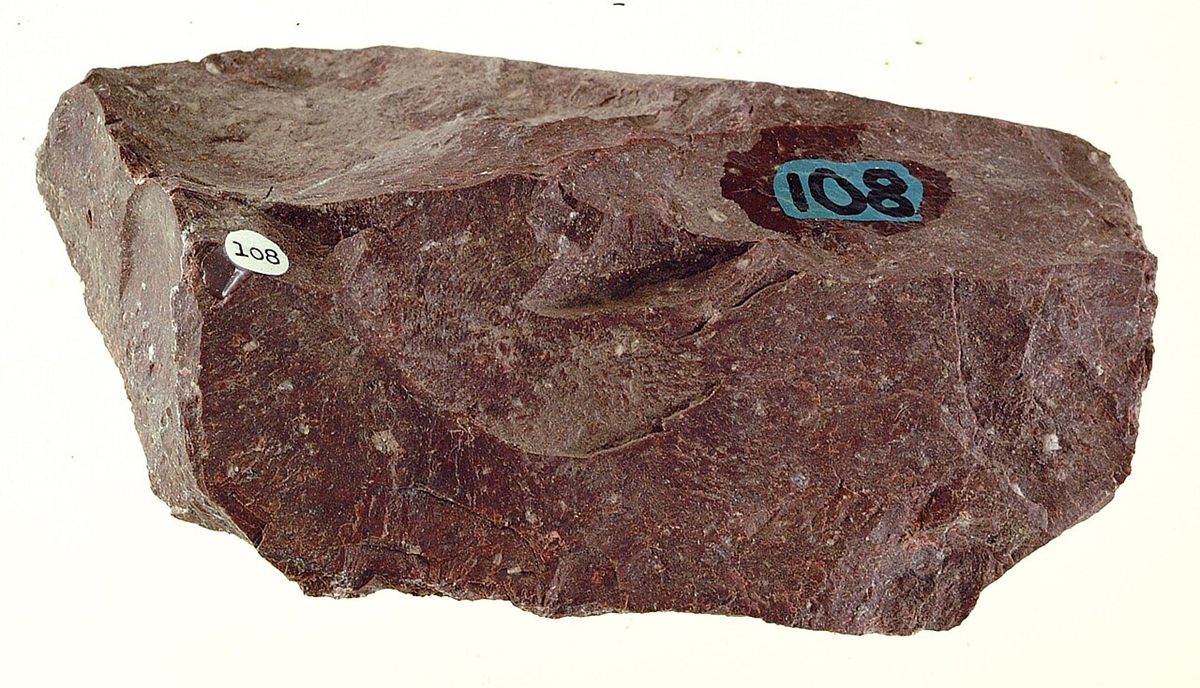
Rhyolite is typically pink, buff, grey or lavender with a microscopic groundmass, often showing swirling flow bands. Scattered glassy phenocrysts of quartz and sanidine, a high-temperature alkali feldspar, are common. Spherulites and gas cavities called lithophysae are frequent, and quenched equivalents include obsidian and pumice.
Distribution: Where Is It Found?
Rhyolite erupts where thick continental crust is hot enough to melt: in continental hotspots such as Yellowstone, in rifts such as New Zealand's Taupo Volcanic Zone, and in volcanic arcs. It also occurs in Iceland, where rhyolite is produced by remelting and differentiation of basalt.
Rhyolite at a Glance
| Property | Value |
|---|---|
| Type / variety | Flow-Banded Silicic Rhyolite |
| Composition | Microcrystalline Quartz + Sanidine + Plagioclase (>69% SiO₂) |
| Geology Guide group | Igneous Rocks (Plutonic & Volcanic) |
| Rock Classification | Felsic Volcanic & Glassy |
| Mohs hardness | Mohs 6–7 |
| Texture / habit | Microcrystalline groundmass with swirling flow bands |
| Density | 2.40–2.60 g/cm³ |
| Lustre and cleavage | Dull-to-vitreous buff, pink, or lavender matrix |
| Geological setting | Continental calderas and silicic lava domes |
| Diagnostic feature (Geology Guide) | Pale pink, buff, or lavender surface-erupted rock with microscopic groundmass crystals, swirling contorted flow-banding, and scattered vitreous sanidine phenocrysts. |
| Plutonic equivalent | Granite |
| Silica content | More than about 69 wt% SiO₂ |