Pumice
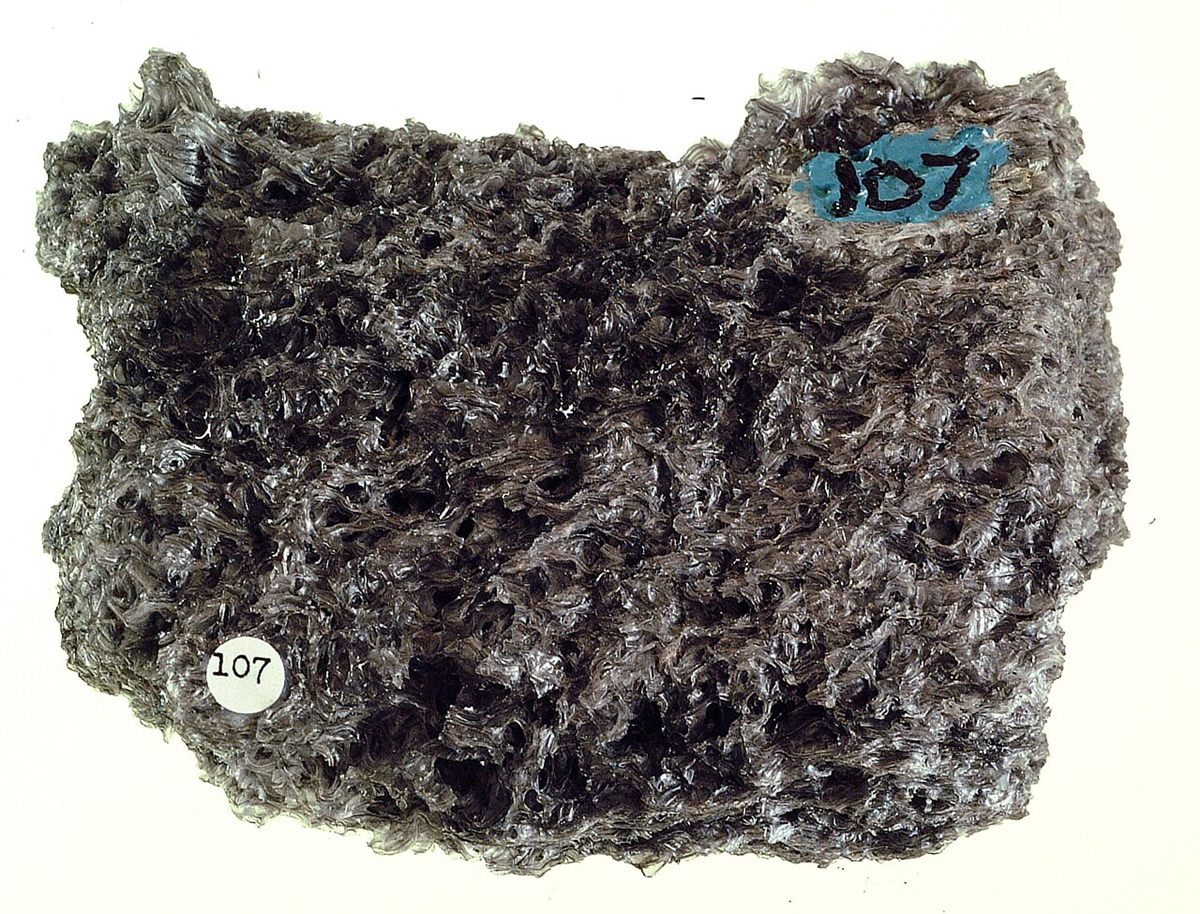
Pumice is a pale, light, glassy volcanic rock so full of gas bubbles that many pieces float on water. It forms when gas-rich silicic magma foams during an explosive eruption and is quenched before the bubbles can escape.
Pumice is a pale, light, glassy volcanic rock so full of gas bubbles that many pieces float on water. It forms when gas-rich silicic magma foams during an explosive eruption and is quenched before the bubbles can escape.
🪨 Geology Guide Specimen: Open Pumice in the CRV Science Rock & Mineral ID Guide to log the specimen, compare it with the other 7 subgroups of Igneous, and test your eye in LithoClade.
Frothy Glass: How Does a Rock Come to Float?
Well over half of pumice's volume is empty space, in the form of millions of tiny, often elongated vesicles separated by thin glass walls. Its bulk density can be below that of water, so pieces float until the pores slowly fill. Rafts of floating pumice from submarine eruptions have drifted for months to years across oceans, carrying marine organisms to new shores.
Eruption Link: How Does Pumice Form in Plinian Eruptions?
As silicic magma rises, pressure falls and dissolved water and carbon dioxide come out of solution as bubbles. In a violent eruption the foam is blown apart and cooled in seconds. Pumice then falls as lapilli and blocks or travels in pyroclastic flows, and when it welds it becomes welded tuff.
Uses: What Is Pumice Good For?
The same properties that make it light also make it abrasive and insulating. Pumice is used as a polishing and exfoliating abrasive, in stonewashing, as a lightweight concrete aggregate and as a soil amendment that holds air and water. It is often confused with scoria, which has thicker walls and is darker and denser.
Pumice at a Glance
| Property | Value |
|---|---|
| Type / variety | Vesicular Frothy Silicic Volcanic Glass |
| Composition | High-silica (65–75% SiO₂) amorphous cellular walls with 70–85% pore space |
| Geology Guide group | Igneous Rocks (Plutonic & Volcanic) |
| Rock Classification | Felsic Volcanic & Glassy |
| Mohs hardness | Mohs 5.5–6 |
| Texture / habit | Micro-vesicular frothy foam (floats on water) |
| Density | 0.40–0.90 g/cm³ (bulk) |
| Lustre and cleavage | Silky-to-dull fibrous pore walls |
| Geological setting | Explosive Plinian and subaqueous caldera eruptions |
| Diagnostic feature (Geology Guide) | Pale cream-to-grey, feather-light stone riddled with millions of microscopic gas-bubble tubes; its porosity exceeds 75%, allowing hand specimens to float effortlessly on water. |
| Void space | Well over half of the rock volume |
| Chemistry | Usually rhyolitic or dacitic glass |
See Also
- Scoria — the darker, denser basaltic cinder
- Obsidian — dense, gas-poor volcanic glass
- Welded Tuff — pumice and ash fused by heat