Lapilli Tuff
Lapilli tuff is a pyroclastic rock whose fragments are mostly lapilli, pieces 2 to 64 millimeters across, set in finer ash. The word lapilli is Italian for 'little stones.'
Lapilli tuff is a pyroclastic rock whose fragments are mostly lapilli, pieces 2 to 64 millimeters across, set in finer ash. The word lapilli is Italian for "little stones."
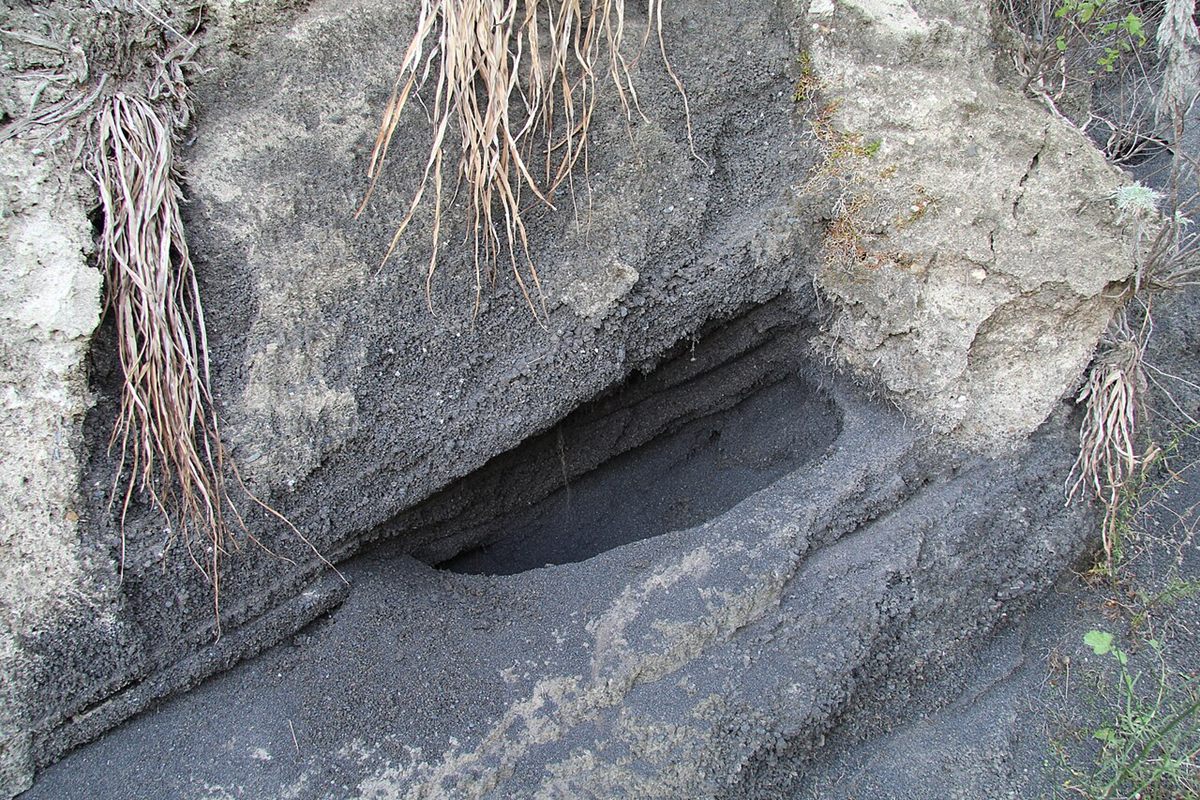
🪨 Geology Guide Specimen: Open Lapilli Tuff in the CRV Science Rock & Mineral ID Guide to log the specimen, compare it with the other 7 subgroups of Igneous, and test your eye in LithoClade.
Size Matters: What Counts as Lapilli?
Volcanic fragments are sorted by size: ash is under 2 millimeters, lapilli run from 2 to 64 millimeters, and bombs and blocks are larger than 64 millimeters. A rock is called lapilli tuff when lapilli are the main fragments, and tuff when ash dominates.
Accretionary Lapilli: How Do Ash Pellets Form?
In wet eruption clouds, ash sticks to moisture and builds up in concentric layers around a droplet or a particle, like a hailstone. These accretionary lapilli are pea-sized pellets that survive burial and are a clue that the eruption involved water, as when magma meets groundwater or the sea.
Fall and Flow: How Are the Deposits Laid Down?
Lapilli fall from eruption columns, blanketing the ground in layers that thin away from the vent, and can also be carried in pyroclastic flows and surges. The pumice lapilli that buried Pompeii in AD 79 are a famous example of a fall deposit, and welded versions of such deposits grade into welded tuff.
Lapilli Tuff at a Glance
| Property | Value |
|---|---|
| Type / variety | Accretionary Lapilli Pyroclastic Tuff |
| Composition | Pea-Sized Volcanic Clasts & Ash Pellets (2–64 mm) in Consolidated Ash |
| Geology Guide group | Igneous Rocks (Plutonic & Volcanic) |
| Rock Classification | Pyroclastic (Tephra & Tuffs) |
| Mohs hardness | Mohs 4.5–6 |
| Texture / habit | Concentric pea-sized pellets and pumice granules (2–64 mm) |
| Density | 1.80–2.30 g/cm³ |
| Lustre and cleavage | Earthy-to-indurated ash matrix packed with rounded ash spheres |
| Geological setting | Steam-charged phreatomagmatic eruptions and ash plumes |
| Diagnostic feature (Geology Guide) | Indurated volcanic ash rock packed with pea-to-walnut-sized (2–64 mm) concentric ash pellets and pumice granules that accreted like hailstones inside moisture-rich eruption clouds. |
| Fragment size | 2 to 64 mm |
| Name origin | Italian lapilli, "little stones" |
See Also
- Welded Tuff — a fused ash-flow deposit
- Scoria — cinder that falls as lapilli-sized pieces
- Pumice — frothy glass that falls as lapilli