Volcanic Bomb
A volcanic bomb is a mass of molten or partly molten lava larger than 64 millimeters that is thrown from a vent and shaped by its flight before it lands.
A volcanic bomb is a mass of molten or partly molten lava larger than 64 millimeters that is thrown from a vent and shaped by its flight before it lands.
🪨 Geology Guide Specimen: Open Volcanic Bomb in the CRV Science Rock & Mineral ID Guide to log the specimen, compare it with the other 7 subgroups of Igneous, and test your eye in LithoClade.
Shaped in Flight: Why Do Bombs Have Different Forms?
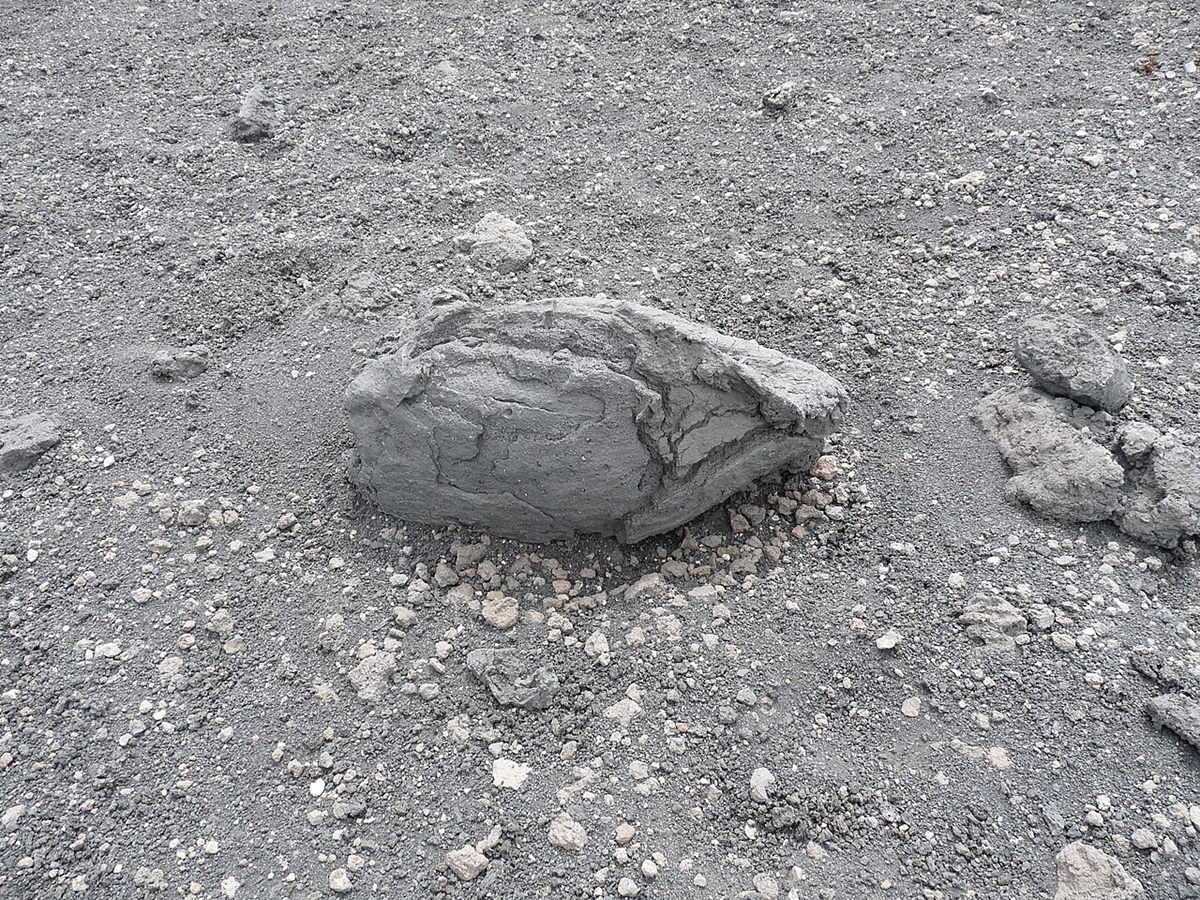
Spinning through the air, a clot of lava stretches into a spindle with twisted, pointed ends. Bread-crust bombs form when the outside hardens and cracks as the still-gassy interior expands. A bomb that lands while still fluid flattens into a splat called a cow-pie bomb.
Bomb or Block: What Is the Difference?
Bombs were liquid when ejected and so are rounded or streamlined, while blocks of the same size were solid and are angular, like those in volcanic breccia. Both belong to the coarsest class of tephra, with fragments larger than 64 millimeters.
Hazard: How Dangerous Are Ballistics?
Large bombs travel ballistically, in arcs unaffected by wind, and can land hundreds of meters to kilometers from the vent. At Japan's Mount Ontake in 2014, falling volcanic rocks were the main cause of death among the hikers killed in a sudden eruption, and exclusion zones around active craters are drawn with ballistic range in mind.
Volcanic Bomb at a Glance
| Property | Value |
|---|---|
| Type / variety | Spindle-Shaped Ballistic Lava Bomb |
| Composition | Basaltic or Andesitic Lava Clast (>64 mm) with Chilled Aerodynamic Crust |
| Geology Guide group | Igneous Rocks (Plutonic & Volcanic) |
| Rock Classification | Pyroclastic (Tephra & Tuffs) |
| Mohs hardness | Mohs 5.5–6 |
| Texture / habit | Streamlined spindle/almond shape or cracked 'bread-crust' rind |
| Density | 2.40–2.85 g/cm³ |
| Lustre and cleavage | Smooth aerodynamic tails with vesicular core |
| Geological setting | Explosive Strombolian and Vulcanian crater vents |
| Diagnostic feature (Geology Guide) | Football-sized clot of molten lava (>64 mm) hurled through the air during an eruption; spinning in flight streamlined its ends into twisted spindle tails and cracked its cooling outer rind like a loaf of bread. |
| Size | Larger than 64 mm |
| Common forms | Spindle, bread-crust, cow-pie |
See Also
- Scoria — smaller frothy cinders from the same type of eruption
- Volcanic Breccia — solid angular blocks cemented together
- Lapilli Tuff — a deposit of smaller fragments