Atlantic Blue Crab
The Atlantic blue crab (Callinectes sapidus) is a swimming crab of estuaries along the western Atlantic coasts, famous in Chesapeake Bay. Its scientific name means 'beautiful swimmer that is savory'.
The Atlantic blue crab (Callinectes sapidus) is a swimming crab of estuaries along the western Atlantic coasts, famous in Chesapeake Bay. Its scientific name means "beautiful swimmer that is savory".
🧬 Field Guide Specimen: Open Atlantic Blue Crab in the CRV Science Field Guide to log the specimen, see its place among the Ecdysozoa lineages in the Cladogram Explorer, and test your recall in the Red List conservation game.
Paddle Legs
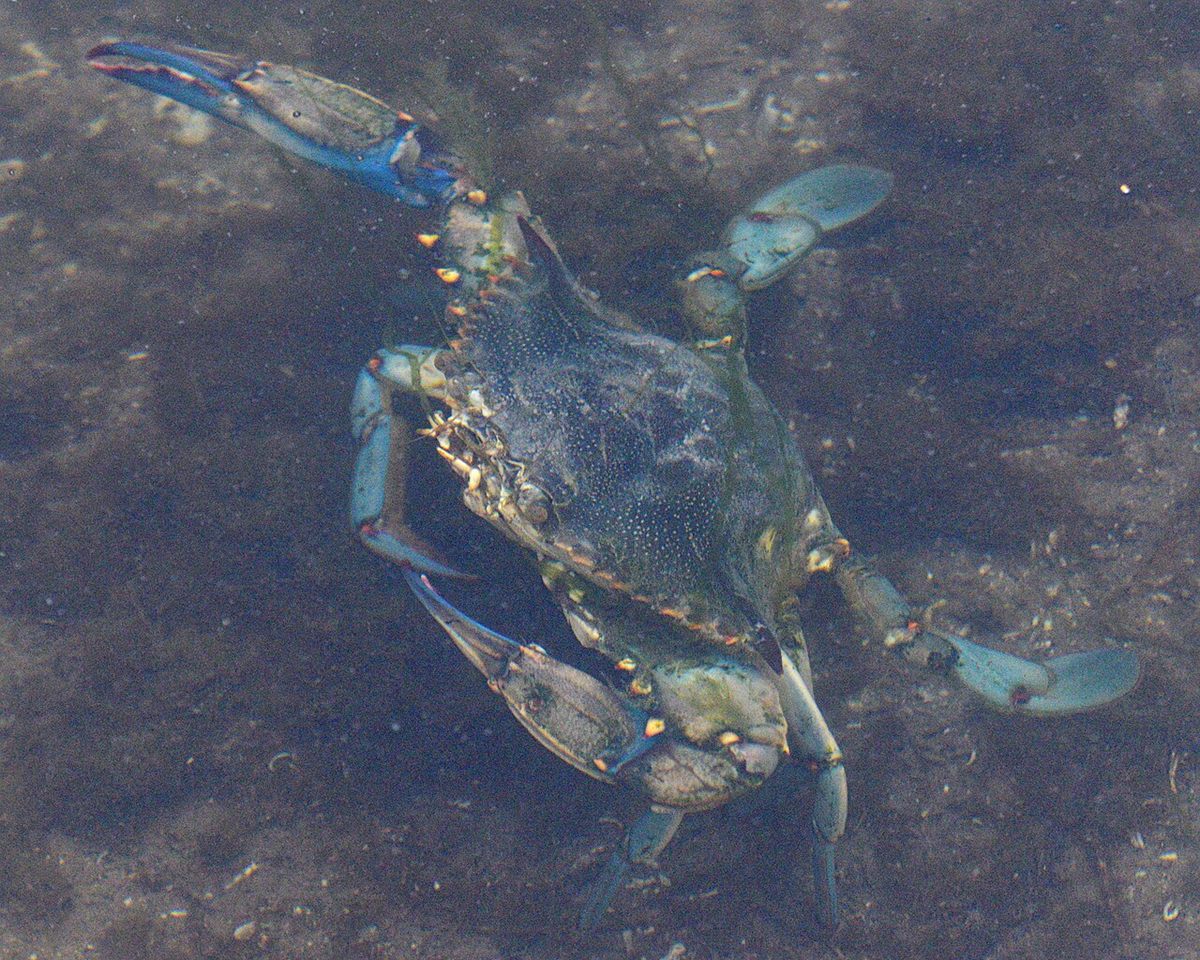
The last pair of legs is flattened into paddles that let the crab swim sideways. Males have blue claws, and mature females have red-tipped ones. Females migrate to the mouth of the estuary to release their larvae.
Soft-Shell Crabs
Crabs grow by molting, and for a few hours afterwards the new shell is soft. Soft-shell crabs are harvested at that stage and eaten whole.
An Invader Elsewhere
Blue crabs have established in the Mediterranean, where they have boomed in recent years and damage fisheries and native shellfish. In Italy, they have become the target of control campaigns. See American Lobster.
Atlantic Blue Crab at a Glance
| Property | Value |
|---|---|
| Scientific name | Callinectes sapidus |
| Kingdom | Animalia |
| Phylum | Arthropoda |
| Class | Malacostraca |
| Order | Decapoda |
| Family | Portunidae |
| Field Guide group | Ecdysozoa: Mandibulata (Mandibulates) |
| Diagnostic feature (Field Guide) | Olive shell with sharp side spines and bright blue claws; the last pair of legs is flattened into swimming paddles. |
| Order | Decapoda |
| Swimming legs | Paddle-shaped fifth pair |