American Lobster
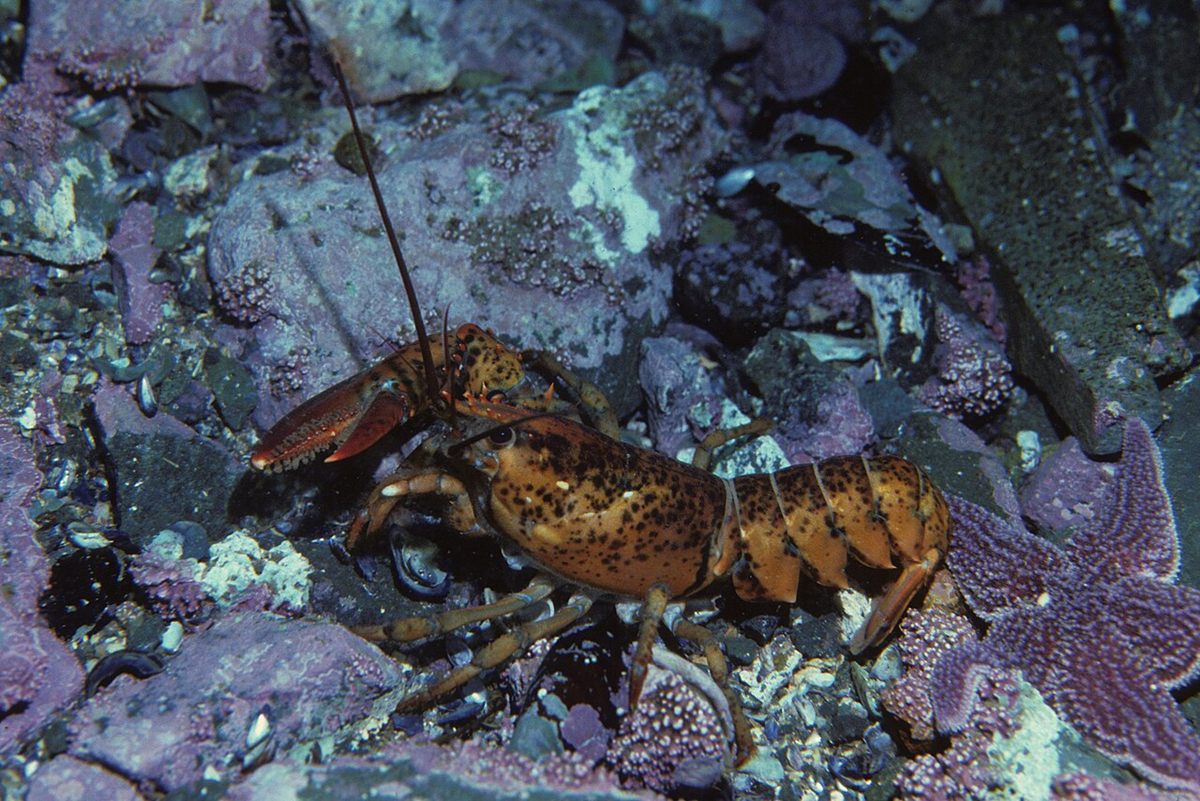
The American lobster (Homarus americanus) is a large crustacean of the cold waters of the northwestern Atlantic and the basis of an important fishery from Maine to Atlantic Canada. It has asymmetrical claws, a crusher and a cutter.
The American lobster (Homarus americanus) is a large crustacean of the cold waters of the northwestern Atlantic and the basis of an important fishery from Maine to Atlantic Canada. It has asymmetrical claws, a crusher and a cutter.
🧬 Field Guide Specimen: Open American Lobster in the CRV Science Field Guide to log the specimen, see its place among the Ecdysozoa lineages in the Cladogram Explorer, and test your recall in the Red List conservation game.
Claws With Different Jobs
One claw is heavy with blunt teeth for crushing shells, and the other is slender and sharp for cutting. Which side becomes the crusher is determined by early use, and lobsters raised without objects to grip may develop two cutters.
Do Lobsters Live Forever?
Lobsters keep growing by molting and maintain activity of the enzyme telomerase, which protects chromosome ends, so they show few signs of aging. But large lobsters often die while molting, and they do not live forever. Some individuals may be decades old.
A Fishery on the Move
Ocean warming has shifted lobster abundance northward, with declines in southern New England and booms in the Gulf of Maine. Shell disease and changing prey are further effects of warming. See Marine heatwave.
American Lobster at a Glance
| Property | Value |
|---|---|
| Scientific name | Homarus americanus |
| Kingdom | Animalia |
| Phylum | Arthropoda |
| Class | Malacostraca |
| Order | Decapoda |
| Family | Nephropidae |
| Field Guide group | Ecdysozoa: Mandibulata (Mandibulates) |
| Diagnostic feature (Field Guide) | Ten walking legs with the front pair enlarged into an asymmetric crusher claw and cutter claw, heavy calcified carapace, fan-shaped tail. |
| IUCN Red List status | Least Concern (LC), assessed 2011 |
| Order | Decapoda |
| Claws | Crusher and cutter |
See Also
- Marine heatwave — warming waters and fisheries
- Coconut Crab — another large decapod