Bladderwrack
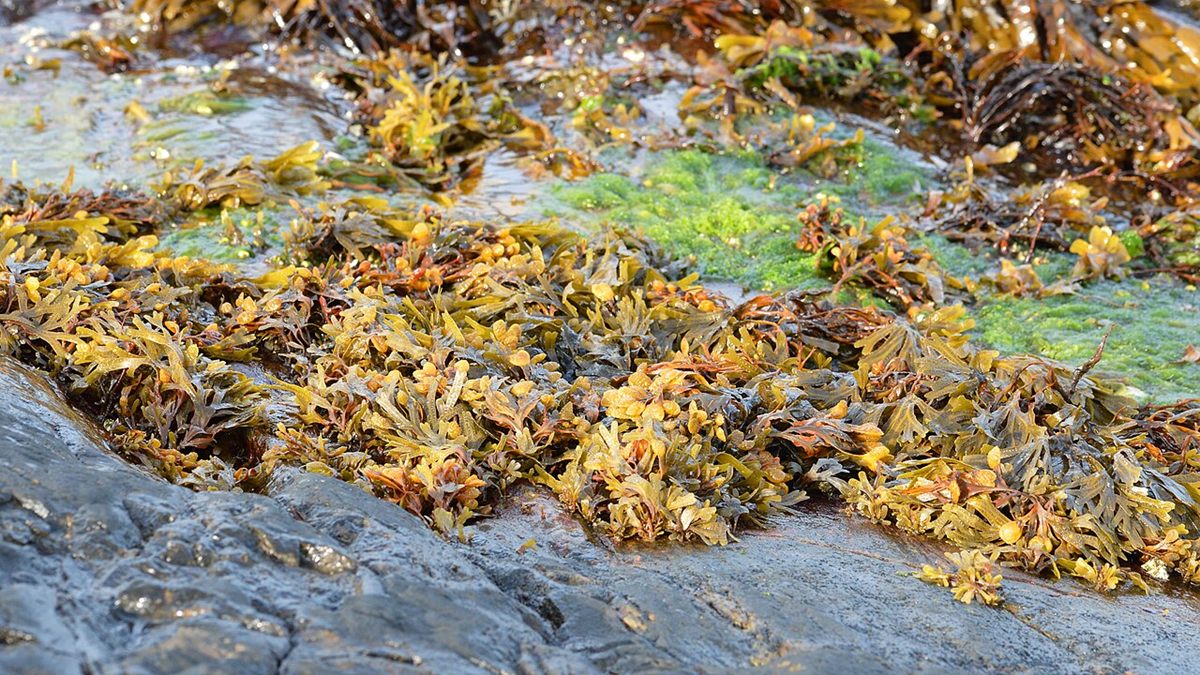
Bladderwrack (Fucus vesiculosus) is a tough, olive-brown seaweed of North Atlantic and Baltic shores, with paired air bladders that float the fronds when the tide is in.
Bladderwrack (Fucus vesiculosus) is a tough, olive-brown seaweed of North Atlantic and Baltic shores, with paired air bladders that float the fronds when the tide is in.
🧬 Field Guide Specimen: Open Bladderwrack in the CRV Science Field Guide to log the specimen, see its place among the Diaphoretickes lineages in the Cladogram Explorer, and test your recall in the Red List conservation game.
Surviving the Tide
On rocky shores bladderwrack is exposed to air for hours at low tide. It resists drying with thick, slimy fronds, and the bladders keep the plant upright in the water so it can photosynthesize at high tide.
Source of Iodine
Brown seaweeds concentrate iodine from seawater. In the 1800s, kelp ash from seaweeds including Fucus was the main source of iodine, which was used to treat goiter. Bladderwrack is now sold as a supplement, but its iodine content is highly variable.
Shelter and Forest
Fucus forms a canopy that shelters small animals on the shore and, in the Baltic, forms underwater meadows. See Giant Kelp.
Bladderwrack at a Glance
| Property | Value |
|---|---|
| Scientific name | Fucus vesiculosus |
| Kingdom | Chromista |
| Phylum | Heterokontophyta |
| Class | Phaeophyceae |
| Order | Fucales |
| Family | Fucaceae |
| Field Guide group | Diaphoretickes: Plants & Algae |
| Diagnostic feature (Field Guide) | Olive-colored rockweed of the intertidal with paired air bladders along a flat midrib that float its fronds at high tide. |
| Group | Brown algae (Fucales) |
| Floats | Paired air bladders |
See Also
- Giant Kelp — a larger brown alga
- Sargassum — a floating relative