Blue Dragon Sea Slug
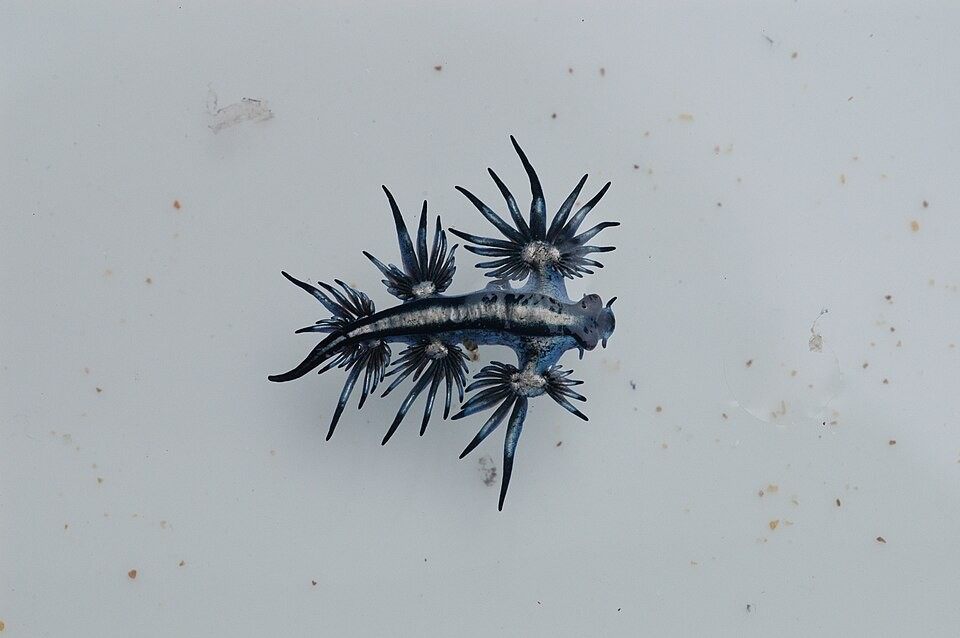
The blue dragon (Glaucus atlanticus) is a small sea slug, a few centimeters long, that floats upside down at the surface of warm oceans. It eats venomous siphonophores such as the Portuguese man o' war and stores their stinging cells for its own defense.
The blue dragon (Glaucus atlanticus) is a small sea slug, a few centimeters long, that floats upside down at the surface of warm oceans. It eats venomous siphonophores such as the Portuguese man o' war and stores their stinging cells for its own defense.
🧬 Field Guide Specimen: Open Blue Dragon Sea Slug in the CRV Science Field Guide to log the specimen, see its place among the Lophotrochozoa lineages in the Cladogram Explorer, and test your recall in the Red List conservation game.
Floating on a Bubble: How Does a Slug Stay at the Surface?
The slug swallows air and keeps it in its stomach as a float. It drifts with the wind and currents, with its silvery-gray back toward the water and its blue underside toward the sky, a camouflage against both seabirds and fish.
Stolen Weapons: Kleptocnidae
The slug eats the tentacles of man o' wars and moves the undischarged stinging cells (nematocysts) to finger-like projections on its body, concentrating the venom. A sting from a blue dragon can be more painful than that of its prey. See Portuguese Man o' War.
Hermaphrodites at Sea
Each slug is both male and female and partners fertilize each other. Blue dragons are washed ashore by onshore winds, sometimes in numbers.
Blue Dragon Sea Slug at a Glance
| Property | Value |
|---|---|
| Scientific name | Glaucus atlanticus |
| Kingdom | Animalia |
| Phylum | Mollusca |
| Class | Gastropoda |
| Order | Nudibranchia |
| Family | Glaucidae |
| Field Guide group | Lophotrochozoa: Mollusca (Mollusks) |
| Diagnostic feature (Field Guide) | Silvery blue and white pelagic nudibranch floating upside down on surface tension, wing-like cerata storing stinging nematocysts. |
| Prey | Siphonophores and other floating cnidarians |
| Defense | Stored nematocysts |
See Also
- Portuguese Man o' War — its main prey
- Spanish Dancer Nudibranch — another sea slug