Greater Blue-ringed Octopus
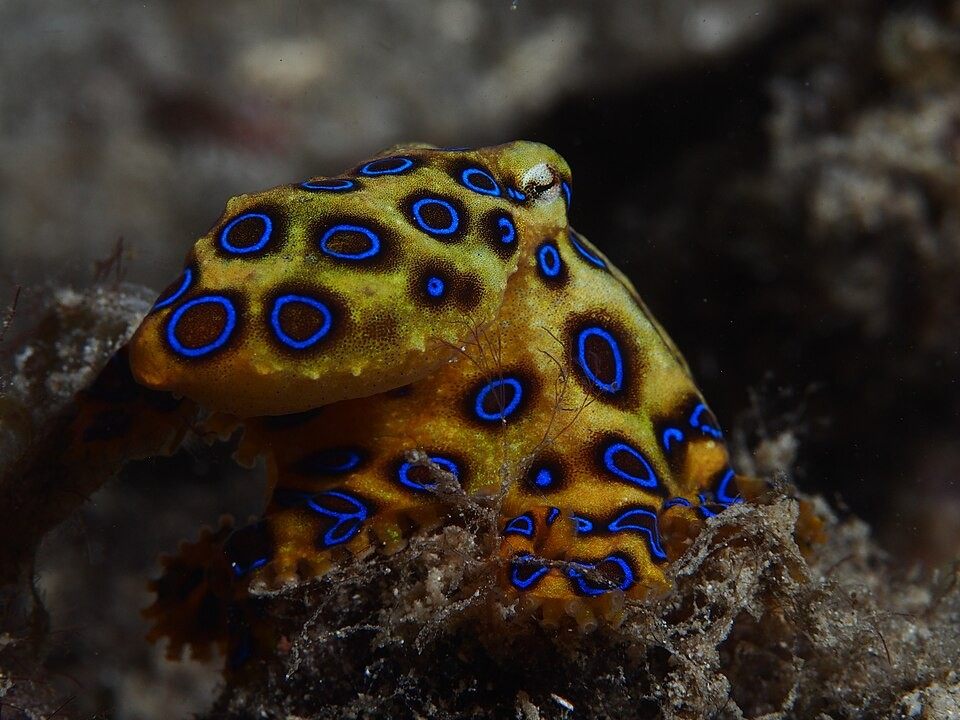
The greater blue-ringed octopus (Hapalochlaena lunulata) is a golf-ball-sized octopus of Indo-Pacific tide pools and reefs, with iridescent blue rings that flash when it is threatened. Its saliva contains the deadly neurotoxin tetrodotoxin.
The greater blue-ringed octopus (Hapalochlaena lunulata) is a golf-ball-sized octopus of Indo-Pacific tide pools and reefs, with iridescent blue rings that flash when it is threatened. Its saliva contains the deadly neurotoxin tetrodotoxin.
🧬 Field Guide Specimen: Open Greater Blue-ringed Octopus in the CRV Science Field Guide to log the specimen, see its place among the Lophotrochozoa lineages in the Cladogram Explorer, and test your recall in the Red List conservation game.
A Warning in Blue
The octopus is normally camouflaged in browns and yellows. When disturbed, it flashes bright blue rings that warn predators of its toxin. A bite is often painless, so people may not notice it until paralysis begins.
Tetrodotoxin From Bacteria
The octopus does not make the toxin itself; it is thought to be produced by bacteria living in its salivary glands, as in pufferfish. Tetrodotoxin blocks sodium channels in nerves. There is no antivenom, and treatment consists of keeping the person breathing until the toxin clears. See Rough-skinned Newt.
Brooding Mothers
The female carries her eggs under her arms until they hatch and then dies, like other octopuses.
Greater Blue-ringed Octopus at a Glance
| Property | Value |
|---|---|
| Scientific name | Hapalochlaena lunulata |
| Kingdom | Animalia |
| Phylum | Mollusca |
| Class | Cephalopoda |
| Order | Octopoda |
| Family | Octopodidae |
| Field Guide group | Lophotrochozoa: Mollusca (Mollusks) |
| Diagnostic feature (Field Guide) | Small yellowish octopus with vivid iridescent electric blue rings flashing when threatened, deadly tetrodotoxin in saliva. |
| IUCN Red List status | Least Concern (LC), assessed 2018 |
| Toxin | Tetrodotoxin |
| Size | About 10 to 12 centimeters |
See Also
- Rough-skinned Newt — another tetrodotoxin carrier
- Common Octopus — a harmless octopus