Common Octopus
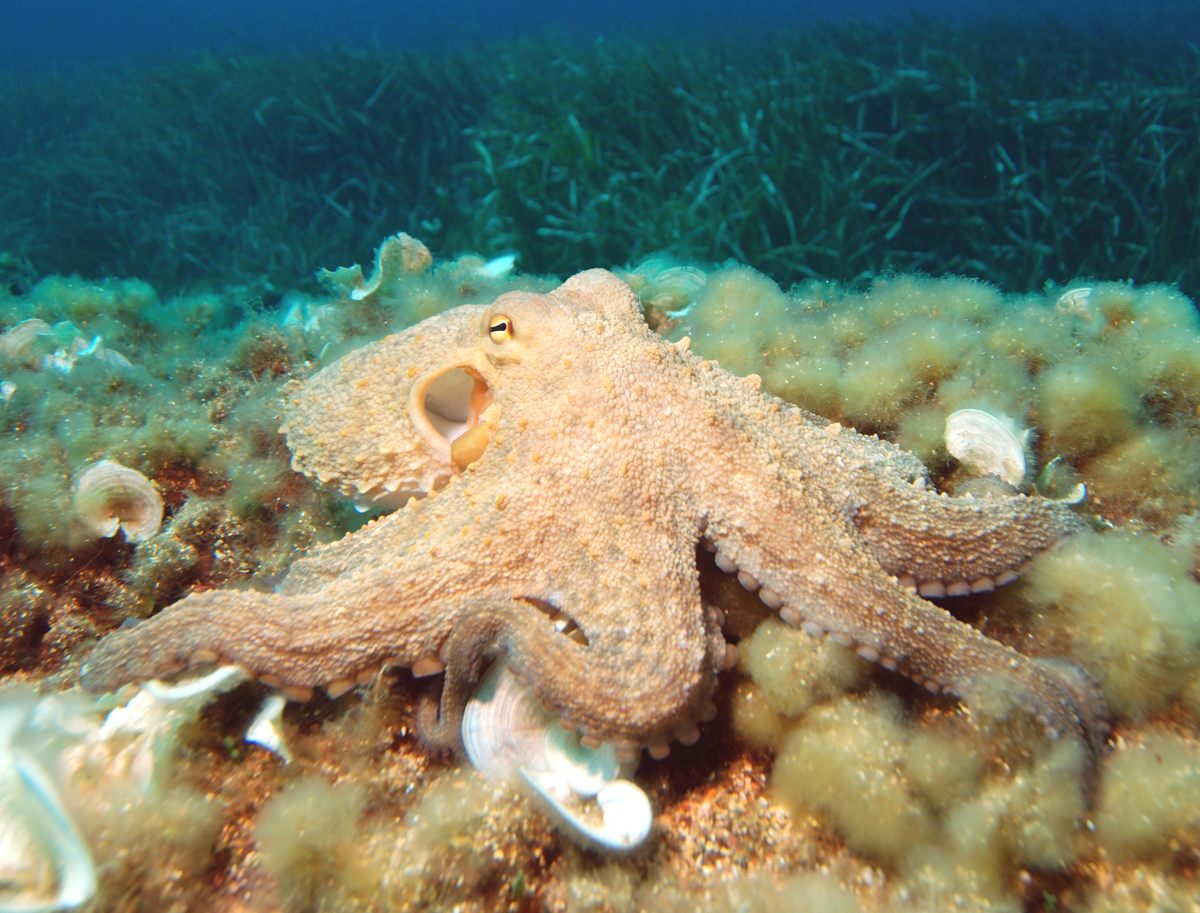
The common octopus (Octopus vulgaris) is a widespread, intelligent cephalopod of warm and temperate coastal seas. It is an adept camouflager and problem solver, but lives only a year or two.
The common octopus (Octopus vulgaris) is a widespread, intelligent cephalopod of warm and temperate coastal seas. It is an adept camouflager and problem solver, but lives only a year or two.
🧬 Field Guide Specimen: Open Common Octopus in the CRV Science Field Guide to log the specimen, see its place among the Lophotrochozoa lineages in the Cladogram Explorer, and test your recall in the Red List conservation game.
An Alien Intelligence: How Is Its Nervous System Organized?
An octopus has about half a billion neurons, most of them in the arms, which can act semi-independently. It can open jars, navigate mazes and learn by observation. See the related Giant Pacific Octopus.
Blood, Hearts and Camouflage
Three hearts pump blood that is blue because it uses copper-based hemocyanin to carry oxygen. Skin cells called chromatophores, controlled by muscles and nerves, change color and pattern in a fraction of a second, and skin papillae alter texture.
A Short, Single Reproduction
Octopuses breed once. A female guards her eggs without feeding and dies soon after they hatch, a programmed decline driven by hormonal signals from the optic gland.
Common Octopus at a Glance
| Property | Value |
|---|---|
| Scientific name | Octopus vulgaris |
| Kingdom | Animalia |
| Phylum | Mollusca |
| Class | Cephalopoda |
| Order | Octopoda |
| Family | Octopodidae |
| Field Guide group | Lophotrochozoa: Mollusca (Mollusks) |
| Diagnostic feature (Field Guide) | Eight suction-cup arms, keratinous beak, camera-type eyes, chromatophore camouflage network. |
| IUCN Red List status | Least Concern (LC), assessed 2018 |
| Hearts | Three |
| Lifespan | About one to two years |
See Also
- Giant Pacific Octopus — a larger relative
- Embryogenesis — development and brain growth