Bottlenose Dolphin
The common bottlenose dolphin (Tursiops truncatus) is a widely distributed, highly social toothed whale and one of the best-studied marine mammals. It is listed as Least Concern.
The common bottlenose dolphin (Tursiops truncatus) is a widely distributed, highly social toothed whale and one of the best-studied marine mammals. It is listed as Least Concern.
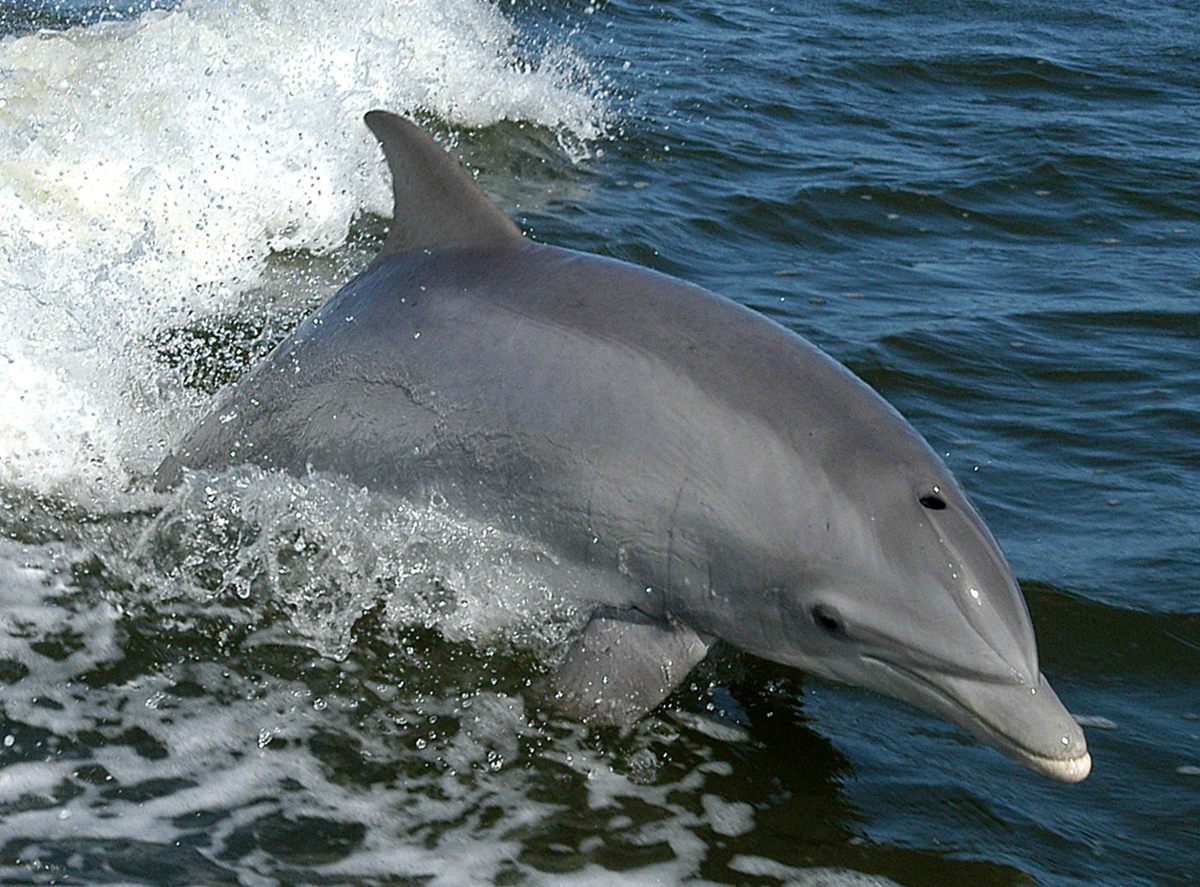
🧬 Field Guide Specimen: Open Bottlenose Dolphin in the CRV Science Field Guide to log the specimen, see its place among the Mammals lineages in the Cladogram Explorer, and test your recall in the Red List conservation game.
Whistle Names: Do Dolphins Name Each Other?
Each dolphin develops a signature whistle that identifies it. In experiments, dolphins responded to recordings of a close associate's whistle by calling back, suggesting that whistles function somewhat like names.
Sound as Sight: Echolocation
Dolphins produce clicks in the nasal passages and focus them with the fatty melon on the forehead. The returning echoes are received through the lower jaw, giving a detailed acoustic image that can detect small objects at long range.
Sleeping Half the Brain
Dolphins sleep with one hemisphere at a time (unihemispheric sleep) so that they can surface to breathe. They live in fluid groups, cooperate to hunt, and in places like Laguna, Brazil, some herd fish toward fishermen's nets.
Bottlenose Dolphin at a Glance
| Property | Value |
|---|---|
| Scientific name | Tursiops truncatus |
| Kingdom | Animalia |
| Phylum | Chordata |
| Class | Mammalia |
| Order | Cetartiodactyla |
| Family | Delphinidae |
| Field Guide group | Mammals: Eutheria (Placentals) |
| Diagnostic feature (Field Guide) | Exhibits advanced mammalian encephalization, signature whistle communication, and echolocation. |
| IUCN Red List status | Least Concern (LC), assessed 2019 |
| Navigation | Echolocation |
See Also
- Orca — the largest dolphin
- Blue Whale — a baleen whale