Blue Whale
The blue whale (Balaenoptera musculus) is the largest animal known to have ever lived, reaching about 30 meters in length and well over 100 tonnes.
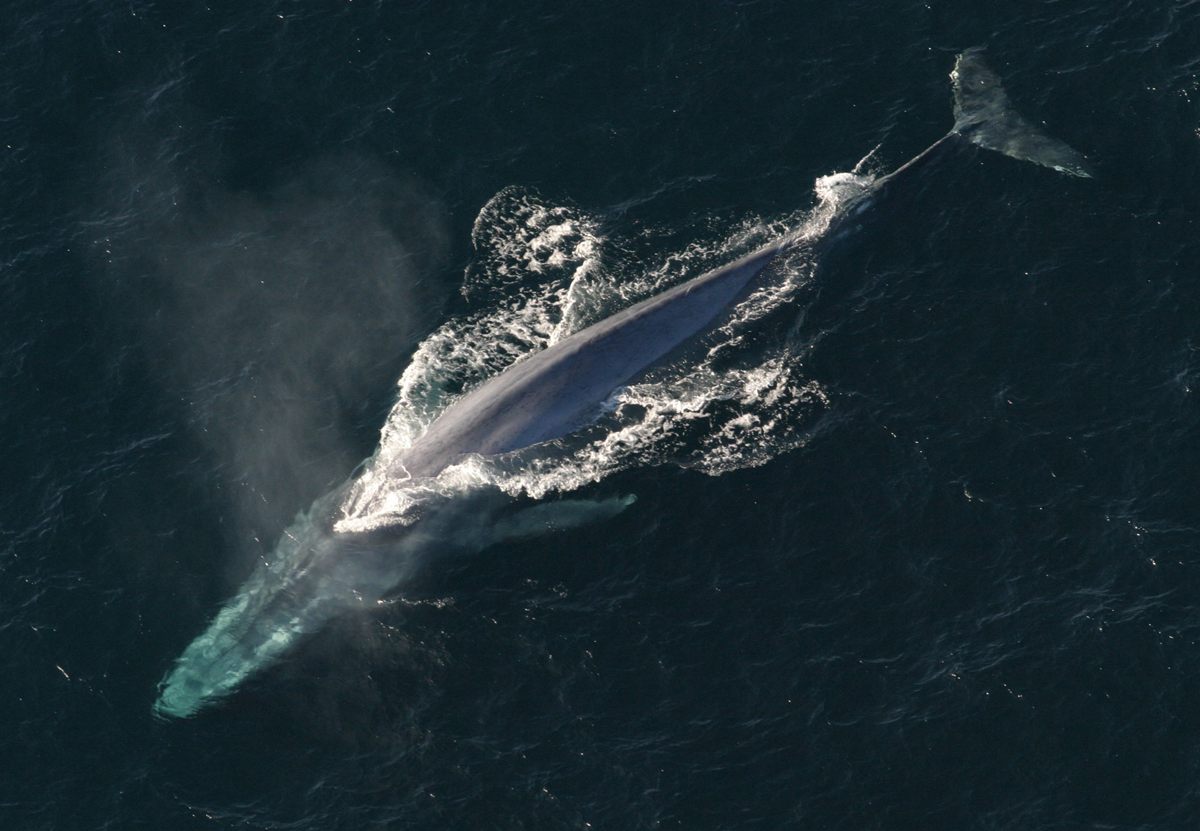
The blue whale (Balaenoptera musculus) is the largest animal known to have ever lived, reaching about 30 meters in length and well over 100 tonnes. A baleen whale that feeds almost entirely on krill, it is listed as Endangered by the IUCN after twentieth-century whaling reduced its numbers by the great majority.
🧬 Field Guide Specimen: Open Blue Whale in the CRV Science Field Guide to log the specimen, see its place among the Mammals lineages in the Cladogram Explorer, and test your recall in the Red List conservation game.
Gigantism and Feeding: How Does a Filter Feeder Reach This Size?
Blue whales feed by lunging into dense krill swarms, engulfing a volume of water and prey larger than their own body, then pushing the water out through keratin baleen plates. In the feeding season an adult can take in several tonnes of krill per day. Ocean productivity, buoyancy that relieves skeletal loads and efficient lunge feeding together allow this scale, which no land animal can match.
Whaling and Recovery: Why Is the Species Still Endangered?
Industrial whaling in the first half of the twentieth century killed hundreds of thousands of blue whales, especially in the Southern Ocean, and an international ban took effect in 1966. Populations have since grown in several regions but remain a small fraction of historical numbers. Ship strikes, entanglement, noise and changing krill availability are ongoing threats.
Evolutionary Placement: A Cetacean Among the Even-Toed Ungulates
Whales descend from land-living hoofed mammals. Molecular and fossil evidence places the cetaceans inside Cetartiodactyla, and the hippopotamus is their closest living relative. Their low-frequency calls can travel for great distances underwater. See the Hippopotamus for the sister lineage.
Blue Whale at a Glance
| Property | Value |
|---|---|
| Scientific name | Balaenoptera musculus |
| Kingdom | Animalia |
| Phylum | Chordata |
| Class | Mammalia |
| Order | Cetartiodactyla |
| Family | Balaenopteridae |
| Field Guide group | Mammals: Eutheria (Placentals) |
| Diagnostic feature (Field Guide) | Enormous streamlined body, dorsal blowhole, baleen plates replacing teeth, vestigial pelvic bones. |
| IUCN Red List status | Endangered (EN), assessed 2018 |
| Main prey | Krill |
See Also
- Hippopotamus — closest living relative of whales
- Orca — a toothed whale and apex predator
- Food web — how krill link whales to ocean productivity