Brazilian Wandering Spider
The Brazilian wandering spider (Phoneutria nigriventer) is a large, aggressive spider of South American forests and cities, whose venom is among the most potent of any spider. It is a wandering hunter and does not spin a web to catch prey.
The Brazilian wandering spider (Phoneutria nigriventer) is a large, aggressive spider of South American forests and cities, whose venom is among the most potent of any spider. It is a wandering hunter and does not spin a web to catch prey.
🧬 Field Guide Specimen: Open Brazilian Wandering Spider in the CRV Science Field Guide to log the specimen, see its place among the Ecdysozoa lineages in the Cladogram Explorer, and test your recall in the Red List conservation game.
Armed and Wandering
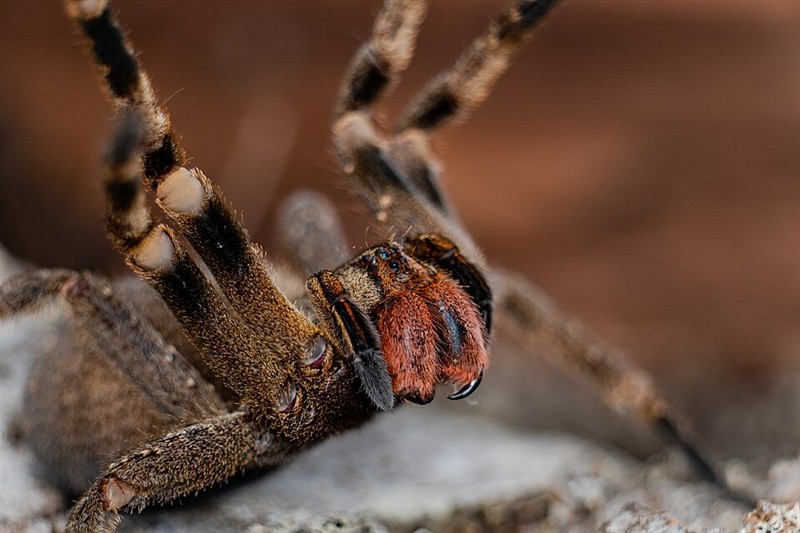
At night it roams the forest floor, hunting insects, frogs and lizards. By day it hides in banana bunches, boxes, shoes and houses, which has earned it the name banana spider. When threatened it rears up and displays its fangs.
A Venom with Surprising Effects
The venom contains neurotoxins that act on sodium and calcium channels, and cause severe pain. In men a bite may cause a painful prolonged erection (priapism), which led researchers to study venom peptides as possible treatments for erectile dysfunction. Antivenom is effective and fatalities are rare.
Not a Web Builder
It is related to other wandering spiders. See Black Widow Spider.
Brazilian Wandering Spider at a Glance
| Property | Value |
|---|---|
| Scientific name | Phoneutria nigriventer |
| Kingdom | Animalia |
| Phylum | Arthropoda |
| Class | Arachnida |
| Order | Araneae |
| Family | Ctenidae |
| Field Guide group | Ecdysozoa: Arachnida (Spiders, Scorpions & Allies) |
| Diagnostic feature (Field Guide) | Cursorial nocturnal South American arachnid that hunts across the forest floor without building a snare web, displaying a characteristic defensive posture with raised front legs and bright red-orange cheliceral setae. |
| Family | Ctenidae |
| Hunting style | Wandering, no web |