Goliath Birdeater
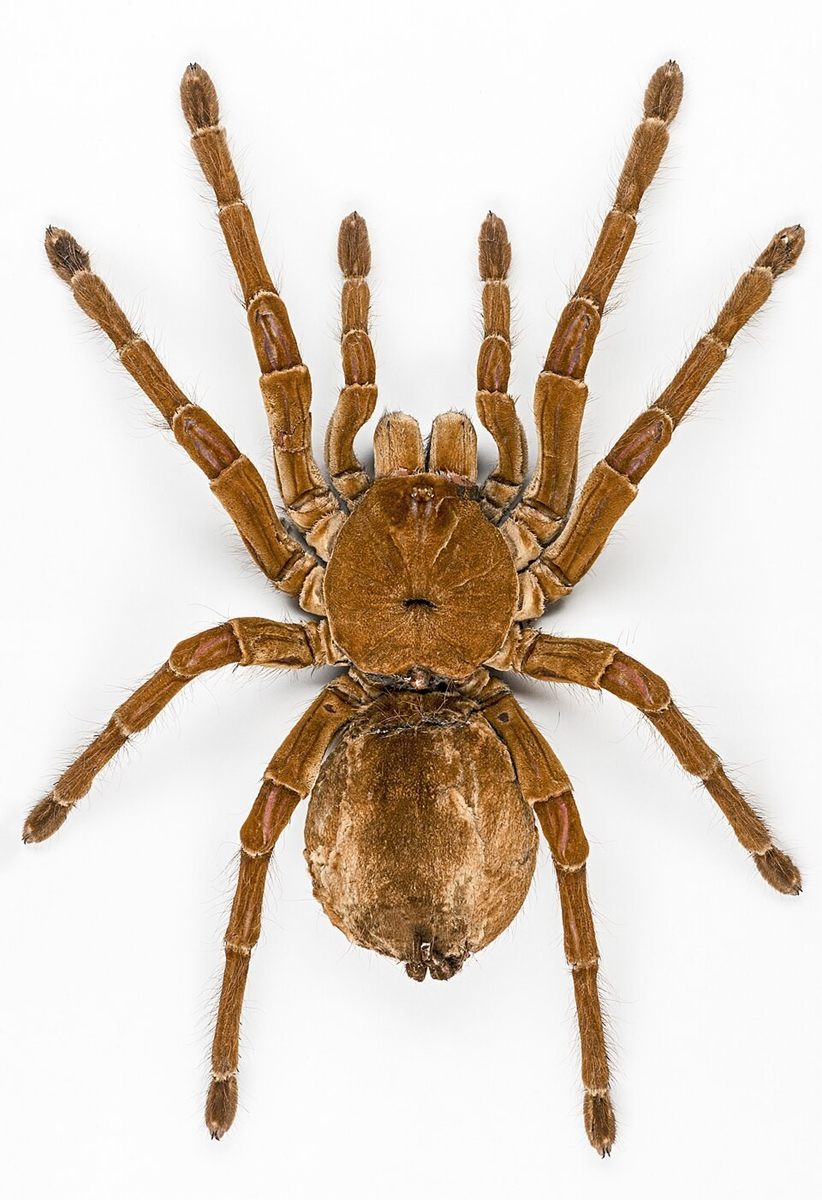
The Goliath birdeater (Theraphosa blondi) is the heaviest spider in the world, weighing about 150 to 175 grams, with a leg span of around 28 centimeters. It lives in burrows in the rainforests of northern South America.
The Goliath birdeater (Theraphosa blondi) is the heaviest spider in the world, weighing about 150 to 175 grams, with a leg span of around 28 centimeters. It lives in burrows in the rainforests of northern South America.
🧬 Field Guide Specimen: Open Goliath Birdeater Tarantula in the CRV Science Field Guide to log the specimen, see its place among the Ecdysozoa lineages in the Cladogram Explorer, and test your recall in the Red List conservation game.
Rarely a Bird Eater
The name comes from an old engraving of a tarantula eating a hummingbird. In reality it feeds mostly on insects, worms, frogs and small rodents, which it ambushes at night and subdues with venom delivered through fangs up to 3 centimeters long.
Hair as a Weapon
When threatened, the spider rubs its legs together to hiss, and flicks barbed urticating hairs from its abdomen toward an attacker. These cause intense itching in skin and eyes. The venom is no more dangerous to people than a wasp sting.
Long Lives
Females can live for 15 to 25 years, while males live much shorter lives after maturing. Like other tarantulas, they molt to grow, and can regenerate legs.
Goliath Birdeater at a Glance
| Property | Value |
|---|---|
| Scientific name | Theraphosa blondi |
| Kingdom | Animalia |
| Phylum | Arthropoda |
| Subphylum | Chelicerata |
| Class | Arachnida |
| Order | Araneae |
| Suborder | Mygalomorphae |
| Field Guide group | Ecdysozoa: Arachnida (Spiders, Scorpions & Allies) |
| Diagnostic feature (Field Guide) | Massive hairy mygalomorph body, downward-striking paraxial chelicerae fangs, abdominal urticating hairs. |
| Mass | Up to about 175 grams |
| Leg span | About 28 centimeters |
See Also
- Black Widow Spider — a medically significant spider
- Biodiversity — rainforest diversity