Common Green Darner
The common green darner (Anax junius) is a large North American dragonfly that migrates south each autumn across the continent. It belongs to Odonata, an order of aerial predators that dates back to the Carboniferous.
The common green darner (Anax junius) is a large North American dragonfly that migrates south each autumn across the continent. It belongs to Odonata, an order of aerial predators that dates back to the Carboniferous.
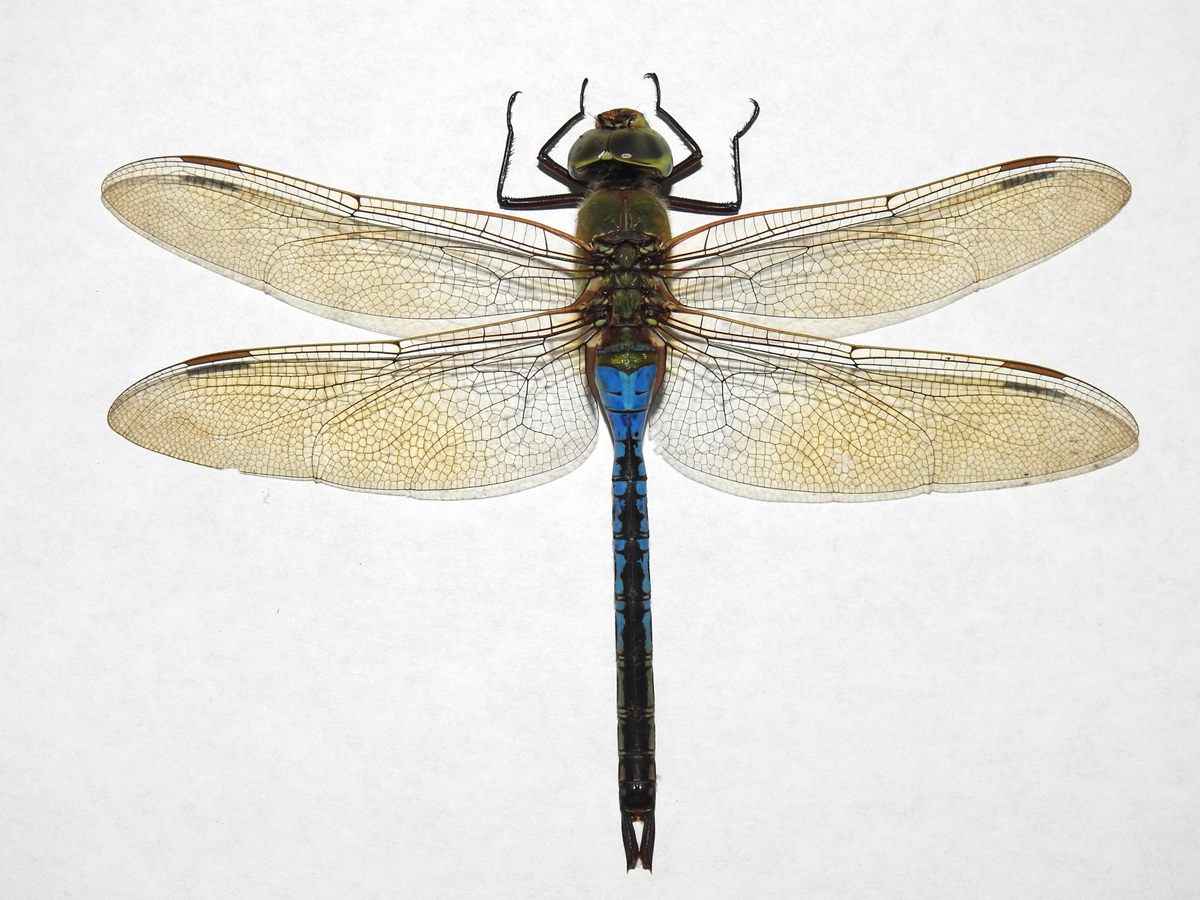
🧬 Field Guide Specimen: Open Common Green Darner in the CRV Science Field Guide to log the specimen, see its place among the Ecdysozoa lineages in the Cladogram Explorer, and test your recall in the Red List conservation game.
Master Hunters: What Makes Dragonflies So Effective?
Huge compound eyes cover most of the head and give nearly all-round vision. Each of the four wings is driven by its own set of muscles, so the insect can hover, dart sideways and even fly backward. Dragonflies are among the most successful predators known, catching the large majority of the prey they pursue.
Underwater Nymphs
Eggs are laid in ponds, and the aquatic nymphs hunt tadpoles and insects with an extendable lower jaw, breathing through gills in the rectum. After a few months to a year, they climb out and molt into winged adults.
A Migratory Insect
Tracking studies with tiny radio transmitters have shown that green darners move south in the fall, and a later generation returns north in spring, a multi-generation pattern like that of monarch butterflies. Wetland loss threatens their breeding sites.
Common Green Darner at a Glance
| Property | Value |
|---|---|
| Scientific name | Anax junius |
| Kingdom | Animalia |
| Phylum | Arthropoda |
| Class | Insecta |
| Order | Odonata |
| Suborder | Anisoptera |
| Field Guide group | Ecdysozoa: Hexapoda (Insects) |
| Diagnostic feature (Field Guide) | Massive compound eyes covering most of head, direct flight muscles powering independent fore and hind wings. |
| IUCN Red List status | Least Concern (LC), assessed 2018 |
| Order | Odonata |
| Larval habitat | Ponds and slow water |
See Also
- Monarch Butterfly — another migratory insect
- Green Drake Mayfly — a fellow member of the ancient winged insects