Monarch Butterfly
The monarch butterfly (Danaus plexippus) is famous for the long-distance migration of its North American population, which travels thousands of kilometers to overwinter in the mountain forests of central Mexico.
The monarch butterfly (Danaus plexippus) is famous for the long-distance migration of its North American population, which travels thousands of kilometers to overwinter in the mountain forests of central Mexico. The IUCN listed the migratory subspecies as Endangered in 2022 and, with updated population models, reassessed it as Vulnerable in 2023; the species as a whole is Least Concern.
🧬 Field Guide Specimen: Open Monarch Butterfly in the CRV Science Field Guide to log the specimen, see its place among the Ecdysozoa lineages in the Cladogram Explorer, and test your recall in the Red List conservation game.
A Multi-Generation Migration: How Do Monarchs Find Their Way?
The eastern population breeds northward over several short-lived generations, but the final generation of the year is a long-lived "super generation" that flies south to the same region its great-grandparents left. Monarchs steer with a time-compensated sun compass in their antennae and brain and probably also sense Earth's magnetic field.
Chemical Defense and Warning Colors
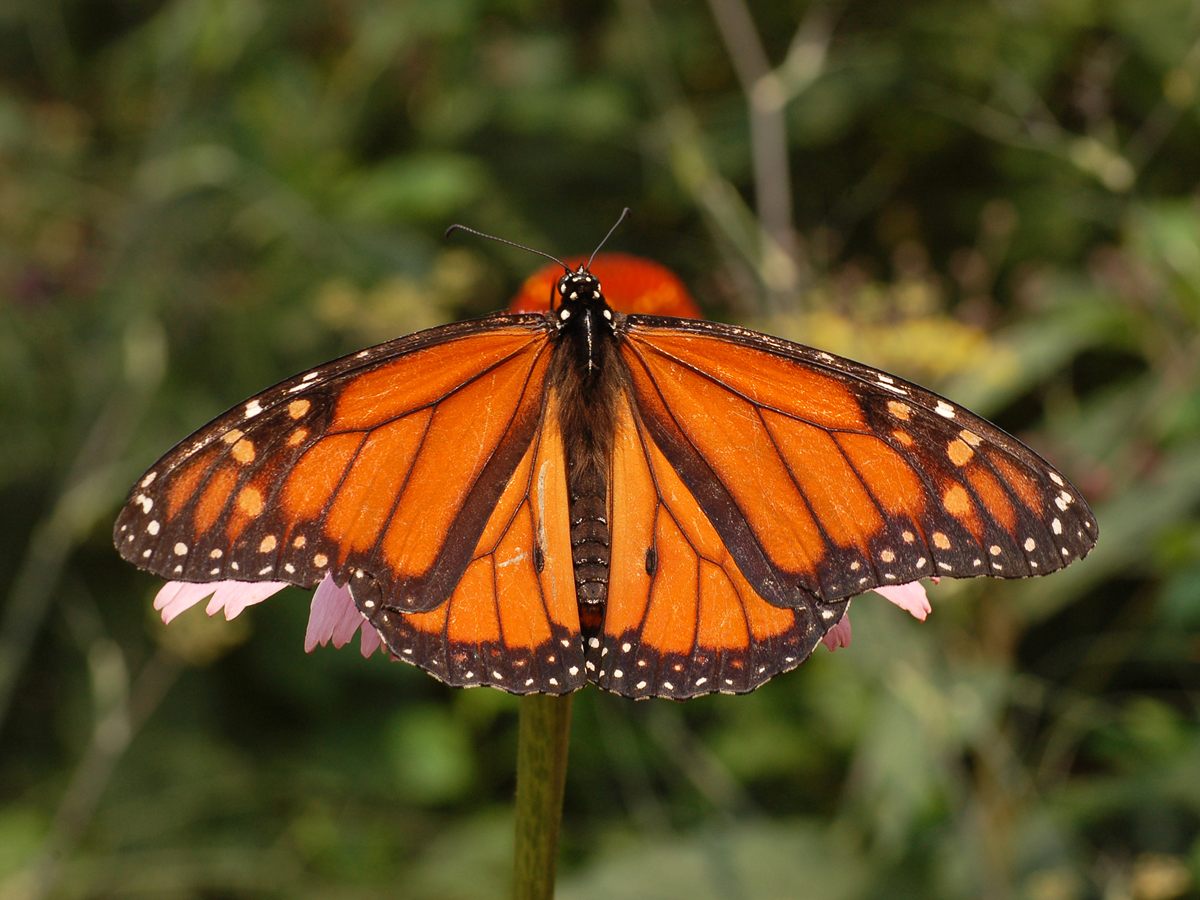
Caterpillars feed only on milkweeds (Asclepias), whose cardiac glycosides they store in their bodies, making adults distasteful to birds. The bright orange and black pattern is a warning signal, one that other butterflies imitate in mimicry systems.
Decline
Counts of overwintering monarchs have fallen sharply since the 1990s because of loss of milkweed to herbicide use and development, logging in the Mexican forests, and extreme weather. In December 2024 the US Fish and Wildlife Service proposed listing the monarch as threatened under the Endangered Species Act; it is not listed as endangered. Planting native milkweed and nectar plants can help.
Monarch Butterfly at a Glance
| Property | Value |
|---|---|
| Scientific name | Danaus plexippus |
| Kingdom | Animalia |
| Phylum | Arthropoda |
| Class | Insecta |
| Order | Lepidoptera |
| Family | Nymphalidae |
| Field Guide group | Ecdysozoa: Hexapoda (Insects) |
| Diagnostic feature (Field Guide) | Orange and black wing patterns colored by microscopic scales, coiled siphoning proboscis. |
| IUCN Red List status | Vulnerable (VU) for the migratory subspecies (2023); Least Concern as a species |
| US status | Proposed as threatened under the Endangered Species Act (December 2024) |
| Host plant | Milkweeds (Asclepias) |
See Also
- Climate change — shifting seasons and migration
- Deforestation — loss of overwintering forest