Green Drake Mayfly
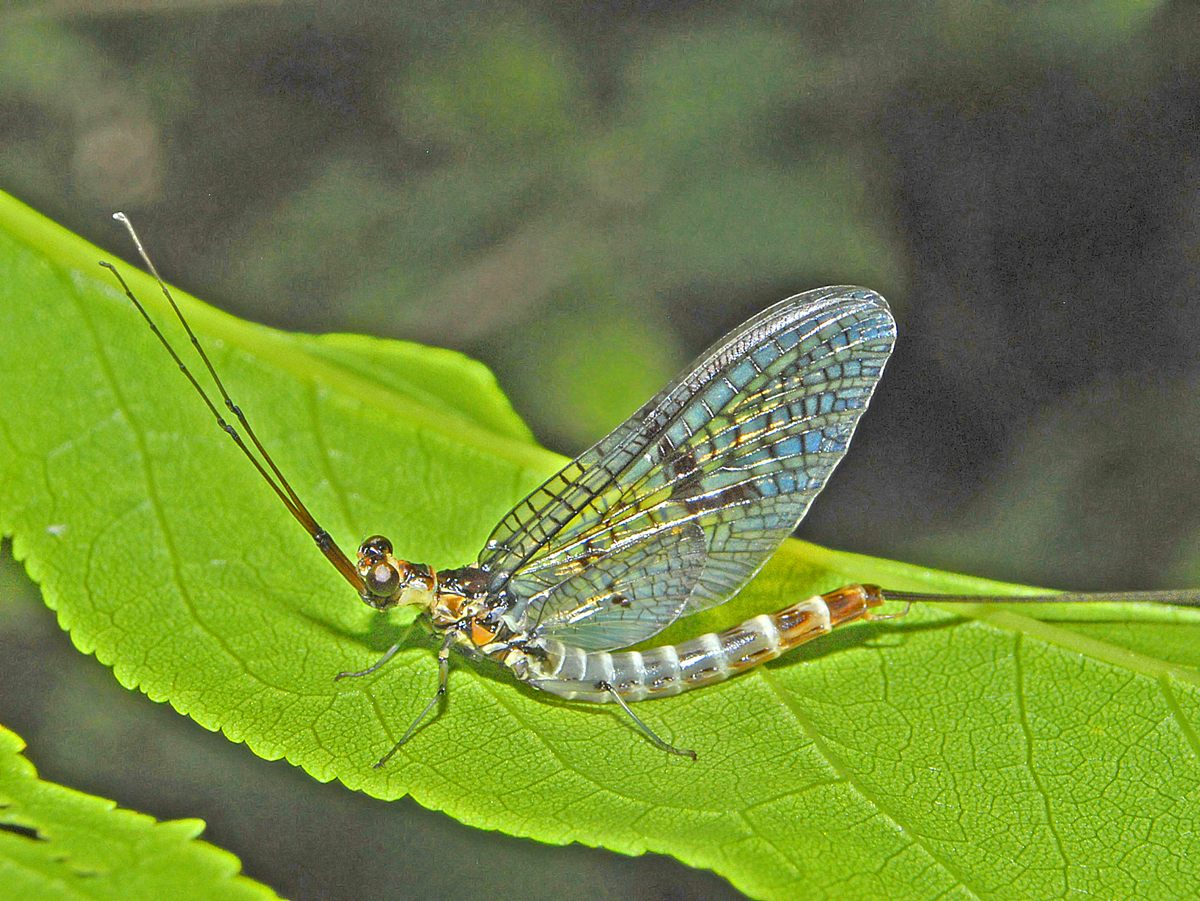
The green drake mayfly (Ephemera danica) is a large European mayfly whose adults emerge in mass hatches in late spring.
The green drake mayfly (Ephemera danica) is a large European mayfly whose adults emerge in mass hatches in late spring. Mayflies belong to Ephemeroptera, one of the most ancient insect orders, and their name reflects the brief adult life, often only hours to a day or two.
🧬 Field Guide Specimen: Open Green Drake Mayfly in the CRV Science Field Guide to log the specimen, see its place among the Ecdysozoa lineages in the Cladogram Explorer, and test your recall in the Red List conservation game.
A Life Mostly Underwater
Eggs hatch into nymphs that burrow into the silt of clean streams and lakes and feed on detritus for a year or two. Because they need well-oxygenated, unpolluted water, mayfly nymphs are widely used as indicators of water quality.
The Extra Winged Stage
Mayflies are the only insects that molt after getting wings. The first winged form, the subimago or "dun," flies to a perch and molts again into the adult "spinner." Adults do not feed, and mate in swarms above the water before laying eggs and dying.
Ancient Wings
Mayflies and dragonflies are the surviving members of Palaeoptera, insects that cannot fold their wings flat over the body. Mayfly-like insects appear in Carboniferous fossils, and the group has a few thousand living species. The green drake hatch is also a favorite of fly fishers.
Green Drake Mayfly at a Glance
| Property | Value |
|---|---|
| Scientific name | Ephemera danica |
| Kingdom | Animalia |
| Phylum | Arthropoda |
| Class | Insecta |
| Order | Ephemeroptera |
| Family | Ephemeridae |
| Field Guide group | Ecdysozoa: Hexapoda (Insects) |
| Diagnostic feature (Field Guide) | Three long caudal filaments, triangular forewings held vertically at rest, unique subimago winged molt. |
| Adult lifespan | Hours to a few days |
| Nymph habitat | Silty beds of clean freshwater |
See Also
- Eutrophication — pollution that eliminates sensitive aquatic insects
- Evolution — ancient lineages