Common Mayfly
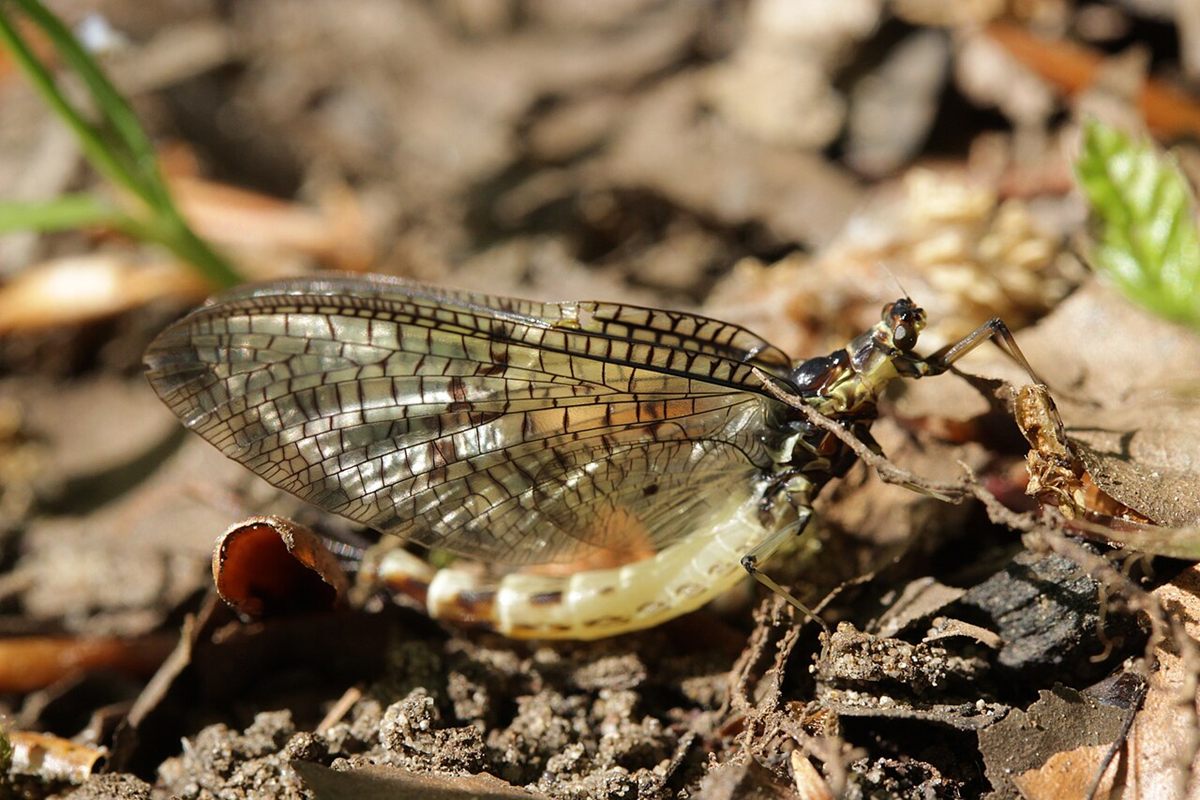
The common mayfly (Ephemera vulgata) is a large European mayfly whose nymphs burrow in the silt of clean rivers and lakes. The adult lives for only a day or two.
The common mayfly (Ephemera vulgata) is a large European mayfly whose nymphs burrow in the silt of clean rivers and lakes. The adult lives for only a day or two.
🧬 Field Guide Specimen: Open Common Mayfly in the CRV Science Field Guide to log the specimen, see its place among the Ecdysozoa lineages in the Cladogram Explorer, and test your recall in the Red List conservation game.
Burrowing Nymphs
The nymph digs U-shaped burrows with tusk-like mandibles and filters detritus. Plumed gills on its back wave to bring in oxygen. It lives two years in the mud before emerging.
A Short Adulthood
Adults emerge in large synchronized hatches in late spring and have no functional mouthparts. They mate in dancing swarms and lay eggs on the water before dying. See Green Drake Mayfly.
Clean-Water Signal
Mayfly nymphs need well-oxygenated water, so their presence is used to assess river health.
Common Mayfly at a Glance
| Property | Value |
|---|---|
| Scientific name | Ephemera vulgata |
| Kingdom | Animalia |
| Phylum | Arthropoda |
| Class | Insecta |
| Order | Ephemeroptera |
| Family | Ephemeridae |
| Field Guide group | Ecdysozoa: Hexapoda (Insects) |
| Diagnostic feature (Field Guide) | Delicate flier with dark-blotched wings held upright over the back, three long tail filaments, and no working mouthparts; adults live only a day or two. |
| Order | Ephemeroptera |
| Nymph habitat | Silt burrows |