Tisza Mayfly
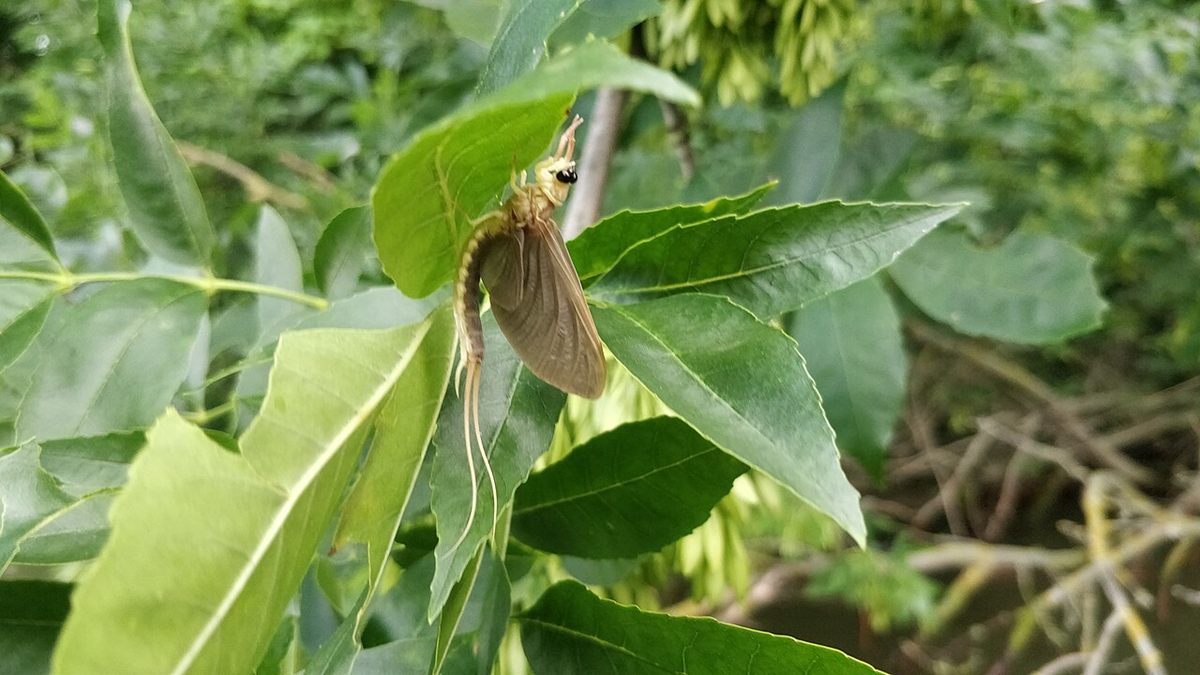
The Tisza mayfly (Palingenia longicauda) is the largest European mayfly, with a body up to about 4 centimeters and tails twice as long. Its mass emergence from the Tisza River in Hungary each June is called the 'blossoming of the Tisza'.
The Tisza mayfly (Palingenia longicauda) is the largest European mayfly, with a body up to about 4 centimeters and tails twice as long. Its mass emergence from the Tisza River in Hungary each June is called the "blossoming of the Tisza".
🧬 Field Guide Specimen: Open Tisza Mayfly in the CRV Science Field Guide to log the specimen, see its place among the Ecdysozoa lineages in the Cladogram Explorer, and test your recall in the Red List conservation game.
A Spectacular Swarm
On summer evenings, billions of mayflies rise from the river in a few hours, covering the water and the riverbanks, then mate and lay eggs in a matter of hours before dying. The corpses are food for fish and birds.
Disappearing From Rivers
The species was once widespread in large European rivers, but has vanished from the Rhine and many other rivers because of pollution and river engineering. Only a few strongholds like the Tisza remain.
Years in the Bank
The nymphs burrow in clay banks and live for around three years. See Common Mayfly.
Tisza Mayfly at a Glance
| Property | Value |
|---|---|
| Scientific name | Palingenia longicauda |
| Kingdom | Animalia |
| Phylum | Arthropoda |
| Class | Insecta |
| Order | Ephemeroptera |
| Family | Palingeniidae |
| Field Guide group | Ecdysozoa: Hexapoda (Insects) |
| Diagnostic feature (Field Guide) | Europe's largest of its kind, up to 12 cm including its tails; millions emerge together for a few hours each June in the 'blooming' of the Tisza River. |
| IUCN Red List status | Not Evaluated (NE): no global IUCN assessment |
| Order | Ephemeroptera |
| Emergence | Mass swarms in June |