Giant Burrowing Mayfly
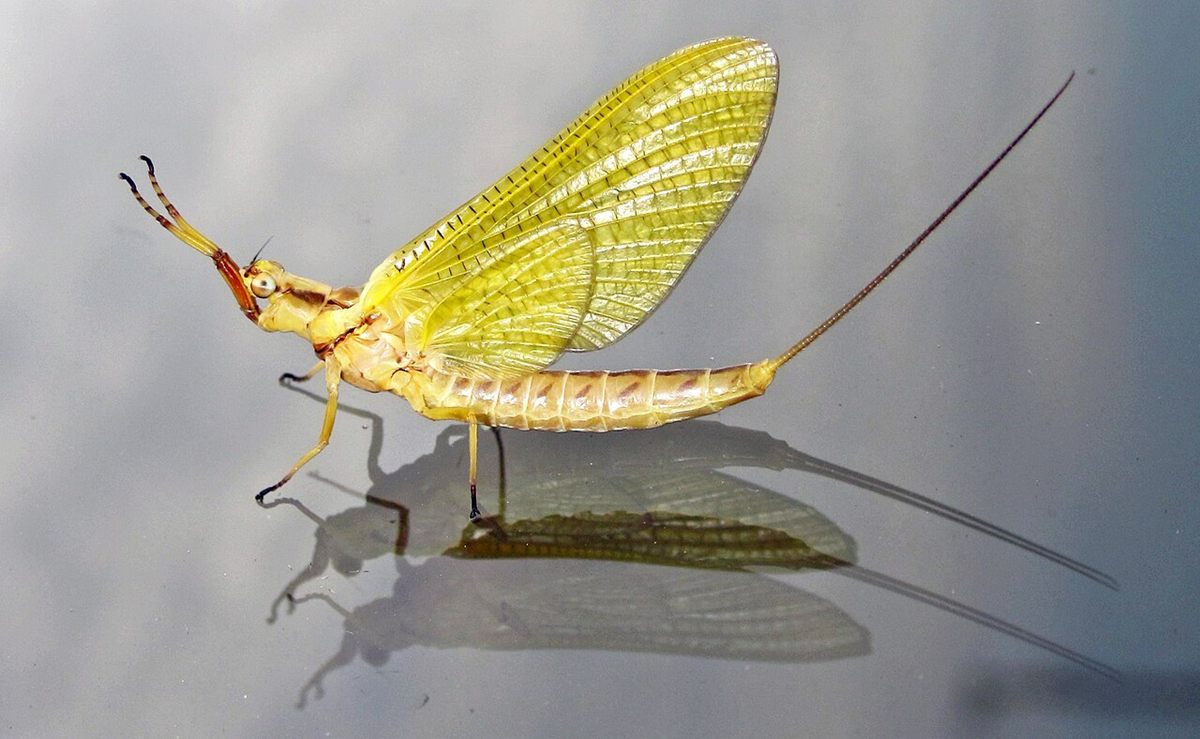
The giant burrowing mayfly (Hexagenia limbata) is a large North American mayfly whose synchronized emergences from the Great Lakes and upper Mississippi are so dense that weather radar picks them up.
The giant burrowing mayfly (Hexagenia limbata) is a large North American mayfly whose synchronized emergences from the Great Lakes and upper Mississippi are so dense that weather radar picks them up.
🧬 Field Guide Specimen: Open Giant Burrowing Mayfly in the CRV Science Field Guide to log the specimen, see its place among the Ecdysozoa lineages in the Cladogram Explorer, and test your recall in the Red List conservation game.
Seen From Space and Radar
Summer swarms from Lake Erie, Lake Pepin and other waters can cover bridges and roads in a slippery layer and are detected by Doppler radar as if they were rain clouds.
A Water Quality Barometer
In the 1950s and 1960s the mayfly disappeared from western Lake Erie because of oxygen depletion and pollution. Its return in the 1990s was taken as a sign of the recovery of the lake. See Eutrophication.
Food for Fish
The nymphs burrow in soft sediment and are a major food for walleye and perch, while the adults are eaten by fish and birds. See Common Mayfly.
Giant Burrowing Mayfly at a Glance
| Property | Value |
|---|---|
| Scientific name | Hexagenia limbata |
| Kingdom | Animalia |
| Phylum | Arthropoda |
| Class | Insecta |
| Order | Ephemeroptera |
| Family | Ephemeridae |
| Field Guide group | Ecdysozoa: Hexapoda (Insects) |
| Diagnostic feature (Field Guide) | Large yellowish flier with three tails whose summer emergence from the Great Lakes is so massive that the swarms show up on weather radar. |
| Order | Ephemeroptera |
| Seen by | Weather radar |