Water Louse
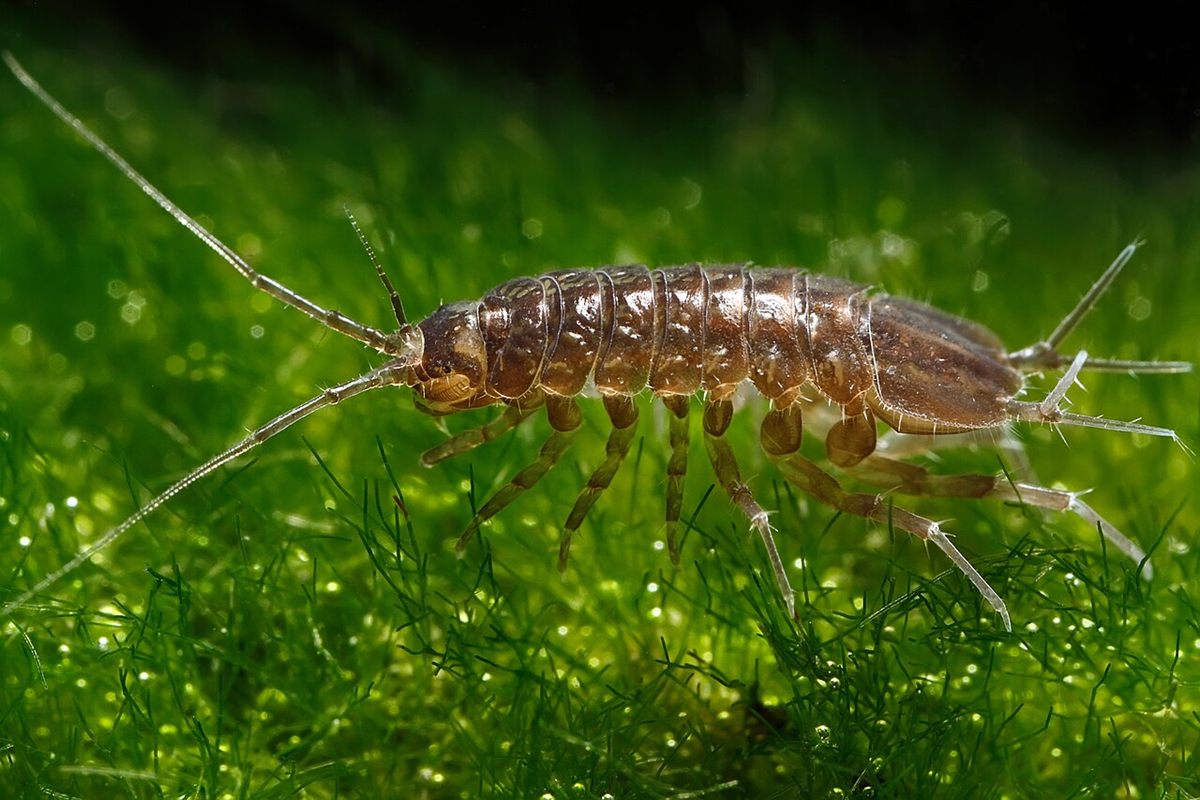
The water louse (Asellus aquaticus) is a small, flattened freshwater isopod of ponds, streams and ditches across Europe. It is common in polluted and low-oxygen water, and some populations live in caves.
The water louse (Asellus aquaticus) is a small, flattened freshwater isopod of ponds, streams and ditches across Europe. It is common in polluted and low-oxygen water, and some populations live in caves.
🧬 Field Guide Specimen: Open Water Louse in the CRV Science Field Guide to log the specimen, see its place among the Ecdysozoa lineages in the Cladogram Explorer, and test your recall in the Red List conservation game.
Evolution in the Dark: Cave Water Lice
In caves such as those of Slovenia and Romania, populations of Asellus have lost their eyes and pigment, evolving independently in different caves. This repeated evolution makes it a model for studying how cave animals adapt. See Natural selection.
Pollution Tolerant
Water lice tolerate organic pollution and low oxygen, so a stream with many lice and few mayfly nymphs often points to degraded water quality. See Green Drake Mayfly.
Detritus Eaters
They feed on dead leaves and plant fragments in the water, breaking them down for other organisms.
Water Louse at a Glance
| Property | Value |
|---|---|
| Scientific name | Asellus aquaticus |
| Kingdom | Animalia |
| Phylum | Arthropoda |
| Class | Malacostraca |
| Order | Isopoda |
| Family | Asellidae |
| Field Guide group | Ecdysozoa: Mandibulata (Mandibulates) |
| Diagnostic feature (Field Guide) | Flattened gray-brown freshwater crustacean that crawls over rotting leaves in ponds; seven pairs of walking legs. |
| Order | Isopoda |
| Cave populations | Eyeless and unpigmented |
See Also
- Common Rough Woodlouse — a terrestrial isopod
- Natural selection — cave adaptation