Sea Slater
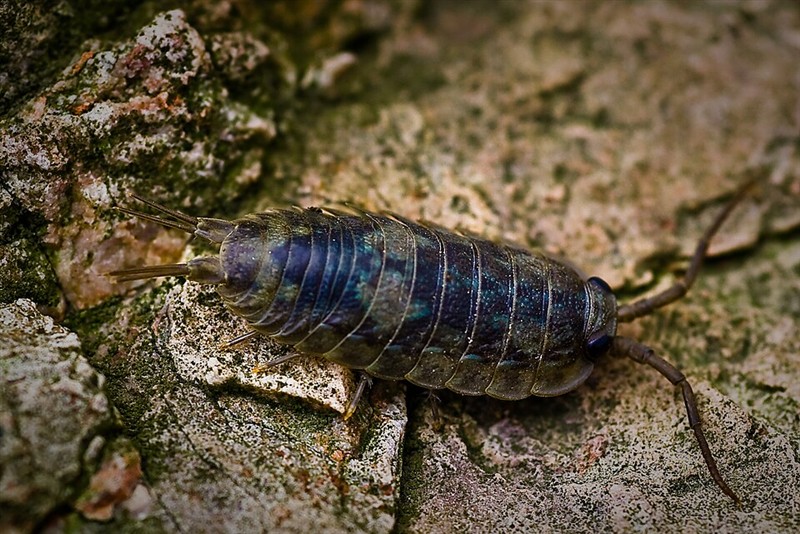
The sea slater (Ligia oceanica) is a large, fast-running isopod of rocky shores of the northeast Atlantic that lives just above the high-tide line. It is a relative of woodlice that has stayed near the sea.
The sea slater (Ligia oceanica) is a large, fast-running isopod of rocky shores of the northeast Atlantic that lives just above the high-tide line. It is a relative of woodlice that has stayed near the sea.
🧬 Field Guide Specimen: Open Sea Slater in the CRV Science Field Guide to log the specimen, see its place among the Ecdysozoa lineages in the Cladogram Explorer, and test your recall in the Red List conservation game.
Scurrying on the Splash Zone
Sea slaters run quickly over barnacle-covered rocks, hiding in crevices by day and feeding at night on algae and carrion. They need damp conditions and are sensitive to drying.
Transition to Land
Isopods moved from sea to land more than once. Sea slaters are an intermediate stage, which breathe with gills that must be kept moist. See Common Rough Woodlouse.
Shore Scavengers
They are food for shorebirds and play a role in recycling stranded seaweed. See Common Pill Bug.
Sea Slater at a Glance
| Property | Value |
|---|---|
| Scientific name | Ligia oceanica |
| Kingdom | Animalia |
| Phylum | Arthropoda |
| Class | Malacostraca |
| Order | Isopoda |
| Family | Ligiidae |
| Field Guide group | Ecdysozoa: Mandibulata (Mandibulates) |
| Diagnostic feature (Field Guide) | Fast-running, dorsoventrally flattened amphibious crustacean up to 3 cm long inhabiting splash-zone rocky crevices of the North Atlantic, equipped with large compound eyes, long second antennae, and forked uropods. |
| Order | Isopoda |
| Habitat | Rocky splash zone |
See Also
- Common Rough Woodlouse — a land isopod
- Water Louse — a freshwater isopod