Devil Worm
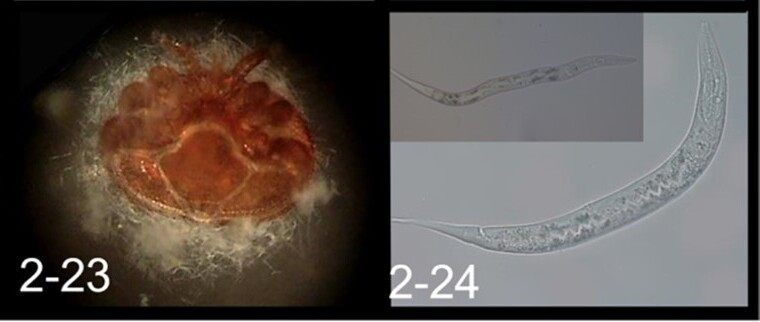
The devil worm (Halicephalobus mephisto) is a microscopic roundworm discovered in 2011 in water more than a kilometer underground in a South African gold mine. It is the deepest-living animal known.
The devil worm (Halicephalobus mephisto) is a microscopic roundworm discovered in 2011 in water more than a kilometer underground in a South African gold mine. It is the deepest-living animal known.
🧬 Field Guide Specimen: Open Devil Worm in the CRV Science Field Guide to log the specimen, see its place among the Ecdysozoa lineages in the Cladogram Explorer, and test your recall in the Red List conservation game.
An Animal in the Deep Biosphere
The worms were living in fracture water thousands of years old, at temperatures near 37 degrees Celsius and very low oxygen. They feed on bacterial biofilms on rock surfaces. The discovery showed that multicellular animals can inhabit the deep subsurface, not only microbes.
Why "Mephisto"?
The name refers to Mephistopheles, a devil in the Faust legend. Its genome shows an expansion of heat-shock proteins, which may help it cope with the heat.
Implications for Astrobiology
If animals can live in such places on Earth, perhaps life could survive in the subsurface of other planets. See Astrobiology and the Search for Life.
Devil Worm at a Glance
| Property | Value |
|---|---|
| Scientific name | Halicephalobus mephisto |
| Kingdom | Animalia |
| Phylum | Nematoda |
| Class | Chromadorea |
| Order | Rhabditida |
| Family | Panagrolaimidae |
| Field Guide group | Ecdysozoa: Nematoda (Roundworms & Parasites) |
| Diagnostic feature (Field Guide) | Microscopic bacteria-grazing worm discovered in gold mine boreholes 3.6 km underground, with extreme heat tolerance. |
| Discovery | 2011, South African gold mine |
| Depth | More than a kilometer below ground |
See Also
- Planetary science — subsurface life elsewhere
- Caenorhabditis elegans — a better-known nematode