Diabase
Diabase, called dolerite in British and Commonwealth usage, is a dark, medium-grained rock with the composition of basalt that cooled in thin intrusions near the surface. It forms dikes and sills and is intermediate in grain size between basalt and gabbro.
Diabase, called dolerite in British and Commonwealth usage, is a dark, medium-grained rock with the composition of basalt that cooled in thin intrusions near the surface. It forms dikes and sills and is intermediate in grain size between basalt and gabbro.
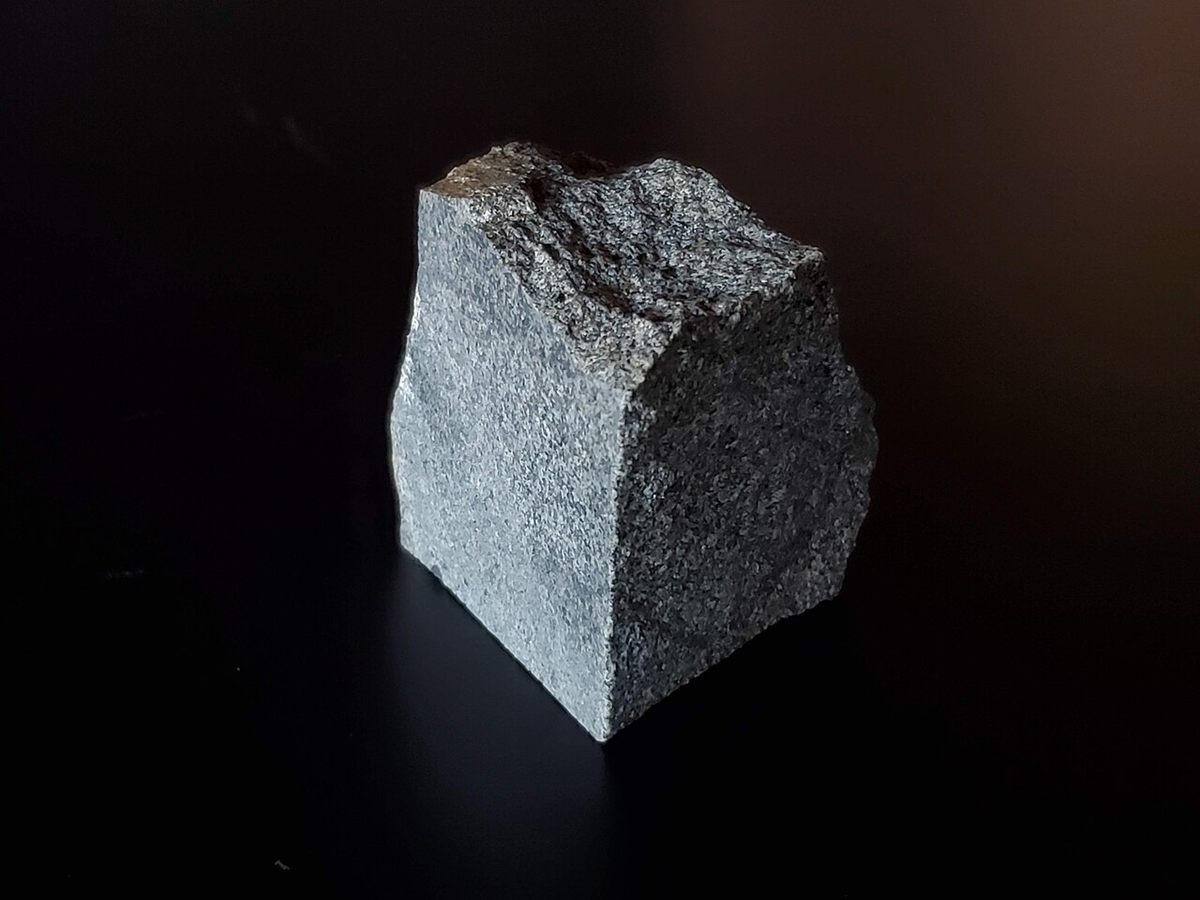
🪨 Geology Guide Specimen: Open Diabase (Dolerite) in the CRV Science Rock & Mineral ID Guide to log the specimen, compare it with the other 7 subgroups of Igneous, and test your eye in LithoClade.
Ophitic Texture: What Does Interlocking Mean?
In classic diabase, slender laths of plagioclase are partly or wholly enclosed by larger crystals of pyroxene, a fabric called ophitic. It shows that the two minerals grew together at about the same time, in magma that cooled more slowly than lava but faster than the deep gabbro.
Dikes and Sills: How Does It Occur?
Magma injected into cracks across layers makes dikes, and magma injected between layers makes sills. The Palisades Sill along the Hudson River is a diabase sill about 200 million years old, linked to the breakup of Pangaea, and England's Whin Sill, which carries part of Hadrian's Wall, is a dolerite sill.
Ocean Crust and Quarries: Why Does It Matter?
Parallel diabase dikes make up the sheeted dike layer of oceanic crust, recording sea-floor spreading. Because it is hard, dense and tough, diabase is widely crushed for road stone and railway ballast, often marketed as "trap rock."
Diabase at a Glance
| Property | Value |
|---|---|
| Type / variety | Ophitic Subvolcanic Diabase |
| Composition | Labradorite Laths Enclosed in Augite Pyroxene ± Magnetite |
| Geology Guide group | Igneous Rocks (Plutonic & Volcanic) |
| Rock Classification | Mafic Plutonic (Gabbroids) |
| Mohs hardness | Mohs 6–6.5 |
| Texture / habit | Medium-grained ophitic (interlocking feldspar laths in pyroxene) |
| Density | 2.90–3.05 g/cm³ |
| Lustre and cleavage | Crisscrossing pale plagioclase needles on dark matrix |
| Geological setting | Sheeted mid-ocean ridge dikes and continental rift sills (e.g., Palisades Sill) |
| Diagnostic feature (Geology Guide) | Medium-grained, tough dark rock from shallow sills and dikes exhibiting a classic 'ophitic' fabric where random, slender white plagioclase laths are enclosed inside larger dark augite crystals. |
| Also called | Dolerite |
| Typical form | Dikes and sills |
See Also
- Gabbro — the coarser, deeper equivalent
- Basalt — the fine-grained volcanic equivalent
- Plate Tectonics — the spreading and rifting that produce dikes and sills