Dolomite
Dolomite is a calcium magnesium carbonate, CaMg(CO₃)₂, with trigonal crystals and a hardness of 3.5 to 4. Its crystals often have curved, saddle-shaped faces, and it is the main mineral of dolostone.
Dolomite is a calcium magnesium carbonate, CaMg(CO₃)₂, with trigonal crystals and a hardness of 3.5 to 4. Its crystals often have curved, saddle-shaped faces, and it is the main mineral of dolostone.
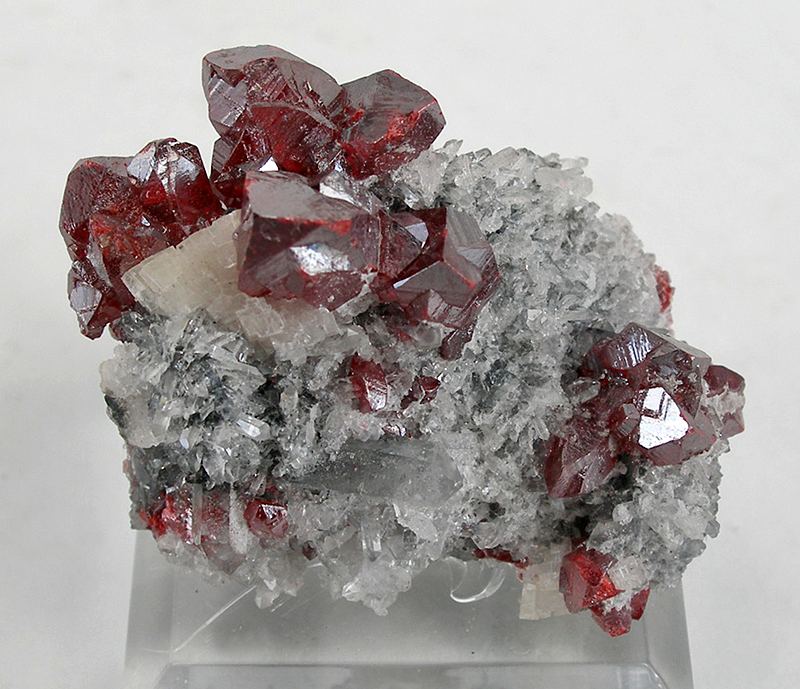
🪨 Geology Guide Specimen: Open Dolomite (Saddle Crystal) in the CRV Science Rock & Mineral ID Guide to log the specimen, compare it with the other 8 mineral classes of Dana / Strunz Classes, and test your eye in LithoClade.
Ordered Structure: What Makes Dolomite Different from Calcite?
In dolomite, layers of calcium and magnesium alternate between sheets of carbonate groups, an ordered arrangement that makes it a distinct mineral and not a mixture. It dissolves more slowly than calcite and reacts with cold dilute acid only when powdered.
Saddle Crystals: Why Are the Faces Curved?
Dolomite that grows from warm fluids in veins and cavities often forms pearly, pale pink or ivory crystals with curved faces, called saddle dolomite. The curvature arises from strain in the lattice as the crystal grows.
Rocks and Ores: Where Does Dolomite Occur?
Dolomite at a Glance
| Property | Value |
|---|---|
| Type / variety | CaMg(CO₃)₂ • Trigonal Double Carbonate |
| Composition | CaMg(CO₃)₂ (Alternating layers of Ca²⁺ and Mg²⁺ cations between CO₃²⁻ sheets) |
| Geology Guide group | Minerals (8 Major Chemical Groups) |
| Mineral Group | Carbonates |
| Mohs hardness | Mohs 3.5–4 |
| Texture / habit | Curved, saddle-shaped rhombohedral crystals in clusters |
| Density | 2.84–2.86 g/cm³ |
| Lustre and cleavage | Pearly pink or ivory curved rhombohedra; fizzes in cold HCl ONLY when powdered |
| Geological setting | Hydrothermal veins, Mississippi Valley-type ore cavities, and dolostones |
| Diagnostic feature (Geology Guide) | Pearly, pale pink-to-ivory rhombohedral crystals with distinctively curved, 'saddle-shaped' faces (Mohs 3.5–4) that fizz in cold dilute hydrochloric acid only after being scratched into powder. |
| Formula | CaMg(CO₃)₂ |
| Acid test | Fizzes weakly unless powdered |