Electric Eel
The electric eel (Electrophorus electricus) is a South American freshwater fish that generates electricity strong enough to stun prey and deter predators. Despite the name, it is a knifefish, not a true eel. Studies in 2019 split the genus into three species.
The electric eel (Electrophorus electricus) is a South American freshwater fish that generates electricity strong enough to stun prey and deter predators. Despite the name, it is a knifefish, not a true eel. Studies in 2019 split the genus into three species.
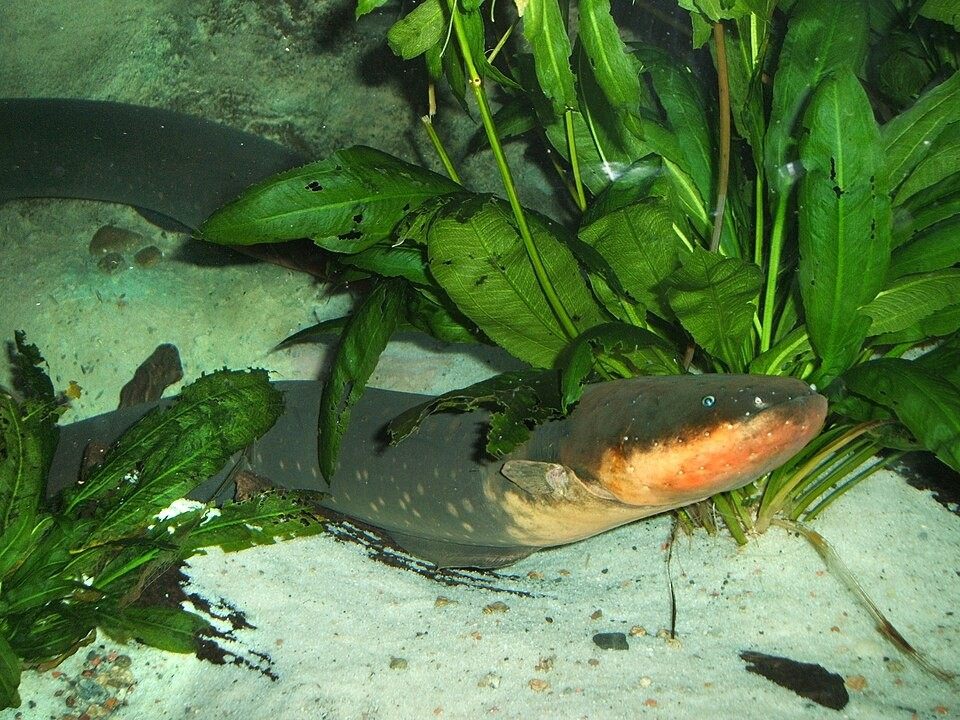
🧬 Field Guide Specimen: Open Electric Eel in the CRV Science Field Guide to log the specimen, see its place among the Vertebrates lineages in the Cladogram Explorer, and test your recall in the Red List conservation game.
A Living Battery: How Does It Make 600 Volts?
Most of the body is packed with stacks of flat cells called electrocytes. Each cell makes a small voltage when ion channels open, and thousands in series add up to hundreds of volts, a design like a stack of batteries. A species described in 2019, Electrophorus voltai, can discharge about 860 volts.
Leaping Attacks and Remote Control
The eel emits high-frequency pulses that force prey muscles to twitch, revealing hidden fish. It can leap from the water and press its body to a target to deliver current. Weak pulses are used for electrolocation.
Breathing Air
Electric eels must surface to gulp air through the mouth, since their gills supply little oxygen. They live in murky Amazon and Orinoco waters.
Electric Eel at a Glance
| Property | Value |
|---|---|
| Scientific name | Electrophorus electricus |
| Kingdom | Animalia |
| Phylum | Chordata |
| Class | Actinopterygii |
| Order | Gymnotiformes |
| Family | Gymnotidae |
| Field Guide group | Marine and Freshwater Fish |
| Diagnostic feature (Field Guide) | Cylindrical scaleless body with three pairs of abdominal electric organs discharging up to 860 volts. |
| IUCN Red List status | Least Concern (LC), assessed 2009 |
| Order | Gymnotiformes |
| Discharge | Several hundred volts or more |
See Also
- Cell membrane — ion channels and membrane voltage
- Platypus — another electroreceptive animal