Platypus
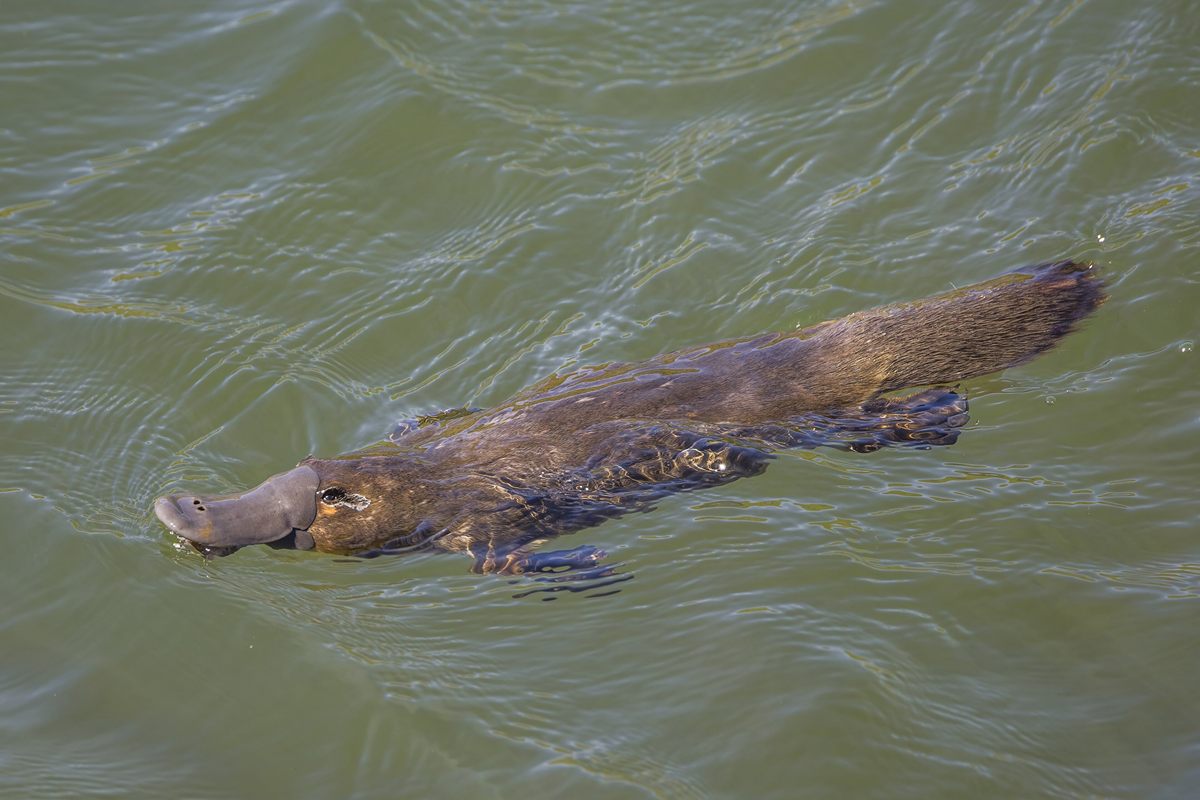
The platypus (Ornithorhynchus anatinus) is a semi-aquatic mammal of eastern Australia that lays eggs, has a duck-like bill and, in males, a venomous spur.
The platypus (Ornithorhynchus anatinus) is a semi-aquatic mammal of eastern Australia that lays eggs, has a duck-like bill and, in males, a venomous spur. It is one of the five living species of egg-laying mammals, or monotremes, and is listed as Near Threatened.
🧬 Field Guide Specimen: Open Platypus in the CRV Science Field Guide to log the specimen, see its place among the Evolutionary lineages in the Cladogram Explorer, and test your recall in the Red List conservation game.
A Bill That Senses Electricity
The soft bill contains tens of thousands of electroreceptors and touch sensors. Underwater, with eyes, ears and nostrils closed, the platypus detects the electric fields generated by the muscle movements of shrimp and insect larvae.
Egg-Laying Mammal: Where Does the Milk Come From?
Females lay one to three leathery eggs and nurse the young with milk secreted from skin patches, since there are no nipples. Platypuses lack a true stomach and have no teeth as adults.
A Strange Genome
The genome, published in 2008, showed a mosaic of mammal, bird and reptile features. Platypuses have ten sex chromosomes, five X and five Y, some of which resemble the bird sex chromosomes. Dams, drought and habitat loss threaten populations.
Platypus at a Glance
| Property | Value |
|---|---|
| Scientific name | Ornithorhynchus anatinus |
| Kingdom | Animalia |
| Phylum | Chordata |
| Class | Mammalia |
| Order | Monotremata |
| Field Guide group | Evolutionary Oddities (Unique & Disputed Lineages) |
| Diagnostic feature (Field Guide) | Egg-laying mammal displaying a cloaca, electroreception bills, and venom spurs. |
| IUCN Red List status | Near Threatened (NT), assessed 2016 |
| Sex chromosomes | Ten |