Short-beaked Echidna
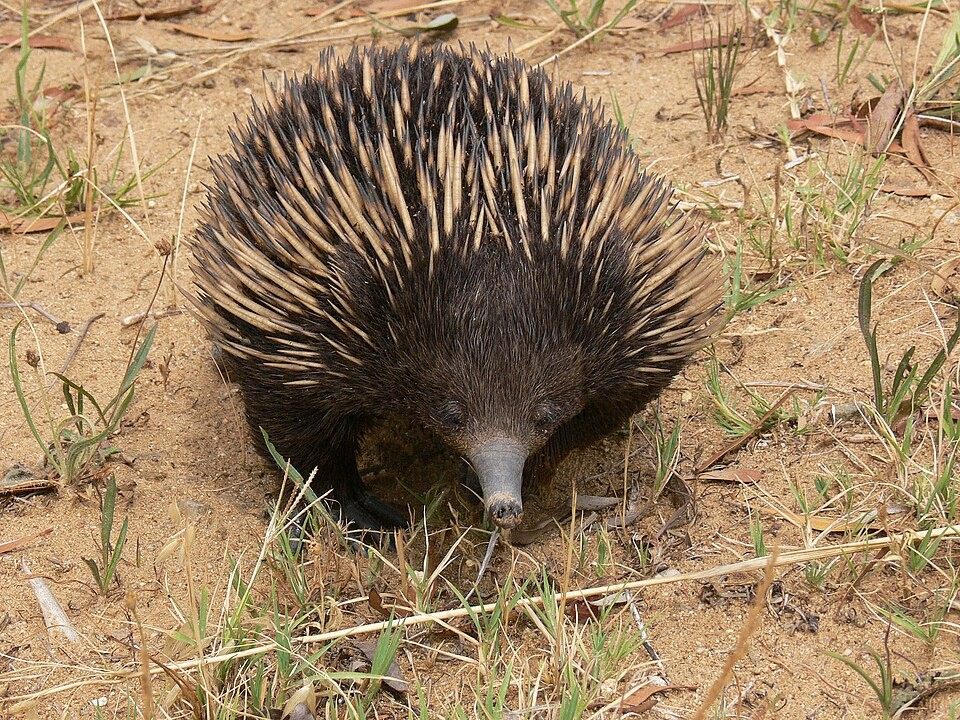
The short-beaked echidna (Tachyglossus aculeatus) is a spiny, egg-laying mammal of Australia and New Guinea. With the platypus, it is one of the few surviving monotremes.
The short-beaked echidna (Tachyglossus aculeatus) is a spiny, egg-laying mammal of Australia and New Guinea. With the platypus, it is one of the few surviving monotremes.
🧬 Field Guide Specimen: Open Short-beaked Echidna in the CRV Science Field Guide to log the specimen, see its place among the Evolutionary lineages in the Cladogram Explorer, and test your recall in the Red List conservation game.
An Egg in a Pouch
The female lays a single leathery egg directly into a temporary pouch, where it hatches after about ten days. The baby, called a puggle, laps milk from patches on the mother's skin until its spines grow.
Ant and Termite Eater
The toothless snout carries electroreceptors, fewer than in the platypus, and the sticky tongue can flick in and out up to a hundred times a minute to catch ants and termites. Strong claws dig into mounds, and the animal can bury itself rapidly if threatened.
Slow Metabolism
Echidnas have a low body temperature for a mammal and can enter torpor to save energy. They have a large brain with a well-developed neocortex.
Short-beaked Echidna at a Glance
| Property | Value |
|---|---|
| Scientific name | Tachyglossus aculeatus |
| Kingdom | Animalia |
| Phylum | Chordata |
| Class | Mammalia |
| Order | Monotremata |
| Family | Tachyglossidae |
| Field Guide group | Evolutionary Oddities (Unique & Disputed Lineages) |
| Diagnostic feature (Field Guide) | Egg-laying monotreme covered in robust hollow keratin spines, toothless tubular snout, long sticky vermiform tongue. |
| IUCN Red List status | Least Concern (LC), assessed 2016 |
| Order | Monotremata |
| Reproduction | Lays a single egg |