Elkhorn Coral
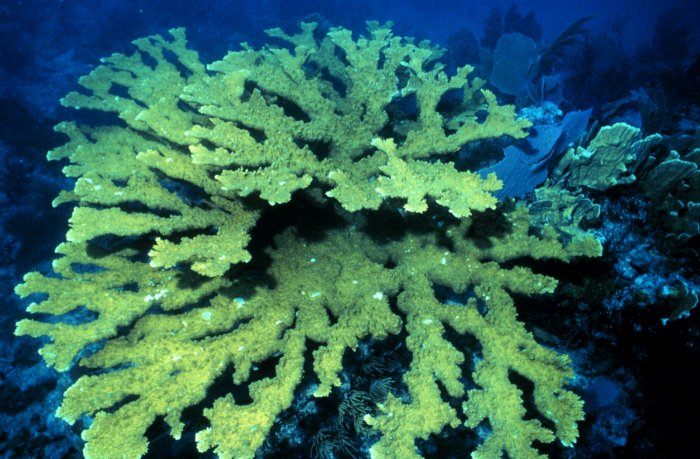
Elkhorn coral (Acropora palmata) is a fast-growing reef-building coral of the Caribbean and Florida, with thick, flat branches like antlers. Once the dominant species on shallow reef crests, it is listed as Critically Endangered.
Elkhorn coral (Acropora palmata) is a fast-growing reef-building coral of the Caribbean and Florida, with thick, flat branches like antlers. Once the dominant species on shallow reef crests, it is listed as Critically Endangered.
🧬 Field Guide Specimen: Open Elkhorn Coral in the CRV Science Field Guide to log the specimen, see its place among the Cnidaria+Ctenophora lineages in the Cladogram Explorer, and test your recall in the Red List conservation game.
Reef Builder: Why Is It So Important?
Elkhorn colonies grow several centimeters a year and form dense thickets that break waves and shelter fish and lobsters. Like other reef corals, they depend on symbiotic algae in their tissues that supply most of their energy.
Why Did It Collapse?
White band disease swept the Caribbean in the 1970s and 1980s and killed most elkhorn colonies, and bleaching during marine heatwaves, hurricanes and ocean acidification have added to the losses. In 2006 it was one of the first corals to be listed under the US Endangered Species Act. See Coral bleaching.
Restoration
Fragments broken by storms can regrow if reattached, and coral nurseries now grow thousands of fragments for transplanting. Heat-tolerant genotypes are being identified for use in restoration.
Elkhorn Coral at a Glance
| Property | Value |
|---|---|
| Scientific name | Acropora palmata |
| Kingdom | Animalia |
| Phylum | Cnidaria |
| Class | Anthozoa |
| Order | Scleractinia |
| Field Guide group | Cnidaria + Ctenophora (Radiata & Jellies) |
| Diagnostic feature (Field Guide) | Massive aragonite calcium carbonate skeleton, photosynthetic endosymbiotic zooxanthellae dinoflagellates. |
| IUCN Red List status | Critically Endangered (CR), assessed 2008 |
| Habitat | Shallow Caribbean reef crests |
See Also
- Coral bleaching — heat stress and symbiont loss
- Ocean acidification — weaker skeletons
- Marine heatwave — a major cause of bleaching