Fir Clubmoss
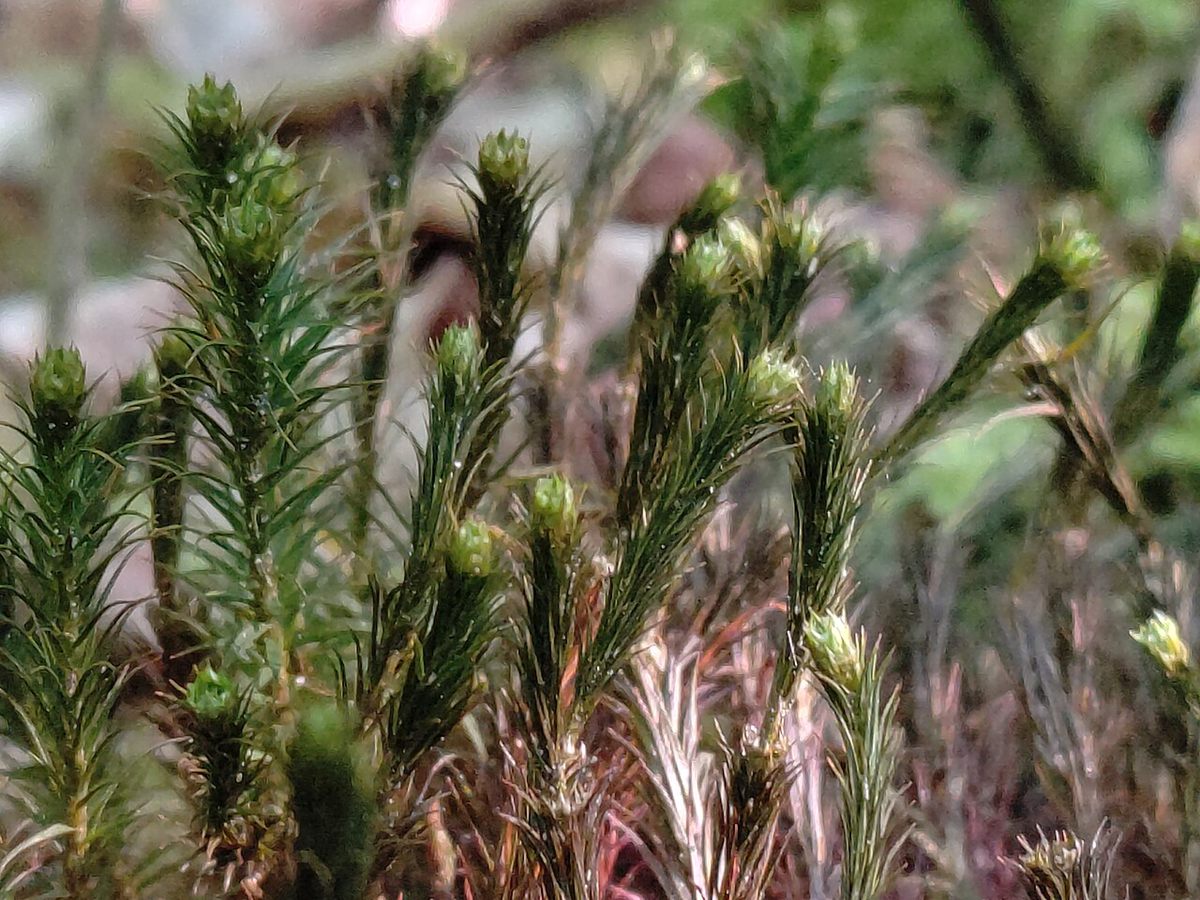
The fir clubmoss (Huperzia selago) is an upright, evergreen lycophyte of cool, mountainous and northern habitats, with crowded, pointed leaves resembling a miniature fir. It is not a moss.
The fir clubmoss (Huperzia selago) is an upright, evergreen lycophyte of cool, mountainous and northern habitats, with crowded, pointed leaves resembling a miniature fir. It is not a moss.
🧬 Field Guide Specimen: Open Fir Clubmoss in the CRV Science Field Guide to log the specimen, see its place among the Diaphoretickes lineages in the Cladogram Explorer, and test your recall in the Red List conservation game.
Reproducing by Bulbils
Besides spores, the plant makes small bud-like bulbils in the leaf axils, which drop off and grow into new plants. This clonal reproduction is common in cold climates.
A Source of an Alkaloid
A related species, Huperzia serrata, is the source of huperzine A, an inhibitor of acetylcholinesterase that has been studied for Alzheimer's disease. Clubmosses make many alkaloids.
Old Lineage
Lycophytes diverged from other vascular plants more than 400 million years ago. See Common Clubmoss.
Fir Clubmoss at a Glance
| Property | Value |
|---|---|
| Scientific name | Huperzia selago |
| Kingdom | Plantae |
| Phylum | Tracheophyta |
| Class | Lycopodiopsida |
| Order | Lycopodiales |
| Family | Lycopodiaceae |
| Field Guide group | Diaphoretickes: Plants & Algae |
| Diagnostic feature (Field Guide) | Upright tufts of stiff stems densely covered in tiny single-veined leaves; spore cases sit at the leaf bases, plus small detachable buds. |
| Group | Lycophytes |
| Propagation | Spores and bulbils |