Giant Panda
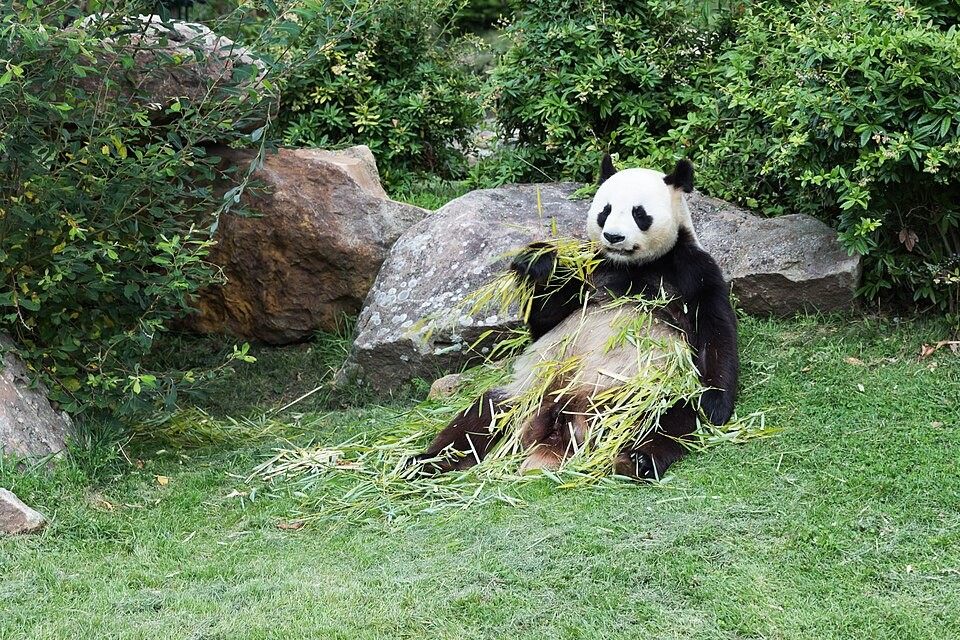
The giant panda (Ailuropoda melanoleuca) is a black-and-white bear of the bamboo forests of central China. It eats almost nothing but bamboo, though it has the digestive system of a carnivore. It is listed as Vulnerable after a recovery from Endangered.
The giant panda (Ailuropoda melanoleuca) is a black-and-white bear of the bamboo forests of central China. It eats almost nothing but bamboo, though it has the digestive system of a carnivore. It is listed as Vulnerable after a recovery from Endangered.
🧬 Field Guide Specimen: Open Giant Panda in the CRV Science Field Guide to log the specimen, see its place among the Mammals lineages in the Cladogram Explorer, and test your recall in the Red List conservation game.
A Carnivore on a Bamboo Diet
The panda's genome has the gene for an umami taste receptor disabled, and its gut is short and has few of the bacteria that break down cellulose well. It compensates by eating 10 to 15 kilograms of bamboo daily and conserving energy with a low metabolic rate.
A "Thumb" Made From a Wrist Bone
The panda holds bamboo with an enlarged wrist bone (the radial sesamoid) that acts like an opposable thumb. This is a textbook example of how evolution modifies an existing structure.
Conservation Success
Reserves and bamboo corridors have helped numbers in the wild rise to around 1,800 animals by the 2010s, and the IUCN downgraded the species from Endangered to Vulnerable in 2016. Habitat fragmentation and climate effects on bamboo remain concerns.
Giant Panda at a Glance
| Property | Value |
|---|---|
| Scientific name | Ailuropoda melanoleuca |
| Kingdom | Animalia |
| Phylum | Chordata |
| Class | Mammalia |
| Order | Carnivora |
| Family | Ursidae |
| Field Guide group | Mammals: Eutheria (Placentals) |
| Diagnostic feature (Field Guide) | Bold black-and-white pelage, modified enlarged radial sesamoid bone acting as an opposable 'pseudo-thumb' for holding bamboo. |
| IUCN Red List status | Vulnerable (VU), assessed 2016 |
| Diet | Bamboo |
See Also
- Grizzly Bear — another bear
- Natural selection — the panda's thumb