Grizzly Bear
The grizzly bear (Ursus arctos horribilis) is a North American subspecies of the brown bear, found in Alaska, western Canada and a few isolated areas of the northwestern United States. It is listed as threatened in the contiguous United States.
The grizzly bear (Ursus arctos horribilis) is a North American subspecies of the brown bear, found in Alaska, western Canada and a few isolated areas of the northwestern United States. It is listed as threatened in the contiguous United States.
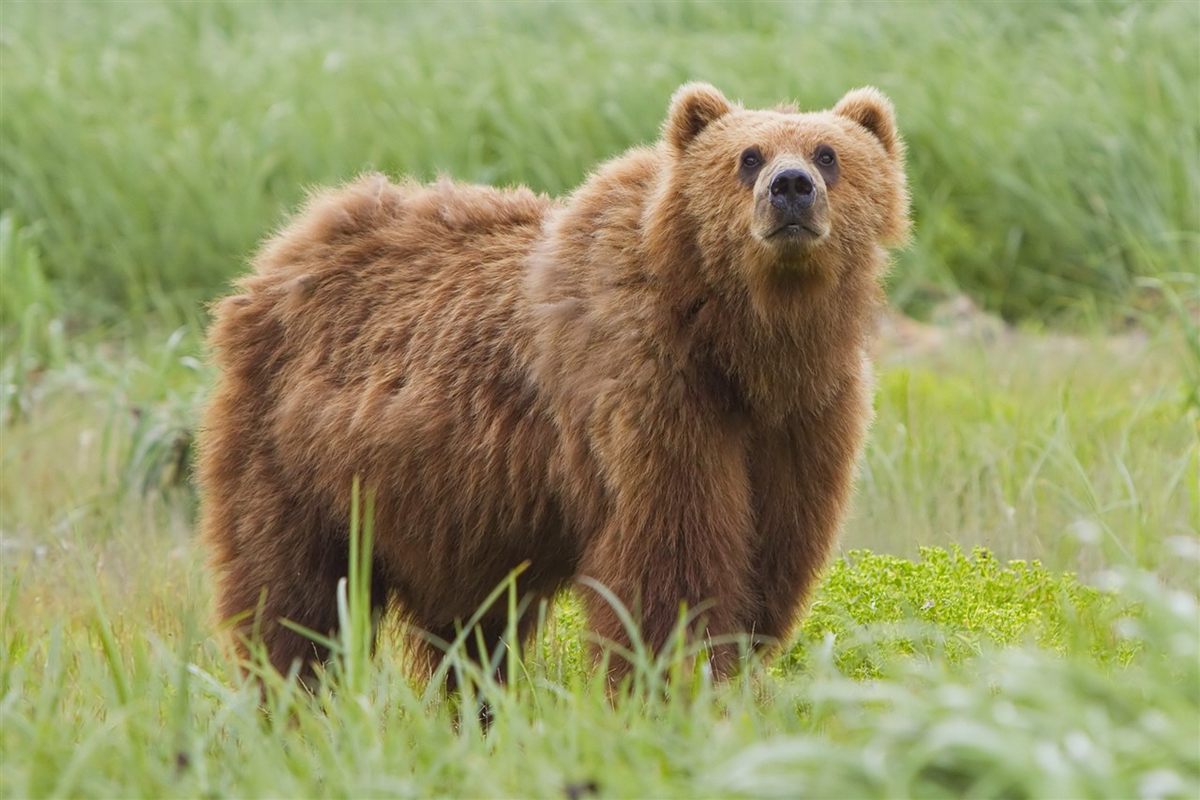
🧬 Field Guide Specimen: Open Grizzly Bear in the CRV Science Field Guide to log the specimen, see its place among the Mammals lineages in the Cladogram Explorer, and test your recall in the Red List conservation game.
Hibernation: How Does a Bear Survive Winter?
During winter dormancy, which can last five to seven months, a grizzly's heart rate falls from about 40 to about 10 beats per minute and the bear does not eat, drink or urinate. It recycles urea into protein and avoids losing much bone or muscle, a physiology of interest to medicine.
Salmon and the Forest
Bears carry salmon carcasses into the forest. Nitrogen from the ocean, traced by isotopes, shows up in trees growing along streams where bears feed. See Nitrogen fixation for the nitrogen cycle that links ocean and land.
Coexistence
Grizzlies need large areas of habitat and have low reproductive rates. In the lower 48 states, about two thousand remain in a handful of ecosystems, including Greater Yellowstone. Roads and conflict with livestock and people are the main sources of mortality.
Grizzly Bear at a Glance
| Property | Value |
|---|---|
| Scientific name | Ursus arctos horribilis |
| Kingdom | Animalia |
| Phylum | Chordata |
| Class | Mammalia |
| Order | Carnivora |
| Family | Ursidae |
| Field Guide group | Mammals: Eutheria (Placentals) |
| Diagnostic feature (Field Guide) | Important for understanding mammalian hibernation physiology and carnivoran omnivory. |
| IUCN Red List status | Least Concern (LC) for the brown bear species (2017) |
| Winter dormancy | Five to seven months |
| US status | Threatened (contiguous states) |
See Also
- Sea Otter — another keystone mammal
- Nitrogen fixation — marine nitrogen in forests