Giant Weta
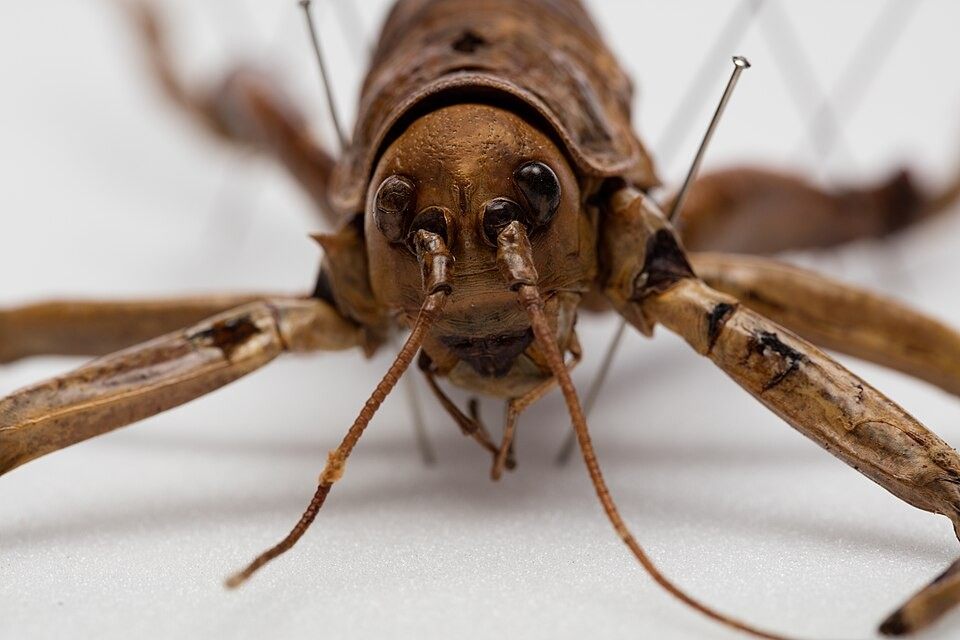
The giant weta (Deinacrida heteracantha), or wētāpunga, is a huge, wingless cricket relative of New Zealand and one of the heaviest insects in the world. Gravid females can weigh as much as a small mouse.
The giant weta (Deinacrida heteracantha), or wētāpunga, is a huge, wingless cricket relative of New Zealand and one of the heaviest insects in the world. Gravid females can weigh as much as a small mouse.
🧬 Field Guide Specimen: Open Giant Weta in the CRV Science Field Guide to log the specimen, see its place among the Ecdysozoa lineages in the Cladogram Explorer, and test your recall in the Red List conservation game.
Heavy and Flightless
A large female can weigh about 70 grams. The insect is nocturnal, eating leaves and fruit, and hides by day in tree holes. It lacks wings and is slow compared to other insects. See Hercules Beetle.
Rats Nearly Erased Them
New Zealand had no land mammals except bats before humans arrived. Introduced rats, cats and other mammals wiped out giant weta from the mainland, and the wētāpunga survived on Little Barrier Island.
Rewilding
Conservation groups bred wētāpunga in captivity and released them on predator-free islands and sanctuaries. The success is an example of how removing introduced predators can restore native species.
Giant Weta at a Glance
| Property | Value |
|---|---|
| Scientific name | Deinacrida heteracantha |
| Kingdom | Animalia |
| Phylum | Arthropoda |
| Class | Insecta |
| Order | Orthoptera |
| Family | Anostostomatidae |
| Field Guide group | Ecdysozoa: Hexapoda (Insects) |
| Diagnostic feature (Field Guide) | Massive flightless New Zealand jumper weighing up to 71 grams, one of the heaviest arthropods, with spiny enlarged hind legs and very long antennae. |
| IUCN Red List status | Vulnerable (VU), assessed 1996 |
| Order | Orthoptera |
| Weight | Up to about 70 grams |
See Also
- Hercules Beetle — another giant insect
- North Island Brown Kiwi — another New Zealand species threatened by predators