Hercules Beetle
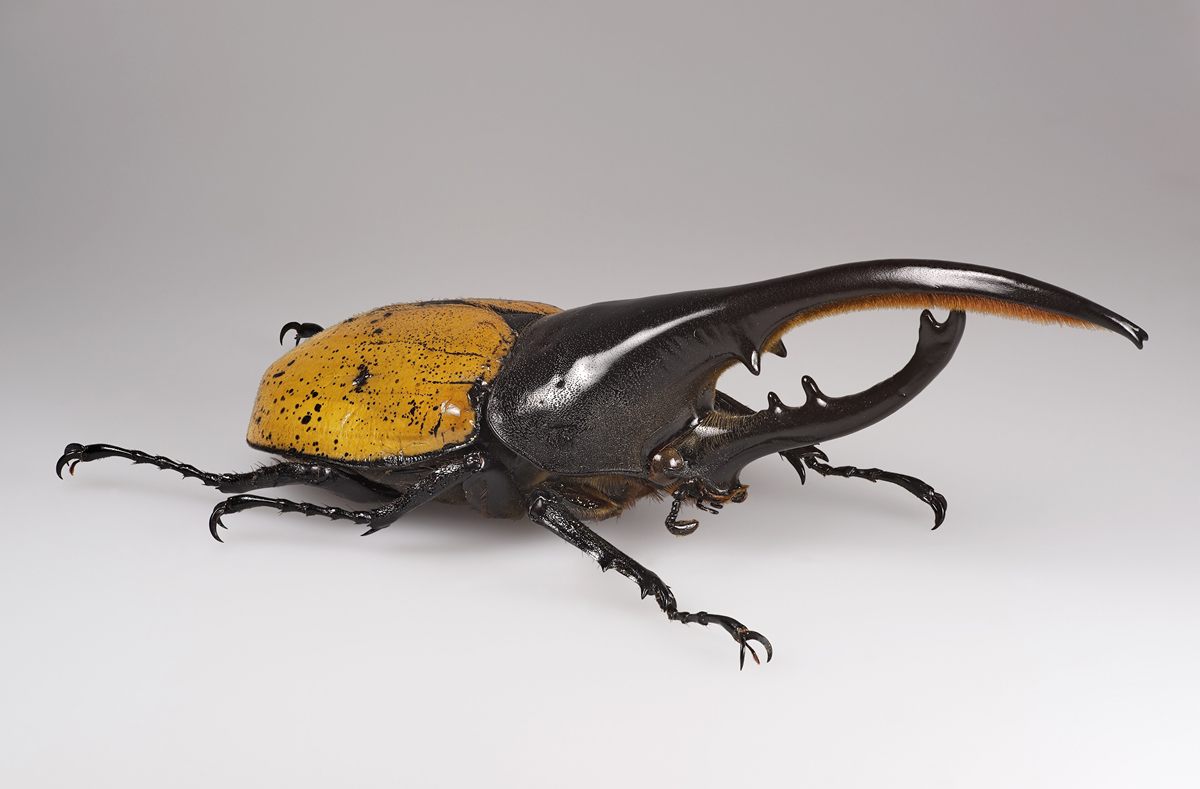
The Hercules beetle (Dynastes hercules) is a rhinoceros beetle of Central and South American rainforests and the Lesser Antilles. Males, which can reach about 17 centimeters including their horns, are among the longest beetles in the world.
The Hercules beetle (Dynastes hercules) is a rhinoceros beetle of Central and South American rainforests and the Lesser Antilles. Males, which can reach about 17 centimeters including their horns, are among the longest beetles in the world.
🧬 Field Guide Specimen: Open Hercules Beetle in the CRV Science Field Guide to log the specimen, see its place among the Ecdysozoa lineages in the Cladogram Explorer, and test your recall in the Red List conservation game.
Horns as Weapons: What Are They For?
The male has two large horns, one projecting from the thorax and another from the head, that pinch together like pincers. Males use them to lever rivals off branches in contests over females, an example of sexual selection producing exaggerated structures. Females are hornless.
Complete Metamorphosis
Like all beetles, the species is holometabolous, passing through egg, larva, pupa and adult stages. Large grub-like larvae feed on rotting wood for a year or more before pupating, and adults live only a few months.
Color That Changes With Humidity
The wing covers (elytra) are olive-green in humid conditions and turn black when dry, owing to changes in the transparency of a layer in the cuticle. Hardened elytra meet along a midline suture, the defining trait of the order Coleoptera.
Hercules Beetle at a Glance
| Property | Value |
|---|---|
| Scientific name | Dynastes hercules |
| Kingdom | Animalia |
| Phylum | Arthropoda |
| Class | Insecta |
| Order | Coleoptera |
| Family | Scarabaeidae |
| Field Guide group | Ecdysozoa: Hexapoda (Insects) |
| Diagnostic feature (Field Guide) | Massive thoracic horn in males, hardened protective chitinous elytra meeting along midline suture. |
| Maximum length | About 17 centimeters including horns |
| Larval habitat | Rotting wood |
See Also
- Natural selection — sexual selection and exaggerated traits
- Evolutionary developmental biology — how horns develop