Pristionchus Roundworm
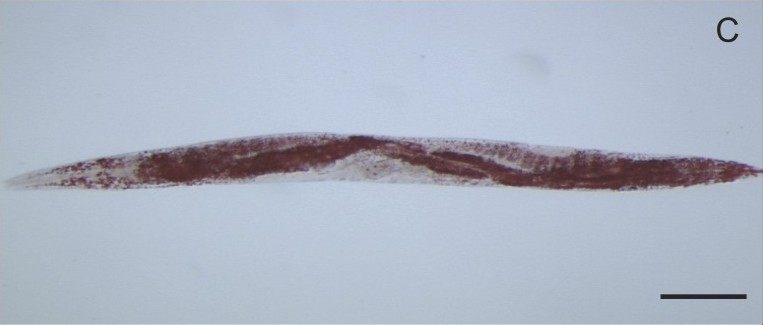
Pristionchus pacificus is a small soil nematode that lives with scarab beetles and is a model for studying how new traits evolve. It can develop two different mouth forms, one of which is a predator.
Pristionchus pacificus is a small soil nematode that lives with scarab beetles and is a model for studying how new traits evolve. It can develop two different mouth forms, one of which is a predator.
🧬 Field Guide Specimen: Open Pristionchus Roundworm in the CRV Science Field Guide to log the specimen, see its place among the Ecdysozoa lineages in the Cladogram Explorer, and test your recall in the Red List conservation game.
Two Mouths, One Genome
Depending on conditions, a worm develops either a narrow, bacteria-feeding mouth or a wide mouth with a large tooth that can bite other nematodes. This plasticity is controlled by a gene switch and is an example of how an environment can steer development.
Riding Beetles
The worms wait in a dormant stage on scarab beetles and resume development when the beetle dies, feeding on the microbes of the carcass. See Hercules Beetle.
A Comparison with C. elegans
Comparing Pristionchus with C. elegans shows how genes and development have evolved. See Caenorhabditis elegans.
Pristionchus Roundworm at a Glance
| Property | Value |
|---|---|
| Scientific name | Pristionchus pacificus |
| Kingdom | Animalia |
| Phylum | Nematoda |
| Class | Chromadorea |
| Order | Rhabditida |
| Family | Diplogastridae |
| Field Guide group | Ecdysozoa: Nematoda (Roundworms & Parasites) |
| Diagnostic feature (Field Guide) | Transparent, 1-millimeter soil and scarab-beetle-associated model organism famous for developmental mouth dimorphism: genetically identical larvae can develop either a narrow bacteria-feeding mouth or a wide, tooth-armed predatory mouth. |
| Order | Rhabditida |
| Mouth forms | Two |
See Also
- Caenorhabditis elegans — the classic nematode
- Evolutionary developmental biology — evolution of development