Greater Horseshoe Bat
The greater horseshoe bat (Rhinolophus ferrumequinum) is a large insect-eating bat of Europe, North Africa and Asia, named for the horseshoe-shaped fleshy 'nose-leaf' that shapes its sonar calls. Its numbers have fallen across much of Europe.
The greater horseshoe bat (Rhinolophus ferrumequinum) is a large insect-eating bat of Europe, North Africa and Asia, named for the horseshoe-shaped fleshy "nose-leaf" that shapes its sonar calls. Its numbers have fallen across much of Europe.
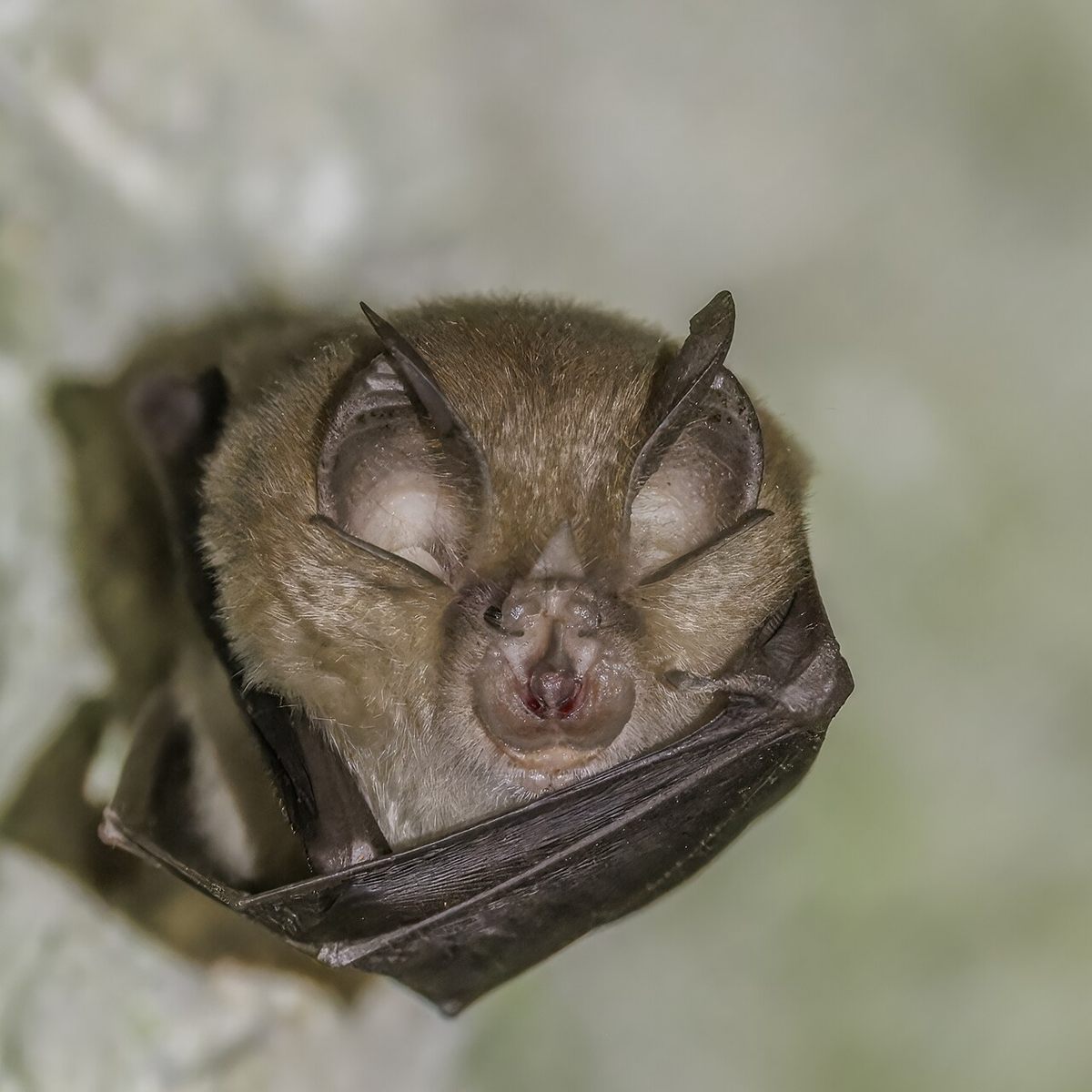
🧬 Field Guide Specimen: Open Greater Horseshoe Bat in the CRV Science Field Guide to log the specimen, see its place among the Mammals lineages in the Cladogram Explorer, and test your recall in the Red List conservation game.
Sonar With a Doppler Trick
Horseshoe bats emit long calls at a constant frequency near 83 kilohertz, through the nostrils. When the bat flies toward a target, the returning echo is shifted upward by the Doppler effect, so the bat lowers its call frequency to keep the echo in the narrow band where its ears are most sensitive. This lets it detect the fluttering of a moth's wings against clutter.
Caves, Hibernation and Disturbance
The bats hibernate in caves and mines and raise their young in warm roosts such as old buildings. Disturbance of hibernating bats wakes them and burns fat reserves, so cave closures and sympathetic building management are important to conservation.
Feeding in Landscapes
They hunt beetles and moths along hedgerows and pastures, and are affected by loss of pasture, pesticides and the use of antiparasitic drugs in livestock dung that reduce dung beetles. See Egyptian Fruit Bat.
Greater Horseshoe Bat at a Glance
| Property | Value |
|---|---|
| Scientific name | Rhinolophus ferrumequinum |
| Kingdom | Animalia |
| Phylum | Chordata |
| Class | Mammalia |
| Order | Chiroptera |
| Family | Rhinolophidae |
| Field Guide group | Mammals: Eutheria (Placentals) |
| Diagnostic feature (Field Guide) | Horseshoe-shaped fleshy nose-leaf that beams ultrasonic calls through the nostrils; hangs wrapped in its wing membranes while roosting. |
| IUCN Red List status | Least Concern (LC), assessed 2016 |
| Echolocation | Constant-frequency calls with Doppler-shift compensation |
| Roosts | Caves, mines and old buildings |
See Also
- Egyptian Fruit Bat — a tongue-click echolocator
- Little Brown Bat — another insect-eating bat