Egyptian Fruit Bat
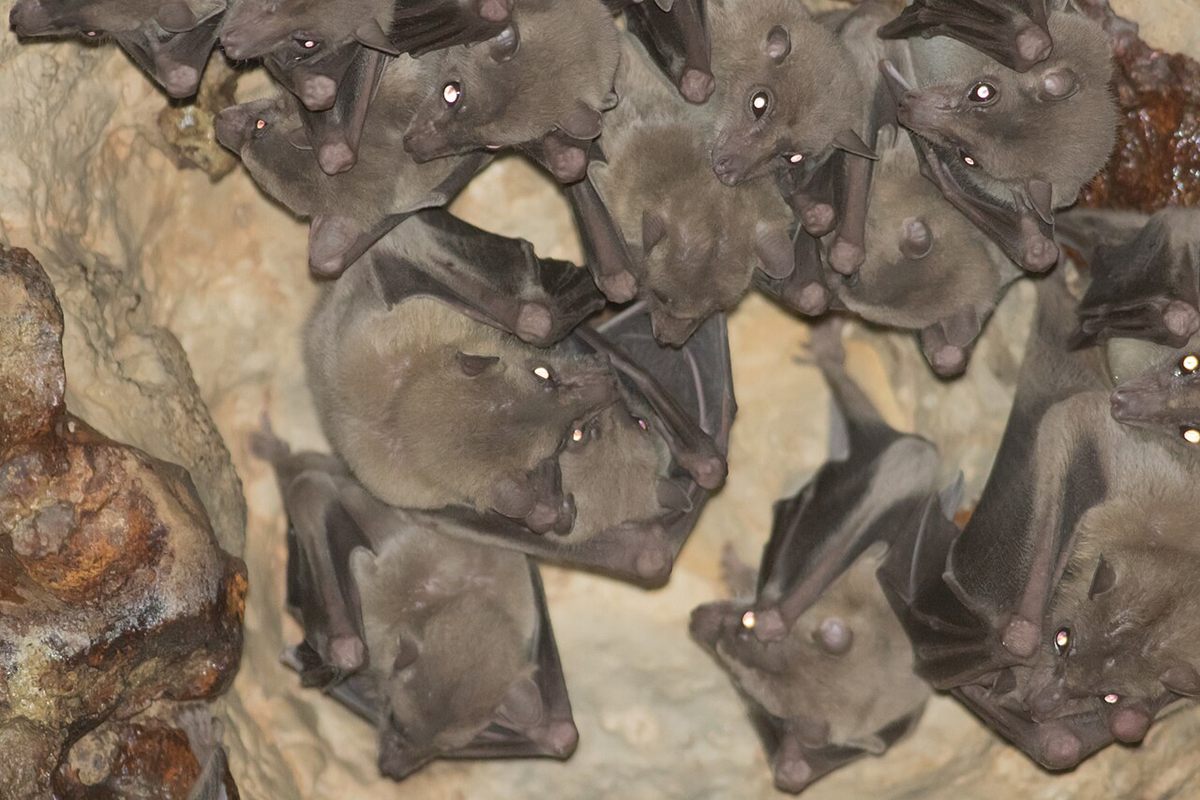
The Egyptian fruit bat (Rousettus aegyptiacus) is a fruit-eating bat of Africa and the Middle East that roosts in caves, tombs and old buildings. Unlike most large fruit bats, it navigates by echolocation using tongue clicks.
The Egyptian fruit bat (Rousettus aegyptiacus) is a fruit-eating bat of Africa and the Middle East that roosts in caves, tombs and old buildings. Unlike most large fruit bats, it navigates by echolocation using tongue clicks.
🧬 Field Guide Specimen: Open Egyptian Fruit Bat in the CRV Science Field Guide to log the specimen, see its place among the Mammals lineages in the Cladogram Explorer, and test your recall in the Red List conservation game.
Clicking in the Dark
Most fruit bats (megabats) see and smell their way and do not echolocate, but Rousettus makes clicks with its tongue to find its way in caves. Its echolocation evolved independently of the laryngeal calls of insect-eating bats.
A Marburg Virus Reservoir
The species is the natural host of Marburg virus, a relative of Ebola that causes severe hemorrhagic fever. Spillover to people has been linked to mines and caves that bats frequent. See Virus.
Social Fliers
Colonies of thousands roost together. The bats pollinate flowers and disperse seeds of fruits such as figs. Their social calls have been studied as an example of vocal communication in mammals.
Egyptian Fruit Bat at a Glance
| Property | Value |
|---|---|
| Scientific name | Rousettus aegyptiacus |
| Kingdom | Animalia |
| Phylum | Chordata |
| Class | Mammalia |
| Order | Chiroptera |
| Family | Pteropodidae |
| Field Guide group | Mammals: Eutheria (Placentals) |
| Diagnostic feature (Field Guide) | Dog-faced fruit eater with large dark eyes and leathery wings; unusual among its relatives for clicking its tongue to echolocate in dark caves. |
| IUCN Red List status | Least Concern (LC), assessed 2016 |
| Navigation | Tongue-click echolocation |
See Also
- Large Flying Fox — a larger fruit bat
- Virus — zoonotic viruses
- Little Brown Bat — a laryngeal echolocator