Large Flying Fox
The large flying fox (Pteropus vampyrus) is among the largest bats in the world, with a wingspan of up to roughly 1.5 meters, living in Southeast Asian forests and islands. It is listed as Endangered because of hunting and habitat loss.
The large flying fox (Pteropus vampyrus) is among the largest bats in the world, with a wingspan of up to roughly 1.5 meters, living in Southeast Asian forests and islands. It is listed as Endangered because of hunting and habitat loss.
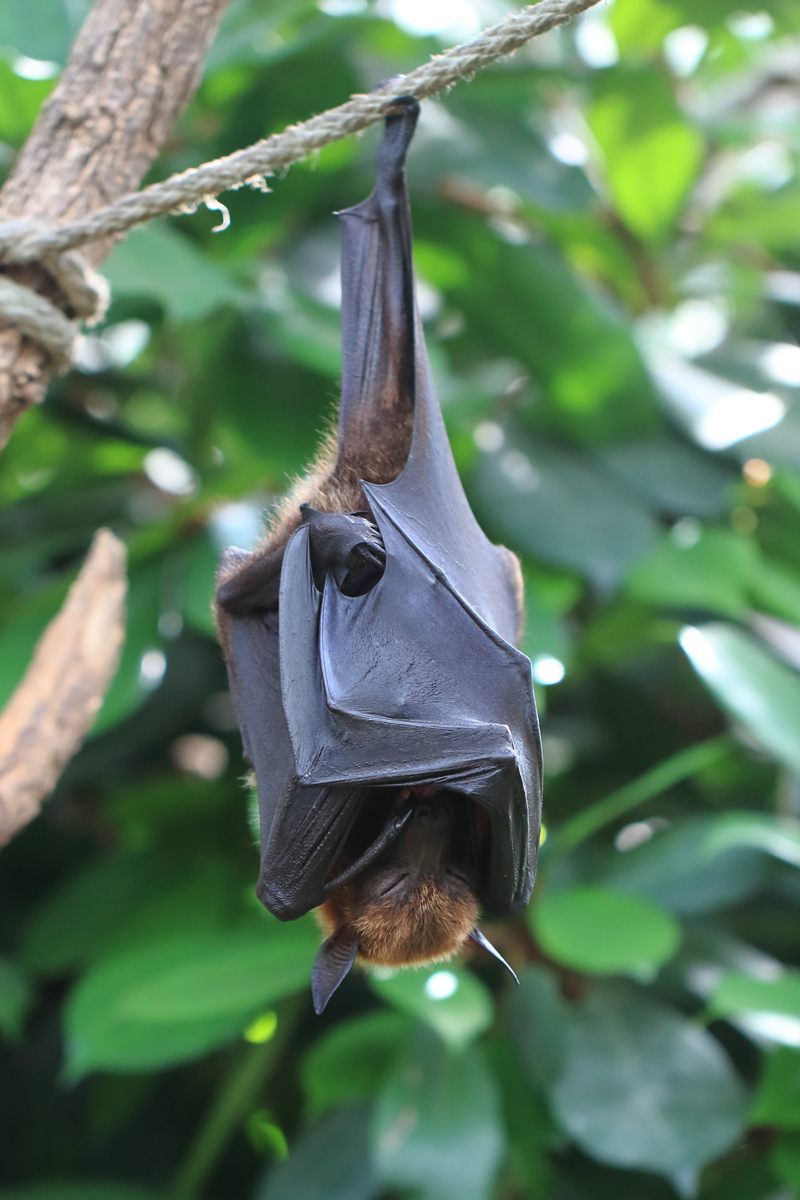
🧬 Field Guide Specimen: Open Large Flying Fox in the CRV Science Field Guide to log the specimen, see its place among the Mammals lineages in the Cladogram Explorer, and test your recall in the Red List conservation game.
Megabats: How Do They Find Food Without Echolocation?
Unlike most small bats, flying foxes rely on large eyes and a keen sense of smell to find fruit and nectar and generally do not echolocate. Roosting in large noisy colonies in trees, they fly long distances each night to feed.
Seed Dispersal and Pollination
By carrying fruit and nectar over many kilometers, flying foxes move seeds and pollen between forest fragments, which makes them keystone species in tropical forests. Their decline can therefore weaken forest regeneration.
Disease Reservoirs and Conservation
Pteropus bats are natural reservoirs of Nipah virus, which spilled over to pigs and people in Malaysia in 1998. Spillover is linked to habitat loss that pushes bats into orchards. Persecution in response is counterproductive, and conservation and public health agencies advise protecting roost habitats and keeping farms bat-safe.
Large Flying Fox at a Glance
| Property | Value |
|---|---|
| Scientific name | Pteropus vampyrus |
| Kingdom | Animalia |
| Phylum | Chordata |
| Class | Mammalia |
| Order | Chiroptera |
| Family | Pteropodidae |
| Field Guide group | Mammals: Eutheria (Placentals) |
| Diagnostic feature (Field Guide) | Span up to 1.5 meters, fox-like facial snout, large eyes for vision without echolocation, dactyl patagium. |
| IUCN Red List status | Endangered (EN), assessed 2022 |
| Wingspan | Up to about 1.5 meters |